Part 2 of a 4 part series
Here is a question that surprises people when they hear it for the first time: Can a Christian be spiritually immoral?
Most of us associate immorality with the kind of behavior that makes headlines — sexual scandal, financial fraud, violence. But the Bible uses the language of immorality for something far more personal and far more common. In Part 1 of this series we looked at Moral Immorality — all the ways the heart strays from God’s moral law through greed, pride, deceit, and injustice. In this article, Part 2, we turn to what Scripture calls Spiritual Immorality: the unfaithfulness to God that the prophets described, with shocking directness, as adultery.
If that word surprises you — good. It is supposed to.
Why God Uses the Word “Jealous”
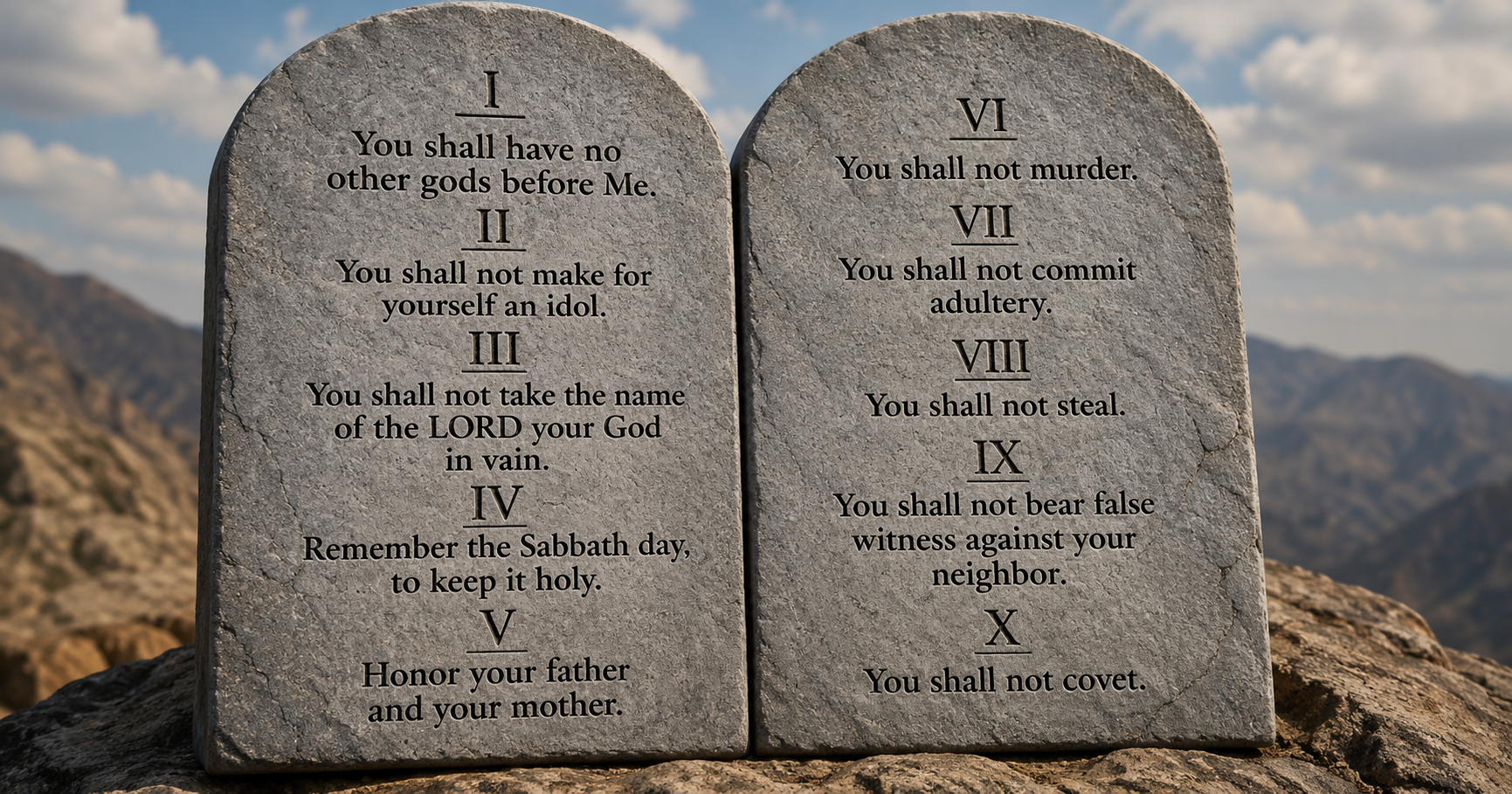
When God gave Israel the Ten Commandments, He included something unusual right after forbidding idolatry. He described himself with a word that sounds almost uncomfortable when applied to God:
Exodus 20:3–5 (NASB2020)
“You shall have no other gods before Me. You shall not make for yourself an idol… You shall not worship them or serve them; for I, the Lord your God, am a jealous God.”
The Hebrew word here, qanna, refers to the rightful, protective claim that a faithful spouse has on their partner’s exclusive devotion. It is the jealousy of a husband whose wife has given her love to someone else. God is not using this word metaphorically. He is making a theological statement about the nature of the covenant relationship: it is a marriage, and He is the Husband. Unfaithfulness to that covenant is, in Scripture’s own language, adultery.
❖ Key Point
God calls Himself “jealous” not because He is insecure, but because the covenant relationship He has with His people is like a marriage — exclusive, intimate, and unbreakable. Breaking it is spiritual adultery.
The Prophets Put It in Plain Language
Once you understand the marriage framework, the prophets begin to make a new kind of sense. Jeremiah, Isaiah, Hosea, and Ezekiel all use the same language for Israel’s idolatry — the language of a wife who has been unfaithful to her husband.
Jeremiah 3:6–9 (NASB2020)
“Then the Lord said to me in the days of Josiah the king, ‘Have you seen what faithless Israel did? She went up on every high hill and under every green tree, and she was a harlot there… She polluted the land and committed adultery with stones and trees.'”
Israel had not abandoned religion entirely — she was still performing the outward motions of worship. But she had added other loves to her devotion to God: the Baals of the surrounding nations, the security of alliances with Egypt and Assyria, the prosperity those other gods seemed to offer. She had given God competitors, and for that, Jeremiah called her an adulteress.
The most striking illustration of all is the life of the prophet Hosea. God actually instructed Hosea to marry an unfaithful woman — and to keep loving her even when she left him for other men — as a living demonstration of what God’s relationship with Israel looked like. Hosea’s heartbreak at Gomer’s repeated unfaithfulness was meant to put a human face on God’s own experience of Israel’s spiritual adultery. It is one of the most emotionally raw passages in all of Scripture, and it exists to answer a question we might otherwise not think to ask: What does idolatry feel like to God?
❖ Key Point
When the Bible talks about idolatry, it is not talking about bowing down to carved statues. It is talking about giving to something other than God the devotion, trust, and love that belong to Him alone. That is spiritual immorality — and it has a far more modern face than most of us realize.
What Does Spiritual Immorality Look Like Today?
Here is where many Christians breathe a sigh of relief too quickly. We are not bowing to idols carved from wood and stone. We are not sacrificing to Baal. So this whole category of “spiritual immorality” feels like ancient history — something for Israel to worry about, not us.
Colossians 3:5 (NASB2020)
“Therefore treat the parts of your earthly body as dead to sexual immorality, impurity, passion, evil desire, and greed, which amounts to idolatry.”
The Apostle Paul labels greed — the consuming desire for more money, more status, more security — as a form of idolatry. Not metaphorically. Not loosely. It amounts to idolatry, because it displaces God from the center of the heart and replaces Him with a created thing. Jesus drew the same line in even starker terms: “No one can serve two masters; for either he will hate the one and love the other, or he will be devoted to one and despise the other. You cannot serve God and wealth” (Matthew 6:24, NASB2020).
The modern forms of spiritual immorality include:
Misplaced trust. Israel’s great recurring sin was not always outright idol worship — it was trusting in the strength of foreign alliances and armies rather than in God. The modern equivalent is placing our ultimate security in bank accounts, health plans, political systems, or human relationships rather than in God.
The love of the world. James addresses this directly: “Do you not know that friendship with the world is hostility toward God? Therefore whoever wishes to be a friend of the world makes himself an enemy of God” (James 4:4, NASB2020). The “world” James refers to is the system of values, ambitions, and priorities that operates as though God does not exist or does not matter.
False teaching. The church in Thyatira was rebuked not for its own idol worship but for tolerating a teacher who was leading others into it (Revelation 2:20). A community that makes room for teachings that shift devotion away from God is practicing a communal form of spiritual immorality.
Drift. Perhaps the most common form of spiritual immorality is the gradual cooling of the heart’s devotion to God — the slow reorientation of priorities away from the Lord. It rarely announces itself. It happens in small increments: the prayer time crowded out by a packed schedule, the Scripture reading replaced by a screen. None of these things looks like adultery. But accumulated over time, they tell a story of a heart that has drifted from its first love.
Revelation 2:4–5 (NASB2020)
“But I have this against you, that you have left your first love. Therefore, remember from where you have fallen, and repent, and do the deeds you did at first.”
What Pastor Russell Taught About Spiritual Fidelity
Pastor C.T. Russell consistently placed spiritual fidelity at the heart of what he called “consecration.” For Pastor Russell, consecration was not a one-time act but a living covenant — the ongoing presentation of the self to God that Paul describes in Romans 12:1 as the offering of a “living sacrifice.”
C.T. Russell — On the Permanence of God’s Moral Law, HTDB Q431:2 (1916)
“[The law] is God’s law briefly summed up in this: ‘Thou shalt love the Lord thy God with all thy heart, with all thy soul, mind and strength and thy neighbor as thyself.’ When will that law be put an end to? Never! Never! We get a little nearer to an appreciation of it every day.”
Russell, C.T. “What Pastor Russell Said,” Q431:2 (1916). Harvest Truth Database (HTDB). Verified primary text: htdb.space/QB/QB_L.htm. | Studies in the Scriptures, Vol. V, The At-One-Ment Between God and Man (1899); Vol. VI, The New Creation (1904). Public domain; archive.org.
For Pastor Russell, spiritual immorality was not a distant danger for pagans. It was an ever-present temptation for the consecrated believer — the temptation to take back what had been given to God and use it for purposes of one’s own. His counsel was not merely behavioral but theological: the remedy for divided loyalty is a renewed understanding of what the covenant of consecration actually means. You have already given yourself to God. Living as though you have not is the spiritual equivalent of adultery.
How Do You Know If You Are Struggling with Spiritual Immorality?
Here are some honest questions worth sitting with:
What do you worry about most? The object of your deepest anxiety often reveals the object of your deepest trust. If financial security, health, or the opinions of others generate more anxiety in you than the question of whether you are walking faithfully with God, that is worth examining.
What would be hardest to give up? Jesus’s instruction to the rich young ruler (Matthew 19:21–22) was not a universal command to sell everything. It was a diagnostic test — a way of exposing where this particular man’s heart was truly anchored. What is the thing you would find hardest to release into God’s hands?
Where does your mind go when it has nothing to do? The wandering mind reveals the wandering heart. What thoughts, plans, daydreams, and anxieties occupy the space in your day that belongs to God?
Has your devotional life become routine or disappeared? The disciplines of prayer, Scripture reading, and community worship are not optional extras for serious Christians. They are the means by which the covenant relationship with God is maintained and renewed. Their absence is often the first sign that the heart has begun to drift.
The Good News: God Calls His People Back
Here is what is remarkable about every prophetic book that speaks most forcefully about spiritual immorality: they all end with an invitation to come back. The God who names Israel’s idolatry as adultery is the same God who says, through Jeremiah, “Return, faithless Israel… I will not look on you in anger, for I am gracious” (Jeremiah 3:12, NASB2020). Hosea closes with some of the most tender words in all of Scripture:
Hosea 14:1–2, 4 (NASB2020)
“Return, Israel, to the Lord your God, for you have stumbled because of your iniquity. Take words with you and return to the Lord. Say to Him, ‘Take away all iniquity and receive us graciously’… I will heal their apostasy, I will love them freely, for My anger has turned away from them.”
“I will love them freely.” That is not conditional language. It is the language of grace — the persistent, pursuing love of a God who will not let His people go, even when they have been unfaithful. James, too, after his blunt warning about friendship with the world, immediately provides the remedy: “Draw near to God and He will draw near to you” (James 4:8, NASB2020). The return is always possible. The door is always open.
❖ Key Point
Spiritual immorality begins with small drifts, not dramatic betrayals. And it ends the same way: not with a dramatic return, but with the daily, deliberate choice to draw near to God — and the promise that He will draw near to you.
Coming Up Next
In Part 3 of this series, we turn to Sexual Immorality — what the Bible actually means by porneia, why Paul calls the body “a temple of the Holy Spirit,” and the complete hope of forgiveness and restoration that Scripture offers. In Part 4 we examine the Church’s Responsibility — how the community of believers is called to respond when any of these three forms of immorality enters its midst: with truth and with grace, following the pattern Jesus himself established in Matthew 18.
About This Series
This 4-part series explores Immorality as the Bible presents it — in three interconnected dimensions: everyday morality, spiritual morality, and sexual morality — and concludes with the Church’s responsibility. Each article is grounded in NASB2020 Scripture, the writings of C.T. Russell, the Herald Magazine, and the Harvest Truth Database (HTDB).
All Scripture: New American Standard Bible 2020 (NASB2020)