

There was once a little girl who was lying on the floor coloring on a large drawing pad when her father came into the room. He stopped and asked her what she was drawing. She said, “I’m drawing a picture of God.” Her father smiled and said, “But no one knows what God looks like.” Without hesitation the little girl answered, “They will when I’m finished.”
The little girl had an image in her mind of what God looked like and she was going to convey it to the world. Have you ever thought about what you would draw if you sat down with a large piece of paper? What does God look like in your mind?
[toc]
God’s Abilities
More importantly, what do we know about His abilities, His character and the way He conducts himself? First we can see Him through His wonderful creative works. “The heavens declare the glory of God; the skies proclaim the work of His hands. Day after day they pour forth speech; night after night they display knowledge. There is no speech or language where their voice is not heard. Their voice goes out into all the earth, their words to the ends of the world.” Psalms 19:1-3
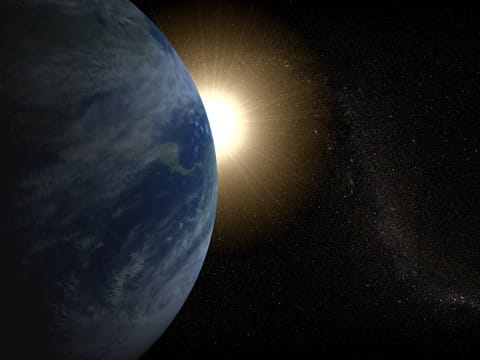 David is telling us that the heavens and the skies convey a message about God. In other words, what we can observe in creation reveals part of the divine glory. First we see that He plans on a gigantic scale. When we look at pictures of the universe we stand in awe at the immensity of what we see. In Psalms 147:4 we read, “He determines the number of the stars and calls them each by name.” It certainly speaks something of not only God’s ability to think of enough names, but also that He would even care to name them all. He is a God of intricate detail, and nothing goes unnoticed or ignored by Him.

Fine Tuning of the Big Bang
When we think of the Big Bang Theory we might think of a wild uncontrolled explosion, but the Big Bang that began the universe actually had to be very finely tuned. Nobel Prize winner and physicist Dr. Steven Weinberg said this, “Life as we know it would be impossible if any one of several physical quantities had slightly different values… One constant does seem to require incredible fine tuning.”
Dr. Michael Turner, an astrophysicist at the University of Chicago, described the fine tuning this way: “The precision is as if one could throw a dart across the entire universe and hit a bullseye one millimeter in diameter on the other side.” Is there evidence for an intelligent designer? Not only is there evidence, there is overwhelming proof of a designer and engineer brilliant beyond our understanding.
Who are we in His presence? And yet He considers us. He loves us and values us above all these amazing things He created. Jesus said that He even knows the number of hairs on our heads. In Psalms 8:4 David says, “When I see your heavens, the work of your fingers, I am inspired to realize my insignificance in relationship to God, Who is overwhelming.”
Our Lessons Revealed
So here is the first lesson we can learn from observing creation: we, too, are insignificant when compared to God. Creation teaches us to acknowledge God as the Supreme Being, not only of the universe, but of our daily lives. How can we not want to dedicate ourselves to His glory seeing all He has done?
God is revealed in creation, and in nature we see harmony and a balance that comes from intelligent design. He is also revealed in His written word where we see a divine plan that also bears His stamp of harmony and intelligent design. It reveals a loving, just, wise and powerful Creator. All creation was designed to inspire us and lead us to love the Lord. By combining our understanding of the Scriptures with what we can observe in the physical creation, our faith and love for God can be boundless.
As we explore what the written words tells us about God, He can be characterized by certain attributes like justice, love, wisdom and power, but in addition to these, there are many other qualities God possesses.
For example, He is an “unchanging God.” Malachi 3:6: “I the Lord do not change. So you O descendants of Jacob are not destroyed. Ever since the time of your forefathers you have turned away from my decrees and have not kept them. Return to me and I will return to you, says the Lord Almighty.”
What a blessing to know we have a God like this. He will always condemn those who oppress the helpless and deprive others of justice. But He will also always return to those who repent. God does not change His sense of justice or His boundless mercy. He was the same 100 billion years ago as He is today.
God’s Name- Jehovah
As we talk about God as being unchanging the question comes up about the name Jehovah, because the meaning of the name suggests that He will change (Malachi 3:6) The phrase “I am Who I am” is where we see the name for God (Exodus 3:14). The words “I Am” come from the Hebrew “Yahweh.” One of the reasons God chose this name for Himself is illustrated by what was happening with the Israelites. They were about to go through the most dramatic and fearful time they had ever seen.
They were a poor enslaved family, not even a nation yet. They were about to have the chains of oppression lifted after 10 grueling plagues, three of which they shared in. How could they have the courage to do what Moses was going to tell them they had to do? There was only one way for them to have the strength and courage to leave Egypt. It was through the strong hand of Yahweh. He would become what they needed Him to become in order to be delivered from Egypt. It is not that He changed, as He is unchangeable, but He became their deliverer. In other words, He became what they needed Him to be.
This can further be appreciated when looking at what Abraham did after offering Isaac. As Abraham and Isaac were preparing an altar for sacrifice remember how Isaac asked, where was the lamb to be offered? Abraham answered, “God will provide Himself a lamb.” Then seeing the ram caught in the thicket and realizing that God would not require he kill Isaac, we are told Abraham named the place Jehovah–Jirah,meaning “Jehovah will provide” as a memorial to what God had done. Jehovah provided a sacrifice in place of Isaac. And, of course, God used that experience to picture His own offering of Jesus as our ransom price.
Later in the life of Moses, God revealed Himself on Mount Sinai and Moses said to God, “Now show me your glory.” (Exodus 33:18-19) We know Moses could not have actually seen God, (1 Timothy 6:16) but God told Moses He would hide him in the cleft of the rock and cover him with His hand while He passed by. Then He would take His hand away and Moses would see the back of God.
Moses probably wanted to see what God looked like, but he also realized there was something far more important than that, because in Exodus 33:13 he said to God, “Teach me your ways so I may know you.” That is where the greatest glory of God lies, in His ways. It is one thing to know what someone looks like – but that is superficial. However, knowing “their ways” is to know them on a far deeper level.

The Knowledge of the Lord
Another attribute of God is that He is “all knowing,” as shown in Psalms 139:1-6: “O Lord, thou hast searched me and known me. Thou dost know when I sit and when I rise; Thou dost understand my thoughts from afar. Thou dost scrutinize my path and my lying down; and art intimately acquainted with all my ways. Even before there is a word on my tongue, behold O Lord, Thou dost know it all. Thou hast enclosed me behind and before, and laid thy hand upon me. Such knowledge is too wonderful for me; It is too high, I cannot attain to it.”
Just looking at the occasion that prompted the writing of this Psalm we see that David came to the throne at a time when it appeared Israel was about to collapse. The Philistines had superior weapons than those of the Israelites because they had learned how to make weapons of iron. Because of the closeness David felt with God he said, “Thou hast enclosed me behind and before and laid thy hand upon me.”
David used military terminology. He was saying that God has set up defenses behind him and in front of him. In other words, nothing could come into his life without God knowing about it and taking an active part in it. In David’s example of faith we see that God can build fortresses and protect us as well – all we have to do is to trust in that. He is our strong fortification against any enemy or trial.
We are seeing here how truly great God is; that he would care enough to search our hearts, to know when we sit down or rise up, to understand our thoughts; this is his ultimate greatness. Creation is scientific brilliance, it’s his brain. This is the heart of God. He wants to know us. He wants to protect us. How perfect and fully rounded He is.
God as Our Abba Father
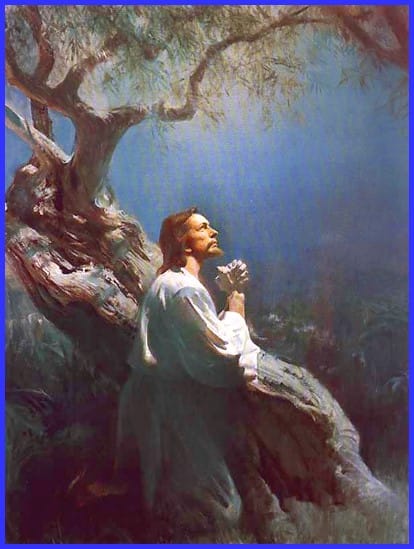
We are going to look at just one more characteristic of God. It is one of the most intimate qualities He has. Romans 8:15 says, “You have not received the spirit of bondage again to fear, but ye have received the spirit of adoption, whereby we cry Abba, Father.” In the oldest manuscripts the two words “Abba” and “Father” are written in different languages. “Abba” is the Aramaic word for father. It is the word a child would use, closer to our papa or daddy.
The second word Father is the Greek word “Pater.” It is a more educated, mature way of addressing one’s father. Why does Paul use this phrase to describe God? In the context, he is contrasting it with the spirit of fear.
A child does not fear its daddy. When children are small, their daddy is a provider. He gives emotional strength and stability to his children. He gives them guidance. Children enjoy being with him. Then as children grow up their relationship with their father naturally changes. He is no longer Daddy. There is an adult relationship that develops, still with the respect for a father’s role, but now they are more like equals, with a father still helping the child whenever possible.
That is what we saw in Jesus, and that is why he could call for his Abba Father at the end of his earthly life, when in deepest despair and mental anguish. His dependence on his Father had grown immeasurably through suffering. In the Garden of Gethsemane, he said, “Abba Father, everything is possible for You. Take this cup from me. Yet not what I will, but what You will.”
There is a childlike innocence in Jesus calling out to his Papa while in such deep distress. After being a man Jesus was able to see a deeper aspect of his Father he could not have seen without his earthly experience. He had a better understanding of God’s justice and mercy. He saw firsthand what drove his father to love mankind.
God is our Papa. He is our father, our life-giver, our provider, our protector, our stabilizing force. He is also preparing us to work alongside of Him as He plans for the blessing of all creation. As God reveals Himself to us, He does so in many, many ways. His creative works tell of His might and brilliance and His love for beauty and diversity. As our understanding of science grows, we will all see those creative works in clearer light.
Then we have the Scriptures which reveal more of His lovingkindness. As the kingdom unfolds, the glory of God will become even clearer and we will all see a grander revelation of God than man has ever seen before. We know one thing for sure, that God will become whatever His creatures need Him to become for their true welfare and blessing.


