
Description

Print Length
97

Language
English

Publisher
Berean Bible Institute Inc. Australia
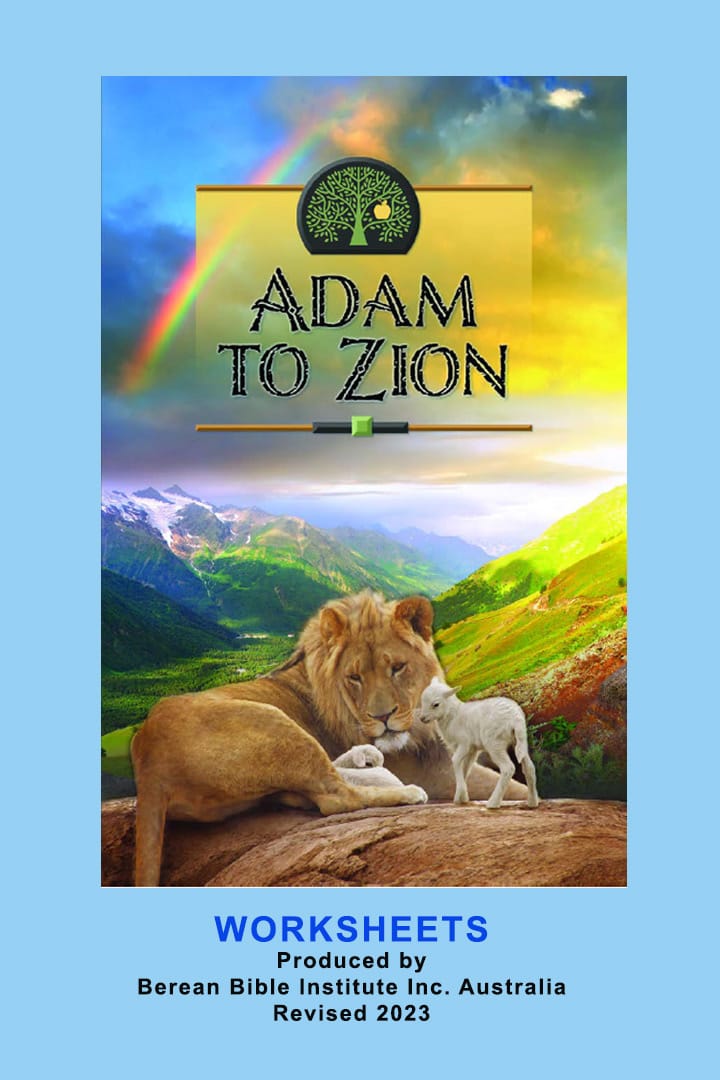
The Adam to Zion Workbook, produced by Berean Bible Institute Inc., is an educational companion to the “Adam to Zion” book. It contains 93 lesson-based worksheets that walk readers through the entire biblical timeline—from the creation of the world to the prophetic vision of eternity to come.
It is designed for ages 8–13+, combining scripture study, critical thinking, and interactive exercises such as puzzles, matching, drawing, and fill-in-the-blank activities. The material encourages both individual learning and group discussions, with scripture references primarily from the New International Version.
One Worksheet per Lesson – Each lesson corresponds to a chapter in the “Adam to Zion” text and follows a chronological flow through biblical history.
Variety of Activities – Exercises range from Bible verse lookups, word scrambles, and matching activities to reflective writing and family tree diagrams.
Integrated Scripture Study – Students are encouraged to read Bible passages directly, reinforcing learning through primary sources.
Discussion Focus – Many sections prompt conversation between children and parents or in group settings.
Days of Creation – Detailed coverage of all seven days, exploring God’s creation of the heavens, earth, plants, animals, and man.
Adam and Eve – Lessons on Eve’s creation, the temptation by the serpent, and the consequences of sin.
Early Biblical Figures – Focus on Abel as the first martyr, Cain’s sin, and the spread of human civilization.
The Flood Narrative – Noah’s ark preparation, God’s judgment, and the destruction of the Nephilim.
Covenants and Faith – Noah’s rainbow pledge, the Tower of Babel, and God’s covenant with Abraham.
Lives of the Patriarchs – Abraham’s test of faith, Isaac’s marriage, Jacob’s dream, Joseph’s betrayal and rise to power in Egypt.
Moses and the Exodus – God’s call to Moses, the plagues of Egypt, the Passover, and the Israelites’ wilderness journey.
Settlement in Canaan – Joshua’s leadership, conquest of Canaan, and establishment of kingship under Saul and David.
Wisdom and Worship – Solomon’s reign, the building of the temple, and prophetic challenges (Elijah, Jeremiah, Daniel).
Exile and Return – The Babylonian captivity, fall of Jerusalem, and promises of restoration.
Prophecies and Birth – John the Baptist as forerunner, Jesus’ baptism, early miracles, and parables of the Kingdom.
Teachings – Sermons, healings, and symbolic acts (Memorial Supper).
Passion and Resurrection – Crucifixion, empty tomb, post-resurrection appearances, and ascension.
Pentecost and Apostolic Work – Outpouring of the Holy Spirit, Paul’s ministry, conversion of Cornelius.
Church History Highlights – Middle Ages, Reformation, rise of various Christian movements.
Prophetic Themes – Increase of knowledge, time of trouble, final victory of God’s Kingdom.
Future Hope – New heavens and new earth, restoration of creation, and the “Ages to Come” symbolized by the Hallelujah Chorus.
Biblical Literacy – Familiarize students with key events, people, and teachings of the Bible.
Moral Instruction – Encourage values like forgiveness, humility, compassion, and faithfulness.
Critical Thinking – Prompt learners to compare scripture passages, reflect on lessons, and apply principles to modern life.
Active Engagement – Use of creative tasks (art, word games, family tree mapping) to enhance retention.
Scaffolding – Lessons build progressively, linking Old Testament history to New Testament fulfillment.
Type–Antitype Connections – Many worksheets highlight biblical “types” (foreshadowing) and “antitypes” (fulfillment), especially between Old Testament events and Jesus’ life.
Personal Application – Students are often asked to relate biblical teachings to personal experiences.
Memorization and Recitation – Certain exercises require writing out and remembering key Bible verses.
The workbook is instructive yet interactive. It avoids heavy theological jargon, opting instead for clear explanations, age-appropriate vocabulary, and hands-on engagement. The lessons keep Christ’s role central, while still showing the full biblical arc from Adam to the eternal kingdom.
In short, Adam to Zion Workbook is both a comprehensive Bible study guide and a hands-on learning tool. It traces God’s redemptive plan from creation through human history, the life and work of Jesus, the spread of the Gospel, and the prophetic hope for the future—while providing creative ways for learners to absorb, apply, and discuss these truths.