
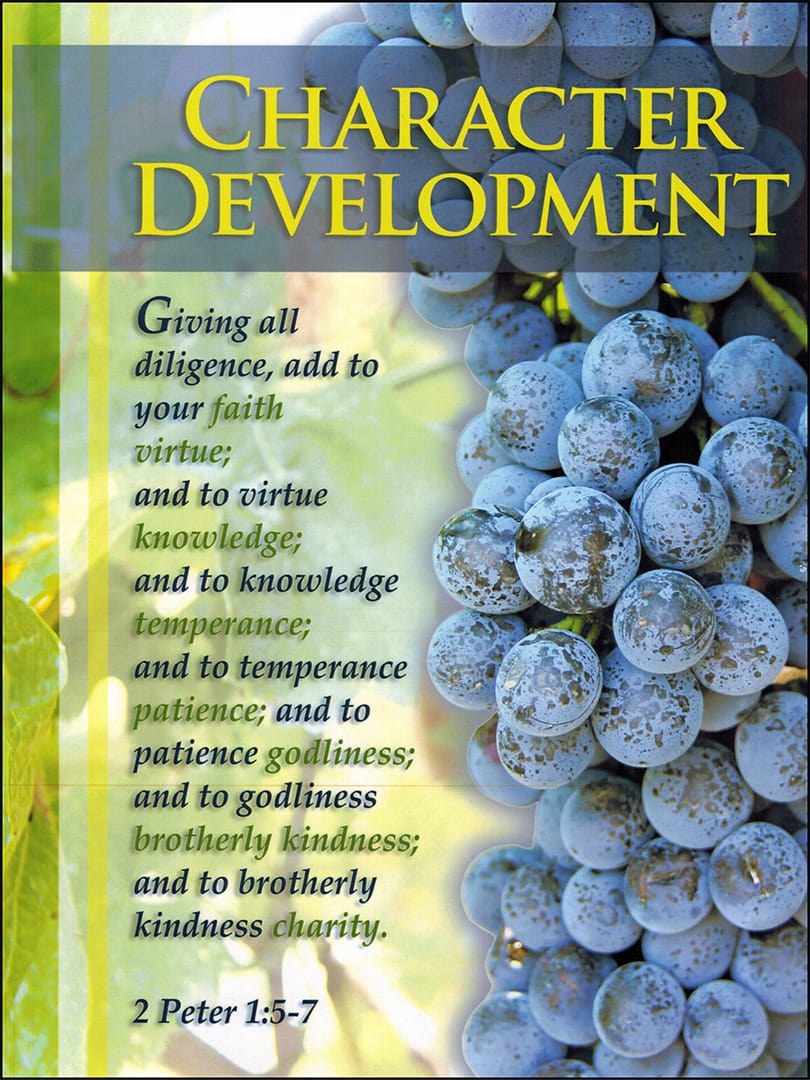
Description

Print Length
448

Language
English

Publisher
CBS Literature Distribution Service
This book focuses on the Christian’s responsibility to grow in Christlike character, teaching that moral and spiritual maturity is a key qualification for those who hope to share in Christ’s future Kingdom work. It encourages believers to engage in a deliberate, daily process of transformation, rooted in God’s Word and empowered by the Holy Spirit.
God’s ultimate goal is not just saving individuals but shaping them into reflectors of His own character.
Scripture teaches that without love, all spiritual gifts and knowledge are meaningless (1 Corinthians 13).
The development of character is central to God’s plan because the Church will assist in blessing and restoring humanity during Christ’s Kingdom.
True Christian character is the consistent application of godly principles in every aspect of life.
It requires more than avoiding wrongdoing; it is an active pursuit of virtues like:
Humility – recognizing dependence on God and avoiding pride.
Patience – enduring trials without complaint.
Self-control – restraining selfish impulses.
Love – the highest Christian virtue, expressed in action and attitude toward God and others.
Testing of faith is necessary for character to be strengthened, much like metal is refined by fire.
Growth in character is gradual and requires:
Knowledge of God’s Will – gained through Bible study and meditation.
Self-examination – identifying weaknesses honestly.
Practice – applying God’s principles consistently in daily life.
Prayer and Reliance on the Holy Spirit – seeking divine help in overcoming personal flaws.
Trials and hardships are not obstacles but opportunities to build perseverance and trust in God.
Jesus Christ is the perfect pattern of godly character:
He demonstrated humility in service.
He loved sacrificially, even to the point of death.
He remained obedient to God despite severe trials.
Believers are called to “walk as He walked”, measuring their growth against His example.
Common hindrances include:
Pride – overestimating one’s spiritual maturity.
Selfish ambition – seeking personal gain rather than God’s glory.
Neglect of spiritual disciplines – failure to study, pray, and fellowship.
Discouragement – giving up when progress seems slow.
The booklet encourages perseverance, reminding believers that God completes the good work He begins.
Galatians 5:22–23 lists the Fruit of the Spirit—love, joy, peace, patience, kindness, goodness, faithfulness, gentleness, and self-control—as evidence of true transformation.
These qualities develop together, not in isolation, and are cultivated through obedience and daily surrender to God.
God allows trials to:
Test loyalty.
Develop endurance.
Teach reliance on His promises.
Difficulties are seen as spiritual training rather than punishment.
The development of godly character prepares believers for future service in Christ’s Kingdom.
The faithful Church will assist in restoring mankind during the resurrection and will need the moral strength developed now to rule in righteousness.
The Christian life is a lifelong journey of becoming more like Christ. Through study, prayer, and practice, believers can grow into strong, loving, and humble servants of God—fully prepared for the responsibilities of the coming Kingdom. The process may be challenging, but it is the most valuable work a Christian can undertake.