
Description

Print Length
554

Language
English

Publisher
Portland Area Bible Students
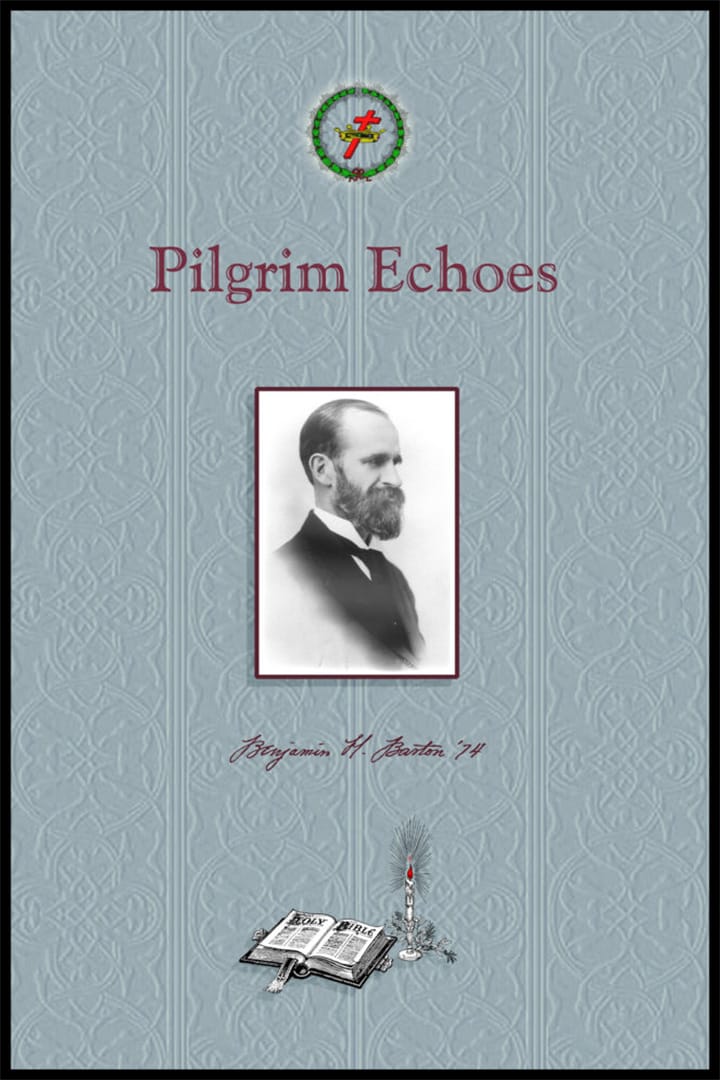
Pilgrim Echoes is a memorial collection of sermons, letters, poems, and personal reflections from Benjamin H. Barton (1874–1916), a traveling minister in the early Bible Student movement associated with Pastor Charles Taze Russell. Barton, originally trained as an architect, gave up his trade to dedicate himself fully to ministry. His travels as a “Pilgrim” took him across the United States, Canada, and the British Isles, preaching biblical truths and offering pastoral encouragement.
Compiled and published by the Portland Area Bible Students in 2010, the book preserves Barton’s teaching ministry as an encouragement for believers “at the end of the Gospel Age.” It is considered supplementary to the writings of Pastor Russell, containing original discourses not otherwise widely available.
The book runs over 500 pages and is organized into:
Publisher’s Foreword & Biographical Tributes – An introduction to Barton’s life, ministry, and spiritual character, with personal testimonies from those who knew him.
Sermons & Discourses – Dozens of talks on doctrinal, devotional, and practical topics, often tied to specific scripture passages.
Letters – Personal correspondence revealing his pastoral heart.
Poems & Praise – Original and collected devotional poetry.
Funeral Service & Final Illness – Notes from Pastor Russell’s sermon at Barton’s funeral and a description of his last days.
Scripture Index – A detailed reference for biblical citations throughout the book.
Barton opens with a sweeping theological overview of God’s Kingdom—tracing it from the creation of the Son, through mankind’s fall, to the promised restoration at Christ’s second advent. He distinguishes between the “Kingdom of Heaven” (the spiritual ruling class with Christ) and the broader “Kingdom of God” (including restored humanity). He emphasizes:
God’s sovereignty has never ceased, even though earth has been under Satan’s temporary rule.
The present age is a calling and testing period for those who will reign with Christ.
The full establishment of the Kingdom will bring universal blessing and justice.
In “Encouraging Lessons from Israel’s Tabernacle,” Barton draws symbolism from every detail of the Tabernacle’s structure, furniture, and coverings to teach lessons about consecration, Christian character, and the believer’s progression from justification to glory. He uses the Gate, Laver, Altar, and Most Holy as vivid metaphors for stages of the Christian walk.
Many sermons deal with daily faithfulness and overcoming spiritual weaknesses. Examples include:
“All Things Work Together for Good” (Romans 8:28): Trials are essential tools for character building, leading to Christlikeness.
“Aids to Spiritual Health”: Using parallels from physical health, Barton discusses diet (spiritual nourishment), cleanliness (purity), exercise (service), and avoiding spiritual “diseases” such as pride, spiritual near-sightedness, and paralysis from fear.
Barton’s messages are rooted in detailed scripture analysis:
Psalm 91 – Promises of divine protection for those dwelling “in the secret place of the Most High,” with careful distinction between conditional and unconditional promises.
The Harp of God – The Bible as a spiritual harp with “ten strings” (doctrinal themes) that must all be played in harmony.
Eighty-Four Reasons Why We Believe We Have the Truth – A systematic apologetic for the Bible Students’ doctrinal framework, emphasizing scriptural harmony, moral fruitage, and providential leading.
Barton frequently addresses the cost of discipleship:
Expectation of rejection by the world.
The refining value of opposition.
The joy of fellowship with like-minded believers.
The recurring call is to complete consecration—“binding the sacrifice to the horns of the altar”—with no holding back. He stresses:
Full surrender of self, time, and talents to God.
Urgency in service, recognizing the limited time before the Kingdom is established.
Humility as the core of Christlike character.
The poetry section includes works like Let Us Go Forth, He Careth for His Own, and The Word of God is Not Bound, reflecting steadfast hope and missionary zeal. His letters, preserved from the St. Paul Enterprise newspaper, reveal his gentleness, encouragement, and unwavering focus on the spiritual welfare of others.
The closing chapters narrate Barton’s brief final illness in Portland, Oregon, in 1916, at age 41. Pastor Russell’s funeral sermon is included, highlighting Barton’s unwavering devotion and likening his life to a “bright and shining star.” The tributes portray him as humble, tireless, and tender-hearted, with a unique ability to comfort and inspire.
Pilgrim Echoes blends doctrinal instruction, pastoral counsel, and personal example. It is both a historical preservation of early Bible Student thought and a devotional manual urging readers toward:
Scriptural study.
Christlike transformation.
Active participation in God’s service.
Joyful anticipation of the coming Kingdom.
Its enduring value lies in its combination of careful biblical exposition and heartfelt spiritual encouragement.