
Description

Print Length
52

Language
English

Publisher
The Associated Bible Students of Central Ohio and The Northwest Indiana Bible Students
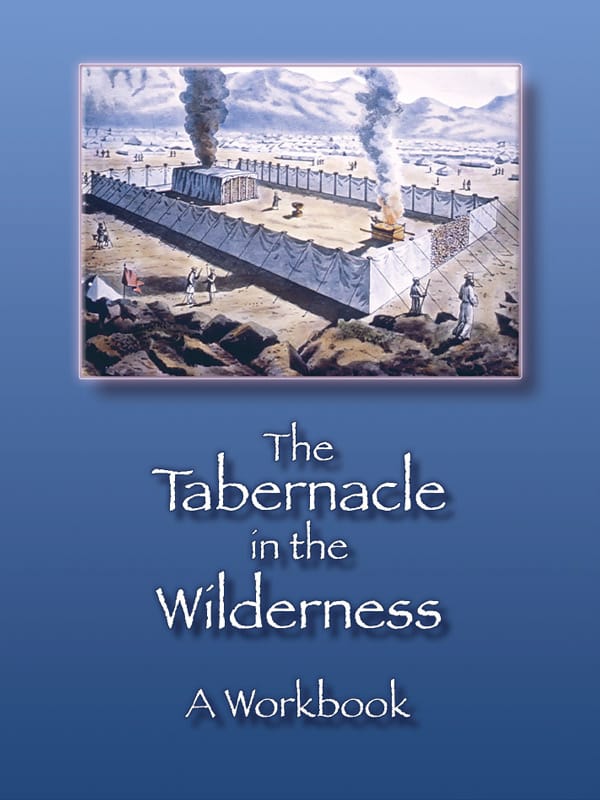
The Tabernacle in the Wilderness – A Workbook is an interactive Bible study resource designed to help learners—especially children, new believers, or group participants—understand the biblical Tabernacle, its parts, and their spiritual significance. Adapted from Tabernacle Shadows by Charles Taze Russell, it combines diagrams, activities, puzzles, and scripture references to explain how the Tabernacle’s design, materials, and services foreshadow Christ’s redemptive work and God’s ultimate plan for humanity.
Illustrated Lessons – Each section contains clear drawings of the Tabernacle and its components.
Interactive Exercises – Fill-in-the-blanks, matching activities, crossword puzzles, and coloring pages make the material engaging and memorable.
Scripture-Based Teaching – Every part of the Tabernacle is explained using direct Bible passages, especially from Exodus, Leviticus, and Hebrews.
Symbolic Interpretation – Practical descriptions are paired with spiritual meanings that point to Christ and the believer’s walk with God.
The Tabernacle’s Origin – God gave Moses specific instructions on Mount Sinai for building a sanctuary so that He could dwell among His people (Exodus 25:8–9).
Central Role in Worship – It served as the center of Israel’s religious life, where sacrifices and offerings were made for the atonement of sins.
Foreshadowing Christ – Every element is shown as a type (symbol) pointing to Jesus as the ultimate High Priest and perfect sacrifice.
Fence and Gate – Symbolizing separation from sin and the only access to God through Christ (John 10:9).
Brazen Altar – Where burnt offerings were made, representing Christ’s sacrificial death.
Laver – Used for washing by the priests, symbolizing cleansing through the Word and Spirit.
Table of Shewbread – Representing spiritual nourishment from God’s truth.
Golden Candlestick (Menorah) – Symbolizing the light of God’s Spirit illuminating the believer’s path.
Altar of Incense – Representing prayers ascending to God, made acceptable through Christ’s mediation.
Veil – Separating the Holy from the Most Holy, torn at Christ’s death to signify direct access to God.
Ark of the Covenant – Containing the Law, manna, and Aaron’s rod, symbolizing God’s covenant, provision, and authority.
Mercy Seat – The place of atonement, foreshadowing God’s throne of grace through Christ’s sacrifice.
Priesthood – The Levitical priests are explained as a type of Christ and His followers who serve God.
Sacrificial System – Each offering points to aspects of Jesus’ death and its benefits for mankind.
Journey of Faith – The believer’s spiritual walk is paralleled to moving from the Courtyard (justification), through the Holy (sanctification), into the Most Holy (full communion with God).
Coloring Pages – To visualize and personalize the Tabernacle layout and furnishings.
Quizzes and Crossword Puzzles – To test comprehension and reinforce key terms.
Fill-in-the-Blank Scriptures – Encouraging Bible reading and verse memorization.
Diagrams – Detailed, labeled drawings of the Tabernacle and its furniture to help with recall.
The workbook is educational yet devotional, blending biblical accuracy with interactive methods to make learning both informative and spiritually enriching. It is ideal for Sunday school classes, homeschooling, small group Bible studies, or personal study.
In essence, The Tabernacle in the Wilderness – A Workbook is more than a historical study—it is a visual and hands-on journey into the heart of Old Testament worship, showing how the Tabernacle’s design and services were God’s prophetic blueprint pointing to Christ’s atoning work and the believer’s relationship with Him.