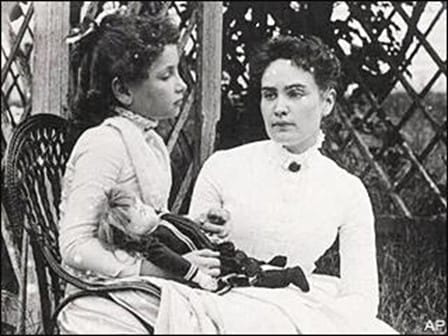
 For some of us, hearing the phrase “The Miracle Worker” brings to mind the story of Anne Sullivan and Helen Keller. In many ways, this story parallels the work that God is doing with all people. The journey of people through the perils of life has created an endless source of lessons and examples that will form part of our memory for eternity to come. The real life human interest story of Anne Sullivan and Helen Keller contains lessons and profound insights into how a mind that was in utter darkness could be brought to enlightenment and reach its potential, not in spite of its physical deficiencies, but because of them. Everyone will reach their full potential, not in spite of the consequences of what Adam did, but because of the lessons and instruction learned through Adam’s fall from grace.

 Helen Keller was a deaf and blind young girl who had lost those senses when she was 19 months old, possibly as a result of a serious illness. Helen had loving parents, but they just did not know how to interact and deal with such challenging problems, so they just let Helen do whatever she wanted.
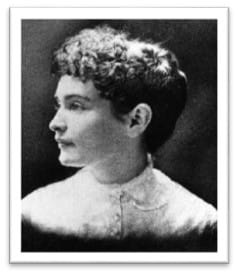
Anne Sullivan had many of her own problems. She began to lose her eyesight at age three, and was virtually blind by the age of five. Eventually her sight was restored enough that she could read for short periods. In spite of her own problems, Anne accepted the position of being Helen’s teacher when Helen was 6 years old.
Throughout the difficult struggle between Anne and Helen, as Anne tried to teach her how to act respectfully and obediently, Anne made some profound statements that can also describe why God has permitted evil to come into the world.
Anne once said to Helen’s father, “I’ve taught her one thing. NO! Don’t do this, don’t do that. I wanted to teach her what language is. I know without it, to do nothing but obey, is no gift. Obedience without understanding is a blindness too. Is that all I’ve wished on her? I don’t know what else to do. Simply going on doing what I’ve done, and have faith that inside she’s waiting, like water underground. …I don’t want her just to obey. But to let her have her way, is being alive to her.”
“Obedience without understanding is a blindness too.”
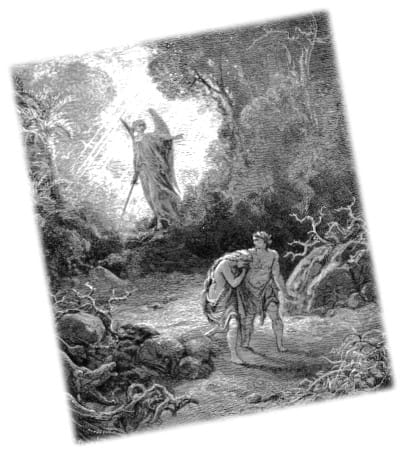 How well Anne’s words describe Adam and Eve. They were told not to eat of one tree. But they were blind to the reason why. They didn’t understand that God would always have their best interests at heart, no matter what the immediate circumstances might look like. God could be trusted in everything.
Because of their spiritual blindness and lack of understanding, they disobeyed. That disobedience led to severe consequences. But like Anne Sullivan also said to Helen’s father, “If you want to help your daughter you have to discipline her.”
Though Helen’s parents loved her, they weren’t really good parents because they didn’t know how to discipline their disobedient daughter. They felt sorry for her and didn’t do what she needed them to do.
 In the punishment of Adam and Eve we see God disciplining His children. God doesn’t just want obedience. He wants people to understand principles. He desires them to do what is right and good because they see the value in those things.
Blind obedience might be OK for a child, but in the end it’s not the noblest reason for our actions. Righteousness brings consequent blessings.
When Anne Sullivan said, “…to let her have her way, is being alive to her,” she was also making a profound statement.
In other words, with understanding comes the most beneficial exercise of freewill.
When people are enlightened to the principles of God, they will be able to choose to live righteous lives. But when freewill is exercised without the proper enlightenment from God, it cannot choose the proper way to live. That’s where Adam and Eve were.
Anne made another profound statement saying, “[Helen] will live up to just what you demand of her.” Helen was comfortable with her old habits. Even after two weeks of enforced discipline, she wanted to go back to her old ways.
In many ways Helen demonstrated something common in most people. People are accustomed to living a certain way and will want to come back to what is comfortable.
The Bible tells us that in God’s kingdom, the laws will be enforced and everyone will have to obey, but someday some are going to test God’s system. Scripture tells us that mankind will someday have a final test. After living in God’s kingdom for 1,000 years there will be a “Little Season” (Revelation 20:7-9). During that time some people will see this as an opportunity to test the system. Maybe someone will do some little thing that they know is wrong, just to see if there will be consequences. If not, they may do something a little worse, just to see if the rules are being relaxed. It will be evident that these people just didn’t get the fact that the enforced rules of the kingdom were to teach them to love righteousness.
 God’s ultimate goal for everyone is not to demand obedience. It’s about teaching people to want to do good.
That’s so much more challenging than enforced obedience. But God is determined to teach the world that the meaning of life can only be found on a higher and nobler plain than most people are living on today.
Helen Keller had a turning point when Anne refused to give up on teaching her and let her go back to her old way of living. Helen eventually came to understand that through her discipline and instruction Anne was really trying to help her. Helen then agreed not to fight against what Anne was doing. She even expressed her love for Anne now knowing that she had her best interests at heart.
Someday, these precious moments of recognition will occur in God’s kingdom. People, who will have fought tooth and nail against the enforced rules of God’s kingdom, will, at some point, have their minds enlightened when they see the value of what the Lord is, at first, demanding of them. Then, they will turn to the Lord in their own “Ah-ha” moment and say, “You’re the teacher. You’re the one with the keys of discipline that have taught me to do good. Thank you for not giving up on me. Thank you for having the wisdom to know what I need to be complete and find my meaning to life.”
These people will then seek out the Lord because they will appreciate all that He has done for them, even when they hated Him.
The scriptures say, “My son, do not reject the discipline of the LORD, or loathe His reproof, for whom the LORD loves He reproves, even as a father corrects the son in whom He delights. How blessed is the man who finds wisdom and the man who gains understanding.” Proverbs 3:11-13
 The Apostle Paul adds this after quoting the above passage from Proverbs, “All discipline for the moment seems not to be joyful, but sorrowful; yet to those who have been trained by it, afterwards it yields the peaceful fruit of righteousness.” Hebrews 12:11
What a feeling of satisfaction Anne Sullivan must have experienced as she saw the light go on in Helen’s mind, and then as she matured and grew into the potential that Anne had seen in her. Jesus, too, must have felt a certain satisfaction as he performed real miracles while here on earth. He was the real miracle worker.
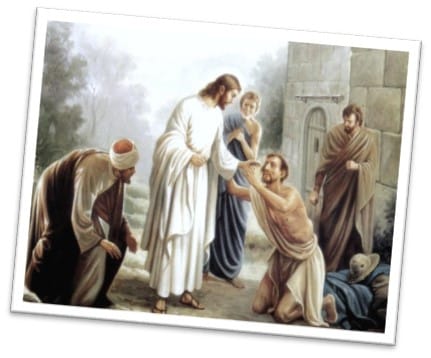
The four Gospels record 37 miracles that Jesus did. But these were only a small sampling of the many miracles He actually performed. The apostle John says, “Jesus did many other things as well. If every one of them were written down, I suppose that even the whole world would not have room for the books that
would be written.” John 21:25
One of the reasons that God gave Jesus that power was to impress on the people that he was someone special, sent by God.

The apostle John says, “…Many other signs Jesus also performed in the presence of the disciples, which are not written in this book; but these have been written so that you may believe that Jesus is the Christ, the Son of God; and that believing you may have life in His name. John 20:30, 31
Jesus also said, “The same works that I do, bear witness of me, that the Father hath sent me.” John 5:36
After working some amazing miracles Matthew says, “…when the crowds saw this, they were awestruck, and glorified God, who had given such authority to men.” Matthew 9:8
 If you were there and saw the works that Jesus did, it would be hard to deny the claims of who He was. And so, this ability to heal was very important in establishing where His authority originated. That was the primary reason for the miracles. But, personally, for Jesus, there was even more to it.
In Matthew 9:36 we read, “As he looked at the vast crowds he was deeply moved with pity for them, for they were as bewildered and miserable as a flock of sheep with no shepherd.”
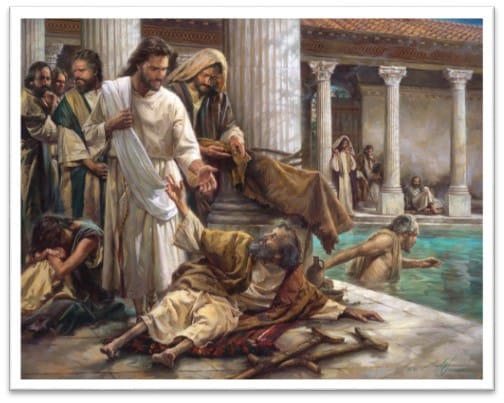 Jesus was a spiritual shepherd, and these were bewildered and miserable sheep. The instinctive nature of a shepherd is to take care of his sheep, especially the weak and wounded ones.
One of the miracles Jesus performed was casting out a demon from a young boy. Before Jesus cast out the demon, He spoke to the boy’s father who was making the request. The father said to Jesus, “…If thou canst do anything, have compassion on us, and help us.”
Jesus said unto him, ‘If thou canst believe, all things are possible to him that believeth.’
And straightway the father of the child cried out, and said with tears, ‘Lord, I believe; help thou mine unbelief.‘” Mark 9:22-24
This was an honest man. He believed, and yet there was part of him that wasn’t sure that Jesus could help.
How much did this man struggle with believing in Jesus after seeing the demon cast out of his son? By doing his part, Jesus helped his unbelief, and that man likely never forgot what Jesus did for him and his son.
Do you ever find yourself saying the same thing to the Lord?

He does help our unbelief! But we have to keep looking toward him and not lose our faith.
Every time that Jesus did a miracle He saw it in a broader context and had a very different perspective than the common observer.
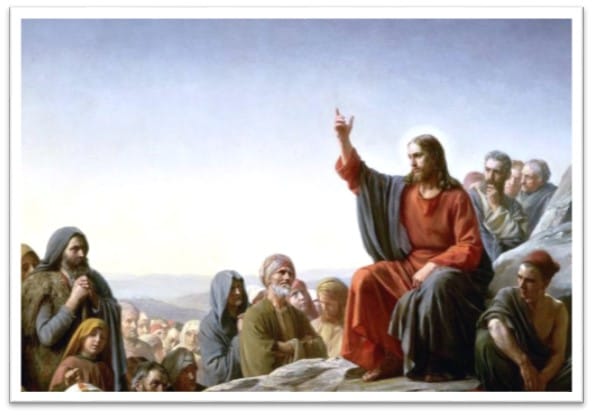 In Matthew 9:35 we’re told that Jesus went to every town and city, “…teaching in their synagogues and proclaiming the gospel of the kingdom, and healing every kind of disease and every kind of sickness.” Matthew 9:35
He was teaching about his kingdom and connecting it to his miraculous power of healing. Jesus knew that when he healed someone, or raised someone from the dead, that person would get sick again, or die again. And so, He saw His miracles as merely small samples of what was to come on a much larger scale in the earthly kingdom.
As we take an overview of Jesus’ miracles we see that they fall into three general categories:

He performed miracles of healing. This would include the raising of the dead, because death is the ultimate sickness.

Then there were the miracles where He exhibited control over nature. Those would include calming the stormy sea, walking on the water, multiplying food and turning water into wine.

And lastly, there were the miracles of casting out demons.
So, why was there such diversity in the miracles of Jesus? It was already mentioned that one of the reasons was to establish His credentials as the Son of God and as the Redeemer. In addition, His healings allowed Him to act on the compassion and pity that He felt for the suffering people.
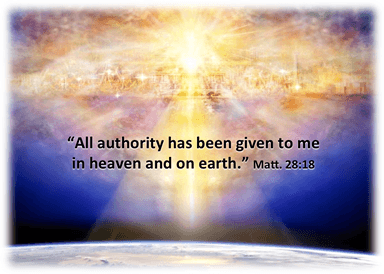 But why did He exhibit power over nature and the power to cast out demons? It was to illustrate the complete authority that He would receive upon His resurrection and would fully demonstrate in the kingdom. There would be nothing that would not be subject to his control.
After His resurrection he said, “All authority has been given to me in heaven and on earth.” Matthew 28:18
His miracles demonstrated what that authority will entail. So, when He healed, when He ruled nature, when He controlled the demons, He was demonstrating the power that He would someday exercise on a universal scale in His kingdom.
With Jesus there will be no possibility of failure. There is no chance that God’s plan will not work. There is no heart that cannot be touched, if it is willing.
If your spiritual ears are open you can hear God’s word for you, and understand that what you are hearing is something extraordinarily unique and special, something worthy of your time and dedication. When you hear what God is saying to you, your perception of things changes.
The Prophet Isaiah says,
“Then the eyes of the blind shall be opened, and the ears of the deaf shall be unstopped.
Then shall the lame man leap as an hart, and the tongue of the dumb sing…” Isaiah 35
Will there be miracles in that kingdom?
Oh yes, so many that they cannot be counted. But there will also be a lot of hard work, discipline, instruction and profound moments of enlightenment. The wisdom of the Great Teacher and Miracle Worker will prevail and a blind and deaf world will be made whole, reaching its full potential.