
“Hosanna! Blessed is he who comes in the name of the Lord! Blessed is the King of Israel!” John 12:13
Near the end of Jesus’ ministry, he visited his good friends, Mary, Martha, and Lazarus, in Bethany. (This was the same Lazarus whom Jesus had awakened from the sleep of death.) He had often been a guest in their home and had been a blessing to them.
To express her appreciation, Mary took a box of expensive perfume and poured it on Jesus’ head and on his feet, wiping them with her hair. A wonderful fragrance filled the room. This box represents our hearts, and the sweet perfume represents good wishes, kindness, and love toward all, and especially to Christ and the church.
One disciple whose name was Judas criticized Mary. He said the perfume should have been sold and the money given to the poor. However, Jesus was pleased with Mary’s example of love and devotion, and said it was like anointing him for his burial. He knew that not many days later he would be taken from them and it would be too late to give him anything.
The next day he sent for a donkey and rode into Jerusalem, as was the custom of Israel’s kings. The crowd of people hailed him as their Messiah or Savior. They scattered clothing and palm branches before him as they shouted: “Hosanna to the son of David
. . . Hosanna in the highest” (Matthew 21:9). Hosanna means praise, joy, and gratitude—similar to Hallelujah.
The Pharisees were unhappy about the attention being given to Jesus and told him to stop the people from shouting. Jesus said they were fulfilling the prophecy of Zechariah 9:9 and if they did not shout, the stones would cry out!
The people thought Jesus would become a great earthly king who would destroy their enemies and they would no longer have to serve the Roman government. But Jesus wept over the city. He knew his kingdom would not begin at that time and that the people would be greatly disappointed and many would be angry, so angry they would soon be shouting for his death!
He went to the temple and saw merchants selling doves for sacrifices. The noise and bargaining were not like a place of prayer. There were huge profits being made from the market booths which went to enrich the family of the high priest. Jesus was greatly offended and drove the money changers out of the temple.
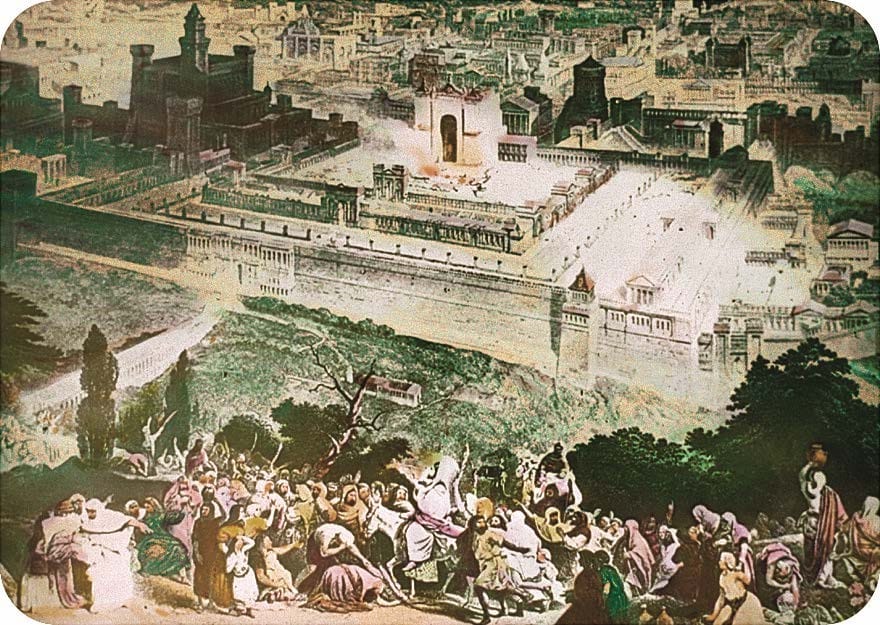 Jesus knew the people would soon be clamoring for his death.