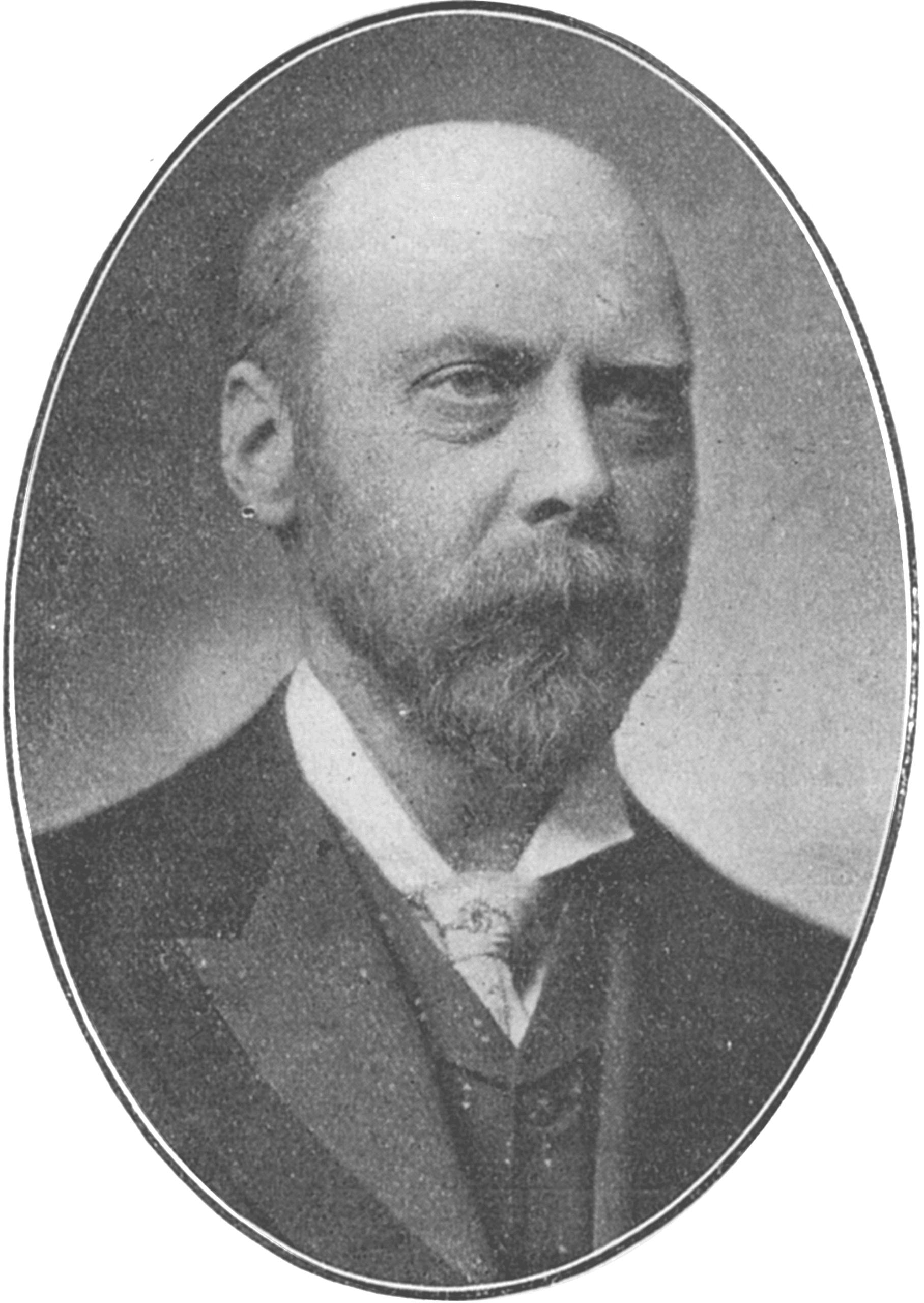
Her Conversion
AUNT Sarah was one of those Christians who could tell the very date of the happy day that fixed her choice on Jesus. It was her delight to recount over and over again the way the Lord had led her to see Him as her personal Saviour. She had been taught that “eternal torment” was the wages of sin, and realised that she was a sinner needing forgiveness. She longed to be “saved,” and earnestly sought the help of Christian friends, but failed to find the comfort of full assurance. She determined to seek till she found; and for several weeks, night and day, with deep anxiety she laboured to enter into the rest of faith. There was one whom she feared might prove a rival to the Lord, and might divert her thoughts from spiritual to earthly hopes. In her earnestness, she prayed that this friend, for whom she had a strong affection, might be kept away till the Lord had taken the first place in her heart. In one way and another the counter-attraction was withheld, and Aunt Sarah was permitted to struggle on undisturbed in her endeavours to gain the light.
Many a sleepless hour she passed in great distress. At last, one night, worn and weary, she cried out to the Lord to give her sleep or she would lose her reason. In the morning she arose refreshed. God, in His love and pity, had answered her cry. She marvelled, and gladly accepted this as a token from the Lord. Later, while preparing the breakfast, and slowly stirring the meal into the porridge pot, she kept repeating these words: “Believe on the Lord Jesus Christ and thou shalt be saved.”
“Do I not believe on Him?” she asked herself. “Surely I do.
I believe He died that I might be forgiven!”
She continued stirring the porridge, thinking hard, then sud- denly said aloud: “ ‘Thou shalt be saved!’ … Why, then, I must be saved! … And is that all I have to do to be saved? Only to believe that Jesus died for me? Oh! that’s just grand!”
The Word of God, in its simplicity, spoke peace to her troubled soul. The first step of faith was taken tremblingly and fearfully, and she dared to believe that her sins were laid on Him who loved her and gave Himself for her.
The joy of this assurance had no sooner begun to fill her heart, than doubts were whispered into her mind. She felt the chill of unbelief. The Adversary suggested that it was too good to be true that such as she could be accepted by the Lord. She felt as if the Evil One stood behind her, and “spurtle” in hand she turned round, and, striking at her unseen foe, cried: “The blood of Jesus Christ cleanseth me from all sin.” And that settled the matter. Doubts on this question never troubled her again. Knowing Jesus called Satan “a liar from the beginning,” she, therefore, then and there accused her enemy of falsehood. Having, by the Word, vanquished him for the time being, she attended to her work, while wave after wave of holy joy and gratitude filled her being. When telling of this experience, she often remarked: “So I began to make the porridge a sinner, and I dished them a saint.” Not only did she believe in the Lord, she gave herself fully to Him.
That evening, for the first time after a long interval, she heard the familiar knock at the hall door. As she joyfully ran to open it, she said triumphantly to the Lord and to herself: “Yes, he can come now, for he can never get the first place in my heart, Jesus is there!” She opened the door widely, her face radiant with a light it never had before. Soon her friend realised that her affection for him had been displaced, and that Sarah, as her name implies, was now a “princess”–one of the daughters of the King. The dear Lord kept her heart for Himself, and never shared it with another. Doubtless it cost her ardent nature much suffering, but she willingly, with her own hands, put from her a union which she knew would not be “in the Lord.” It was not in vain, however, that she made this voluntary sacrifice. The pain it caused deepened and widened the channels of her sympathy as nothing else could have done. Dear Aunt Sarah would not have become so tender and comfort- ing a “mother in Israel” had she never loved and surrendered.
Her Early Work for the Lord
It was soon evident that Sarah Ferrie would not be content to render half-hearted service. Before many days all her friends knew of the change. At once she began to “speak for Jesus,” and the Lord used her as a means of bringing many to Himself. She was most diligent in finding opportunities for service, and soon became well known as an earnest and successful Christian worker. She had many natural nephews and nieces–some of whom became Christian fellow-workers with her–but, as her kind and cheerful disposition rendered her a general favourite, before long others also affectionately called her “Aunt Sarah,” and this became her accepted designation, even by those who did not know her intimately. She regularly visited the infirmaries and sang to the patients, speaking also to many at their bedsides. The “little woman with the black eyes and the black bag”–a description of herself that gave her some merriment–was eagerly looked for and welcomed by many a poor invalid. In the bag she carried little tracts and booklets and some sweets, besides her Bible and hymn book. One rarely saw Aunt Sarah without her satchel.
The temperance movement also claimed her sympathy and support, but she felt this work less congenial. The Saturday night entertainments, intended to afford a counter attraction to the public house, jarred upon her spirit. After a time she concluded that it was not the duty of “saints to amuse sinners,” and accord- ingly she withdrew from the association. And the same lesson was taught her in private life. After her conversion, she was so wishful to demonstrate to her worldly friends that a Christian need not be melancholy, that she let her humour and lively wit have full play. Sometimes she felt she had gone to extremes in provoking laughter and fun at a social gathering. After an evening of such “innocent mirth-making” she was occasionally troubled in mind, and once wistfully remarked to a Christian niece: “I’m afraid,
Minnie, I can’t call all that nonsense sanctified humour!” Step by step her Lord led her to devote her winsome joyousness wholly to His service.
It flashed most brightly in the testimony meeting. If Aunt Sarah were present she was usually among the first to recount some evidences of her Father’s love and goodness. Those who knew her best are well aware that she had to struggle against a natural shrinking from taking a prominent place. We are glad she overcame so often, for we remember many a helpful lesson she thus passed on to us. She was almost invariably humorous, but the Lord used the laugh to break down any restraining stiffness. It was always easier for others to speak after Aunt Sarah had testified. Besides the laugh helped to fix the lesson in our minds.
A testimony given about ten years before her death still lives in the memory of some. It is so typical of her bright homely style that it will bear recording here.
She sat in the front seat, and as she stood up, turned round with face aglow to tell us of one of her encounters with our old enemy. “I want to tell you of this attack of his,” she said, “that we may be the better fortified against his devices. I was having a real happy time the other day, when all at once didn’t the devil pull out something from behind me–a something that I had done a long time ago, and that I felt ashamed of–and held it up before my face and said: ‘There, now! how do you like that?’ ” As she spoke, Aunt Sarah acted the part, and our eyes as well as our ears took in the lesson. “ ‘Like it!’ I cried, ‘Why! I don’t like it at all! !’ and down went my heart to my boots–ay, and right through them too!” And she heaved a sigh that could be heard by us all, but the look of triumph in her eye was undimmed. “Well, I kept looking, and the devil held it up for me to see every bit of its ugliness. The more I looked, you may be sure, the worse I felt.
“But the Lord came to the rescue–suddenly the texts flashed into my mind: ‘Forgetting the things that are behind … I press on,’ and ‘Thou hast cast all my sins behind Thy back’ (Phil. 3:13, 14; Isa. 38:17), and it just seemed as if the Father said to me: ‘Sarah, why are you trying to get behind me to look at what I’ve cast there?’ So I cried: ‘Lord, I’ll refuse to look any more. I’m determined by Thy grace, I will forget the things that are behind.’ Oh, how my heart jumped for joy to think that God has covered up ALL my sins. I feel I want to praise Him more than ever, and to press on in the race for the prize set before me.”
Believing in eternal torment and the inherent immortality of the soul, she felt it incumbent upon her to solemnly warn sinners of the dreadful fate of the unconverted, but, as she afterwards affirmed, “I never enjoyed telling of that–I liked best to present the love of God.” Yes, the eternal torment of the unregenerate is a belief which throws a deep shadow on the character of Him in whom is no darkness at all. “I never liked to feel that I had to apologise for God in designing such a fate for so many of His creatures. But if the Bible said it then I have to believe, whether I liked it or not. Oh! how grand to know that the Bible teaches no such thing!”
If we would comprehend the full extent of Aunt Sarah’s devotion we must bear in mind that she was in no way a woman of leisure. She earned her living as a bedding merchant in the city, but while attending to her business she contrived to spend as much time as possible in more direct service to the Lord. “I was always real hungry for a blessing, and wherever I heard something good was to be got there I tried to go.” Whenever she received it she busied herself to share it with others.
When, from time to time, special services were held for the deepening of the spiritual life, Aunt Sarah was sure to be present. She testified to blessings received at these meetings, and believed that through the help there obtained she entered more deeply into the joys of full surrender. Most of her jewellery was parted with for Foreign Missions, and some favourite trinkets were given to help in the conversion of the Jews. In all this the Lord was preparing her to receive fuller knowledge of Himself. She began her Christian life in the State Church of Scotland, but soon found it too cold and formal. When she came into the light of present truth she was a member of a very earnest branch of the close sect of the Plymouth Brethren. This she designated “one of the best little bits of Babylon that could be found.” “The path of the just is as the shining light that shineth more and more unto the perfect day,” is a text she often quoted, and wherever she saw the light shining, there, by the grace of God, Aunt Sarah followed on.
By and by she began to have doubts about the eternal torment theory. Her eldest sister (Mrs. Hodge, of Gourock) and she often discussed the subject with a measure of timidity and fearfulness, lest they should stray from the teaching of Scripture. The fate of the heathen also gave them some concern; but, like many others, they could find no comfort save in the words of Abraham: “Shall not the Judge of all the earth do right?” They were assured God could never judge unrighteously, and that as the heavens are higher than the earth, so are His ways and thoughts higher than ours. The more they developed into the likeness of the Perfect Pattern, the less could their hearts be satisfied with the assurance of merely their own salvation and that of the few, who, in this life, find the strait gate and walk in the narrow way.
On one occasion, during a series of meetings for special prayer, after listening night after night to loud, repeated, and long-drawn-out supplications, Aunt Sarah felt her soul revolt at the improper conception of God these petitions betrayed. She told one of the leaders she thought they did not honour the Lord enough Surely, instead of imploring further, it was now time to begin thanking the Father for all the glorious things He had covenanted to do. She believed the rich promises regarding the prayer of faith offered in Christ’s name, and fully assured that she would behold great and wonderful things (Jer. 33:3; Matt. 21:22), determined to sing His praises for the blessings that were on the way.
This incident occurred about a month before the Lord caused His light and truth regarding the “Plan of the Ages” to shine into her mind. Truly her Father heard her prayers, and granted her a rich token of His acceptance.
Her eldest sister came first into touch with the writings of Pastor Russell, and quickly saw that they unfolded many precious truths hitherto hidden from her view. She at once gave Aunt Sarah a copy of the first three volumes of “Studies in the Scriptures” and urged her to read them. So multifarious and incessant were her labours for the unconverted, however, that she had no time for a new study. She must read her daily portion of Scripture, as well as her religious papers and Spurgeon’s weekly sermon, and she would not be denied time for prayer. Her sister tried in vain to thoroughly arouse her to the importance of this fresh light that, surely, God Himself had directed to come within her reach. “I mean to read them, but I am really not able to find the time,” she would answer. At last Mrs. Hodge got over the difficulty by sending an urgent invitation to Aunt Sarah to spend a few days with her during the visit of her son and his friend, Brother Hemery, from Manchester.
Greater Light
While at Gourock she heard “great and wonderful things.” Many puzzling questions now became clear to her. Misty, vague wonderings gave place to well founded hopes, built upon the infallible Word of God. A “thus saith the Lord” settled for her many disputed points. Brother Hemery traced, step by step, God’s plan as revealed in the Bible, and demonstrated the distinctive work and purpose of each Age. He opened up to her wondering eyes the glorious hope for the few (the Church) and the blessings for the many (the world in the Age to come). He clearly proved that death–not an endless existence in misery (as the creeds declare), but extinction of being–was the penalty God pronounced upon sin. He opened to her the Scriptures, showing how the man Christ Jesus bore the guilt of all. “He, by the grace of God, tasted death for every man.” (Heb. 2:9) He “gave Himself a ransom for all.” (1 Tim. 2:6) Therefore, every man must, in due time, partake of the benefit accruing to the race by the sacrifice of Christ.
“But would that not mean a second chance?” asked Aunt Sarah.
Brother Hemery proceeded to make clear how the first chance or opportunity for eternal life has never yet been offered to every man; that in this Age only the few have heard with their natural ears, and that even of these fewer still have heard with their understanding. Jesus said: “He that hath an ear, let him hear,” and “Unto you (His disciples, the few with the hearing ears) it is given to know the mystery of God, but unto them that are without all these things are done in parables, that seeing they may see and not perceive, and hearing, they may hear and not understand, lest at any time they should be converted and their sins be forgiven them.” Aunt Sarah felt as if this familiar passage was being brought for the first time to her attention.
“Did Jesus not wish all to understand His words?” she queried.
“No,” came the answer; “He did not desire that all should know then, nor that all, even now, should know; but the day is coming when all the blind eyes will be opened and all the deaf ears unstopped (Isa. 35:5), because Satan, the ‘god of this world,’ who now blinds the minds of them which believe not, will be bound, and no longer permitted to deceive mankind in the next Age– when Christ’s Kingdom is set up on the earth. Then the knowledge of the Lord will cover the earth as the waters cover the sea.” “Yes,” she agreed, “that will come to pass in the Millennium.
I have always believed that, but what about the unbelievers who die in ignorance now? And what about the heathen?”
After a careful study of Matt. 11:20-27, in connection with Ezek. 16:44-63, Aunt Sarah saw that the wicked cities of Sodom and Gomorrah, which God, in His wisdom, had seen fit to destroy, were not so evil in His sight as were the Jews who sinned against greater light and knowledge; and yet it was God’s purpose to restore both Jews and Sodomites to life and grant them a “tolerable” time in the great day of Judgment, when Christ will reign to bless all. The Sodomites, not having been so hardened in heart as were the Jews through their resistance to the ministry of Jesus among them, will not require the severe discipline that the Israelites will receive in that day. This is proved by the statement of Jesus that had these cities seen the works of His first advent they would have repented in sackcloth and ashes. If He knew that Tyre, Sidon, and Sodom would have accepted His message had He been sent to them, surely God would know that also, and if God knew that and also had foreseen–as the prophecies clearly show He did–that the Jews would reject Jesus’ witness, why did the all-wise, all-loving, almighty and just God not send Jesus to the Sodomites, who would have accepted Him, instead of to the Jews, who rejected Him? And if the Jews, who refused to accept their Messiah, were to be lost for ever, and consigned to eternal misery, why did the gentle Jesus, who came to die for all, thank the Father because He had hidden these things from the wise and prudent, and revealed them unto babes? And yet the wise and prudent, in their own sight, are the very class that, according to the creeds of men, are doomed to eternal woe.
Jesus rejoiced because He knew that those at present blinded will arise from the sleep of death at His call in the next Age, and will then be granted a full opportunity for eternal life. Those who, at that day, will come into harmony with God’s law of righteousness and love, rendering obedience to Christ, the King and Judge, will obtain all the blessings that Adam by his disobedience lost for the race, and that Jesus, through His death, won to restore to all.
It brought great joy to Aunt Sarah’s loving heart to be convinced that the future work God had designed for her, and for all His saints, was not to spend eternity singing hymns and playing a golden harp in heaven, but to be His great instrument, as a joint- heir with Christ, of blessing all the families of the earth. In after days she often referred to the satisfaction of heart and mind brought to her by the realisation that she was part of the great seed of Abraham, whom God had sworn not only to bless, but to make the blesser of all. (Gal. 3:8, 16, 29) With her wide knowledge of Scripture she quickly recognised that many seemingly contradic- tory passages were thus made harmonious, and such verses as Acts 3:19-21, 15:14-18, acquired a new and fuller meaning. Before long she saw for herself several instances where the “false limits” of man’s teachings had obscured the Word of God, and quoted numerous texts in proof of the truths now being presented to her.
The subject of our Lord’s Second Coming had, for many years, claimed much of her thought and study, but only now did she learn the true and worthy object of His return. It made her long all the more for His advent. For years the signs of the times had indicated to her that this great event was almost, if not quite, due to take place. Night after night she had retired to rest hoping to be awakened by the literal sounding of the great trumpet and the voice of the Archangel, to see the Lord descend from the heavens in human form, while she would be “caught up” bodily “to meet Him in the air.” She often quaintly remarked, in her desire to press home her teaching on the “rapture of the saints,” that “the undertakers will never make any money out of me.”
The last evening of her visit in Gourock (7th June, 1897) was the most momentous. It was only a few hours before leaving for Glasgow that she learned how erroneous were her views on the manner of Christ’s Second Coming. She had been expecting to see Him as a man in the flesh, in the body of His humiliation, with her natural eyes, instead of recognising through the eyes of her faith and spiritual understanding, the fact of His presence in the world as a glorious spirit being, the express image of the Father’s person. Brother Hemery pointed out to her the change of the word “coming” to that of “presence” in the R.V. margin, and emphasised the great difference in the meaning of these two words. Thus, instead of looking for signs that the Master was about to arrive (of the day and hour of His coming none on earth was to know beforehand), we are exhorted rather to look for signs whereby we would know when He was present–that His arrival had already taken place. As gently as possible, her brother in the Lord unfolded to her his belief that the time prophecies of the Bible, as well as the signs of the times all pointed out that the Lord had returned and was already present doing a work preparatory to establishing His Kingdom on earth. Matt. 24:27 was read with new and startling meaning. The word “lightning” was shown to be a poor translation of the Greek word “astrape,” which signifies “bright shining” (as given in Luke 11:36), and really refers here, as the context indicates, to the sunlight which shines always from the east even to the west, while, on the other hand, lightning flashes in a variety of directions, wherever the electrical forces producing it may be discharged. When the word “presence” is substituted for “coming,” the statement is seen to declare that the presence of Christ will be like the sunlight, gradually illuminating the world. Those who are awake and watching, the children of the light, are the first to discern and rejoice in His presence. The children of the night and of the darkness will awake when the Sun of Righteousness will arise in His full glory, and all the sin-sick will rejoice in the healing to be gained through the influence of His rays. “As it was in the days of Noah (the days when Noah was present on the earth) so shall it be also in the days of the Son of Man (when He will be present on the earth). They did eat, they drank, they married wives, they were given in marriage, until the day that Noah entered the ark … even thus shall it be in the days when the Son of Man is revealed.”–Luke 17:26-30
Aunt Sarah cried out in amazement: “He’s here! The Lord has come!” She could hardly restrain her excitement. Question after question came tumbling forth, and like snow before the early sunshine, her difficulties dissolved in the new found light. At last she had the right understanding of the Lord’s return. She concluded that, after all, the symbolic seventh trumpet and the voice of the Archangel had suddenly awakened her to see the glorious sunlight of her Lord’s presence, stealing unawares, like a thief, upon the world. Brother Hemery had never, in all his experience, met with one so “ripe and ready” to discern the truth now due to the household of faith. Her nephew and he felt it wise to give her a word of warning that she must not expect to find all ears as open to the truth as her own had been, and remarked that the truth was like a sword, dividing friend from friend. “Ah!” she quickly replied, “my friends are not of the worldly so called Christian class–mine are the real jewels of the Lord.” She was impatient to get home with the good news, and determined to quickly arrange to have a meeting gathered together of the best of her religious associates. There and then Brother Hemery was engaged to give them a discourse on the “Plan of the Ages.” When the time for leaving came, she could hardly tear herself away, and she had to run to catch the last train. Brothers Hemery and Hodge accompa- nied her to the station, and just as they parted they exhorted her to be careful as to how she told of the fresh light she had gained.
The train had scarcely started when Aunt Sarah, with joy beaming in her face, began to tell a lady–the only other occupant of the compartment–of the good things she had been hearing, and ended by asking her in an earnest tone if she knew the Lord had come! At the first station the lady changed in haste into another carriage, and Aunt Sarah was alone for the rest of the way!
One night, a few days after her Gourock visit, doubts and questionings arose in Aunt Sarah’s mind about the Lord’s Presence. She found it difficult to get entirely free from long cherished ideas. What about the descent of Jesus on Mount Olivet? How should that be understood? And then He was to come suddenly to His temple! (Mal. 3:1) “The Lord, whom ye seek, shall suddenly come to His temple, even the messenger of the covenant whom ye delight in, behold He shall come, saith the Lord of hosts,” kept repeating itself in her mind. As she brushed out her long hair before the mirror, she wondered where this temple could be, and asked aloud: “Where is Your temple, Lord?” doubting if He could be present on the earth when, as yet, there was no temple ready to receive Him. As she gazed abstractedly into the glass, brush in hand, suddenly, like a flash, the words: “Know ye not that ye are the temple of God, and that the spirit of God dwelleth in you” (1 Cor. 3:16) illuminated her mind. “Oh!” she cried; “Your temple is here! And, Lord, You have come to it!” At once she saw that the Lord could find no earthly building a fit habitation for Himself, but could dwell by His Spirit only in the consecrated hearts of His espoused; and only to these He revealed, by His Word, the signs of His return to earth–“We walk by faith, not by sight.” Her gratitude and welcome to her King expressed itself in tears as she renewed her vow of consecration.
Early Labours in the Harvest Field
To be convinced of the truth was to Aunt Sarah a commission from the Lord to proclaim it. Despite warnings not to be too expectant that her friends would see eye to eye with her, she was so confident of the sincerity of their desire to know and do the will of the heavenly Father that she joyfully made arrangements for the meeting Brother Hemery had agreed to address. About thirty of her most intimate religious associates were invited, among whom were some well-known evangelists and diligent Christian workers. As she glanced over the audience she was glad and thankful that the Lord had blessed her efforts to gather together such a godly company. Speaking of it later, she said the cream of her fellow-labourers were there–indeed, a crème de la crème of God’s people in Glasgow.
In his lecture, Brother Hemery sought to make clear how the death of one man, Christ Jesus, could be a “corresponding price,” a ransom for all. He emphasised that Jesus was the “Son of God,” and not, as the creeds erroneously state, “God the Son.” He proved that to redeem man it was necessary for Him to lay aside the spirit nature that He possessed while with the Father in glory, and become flesh and yet separate and distinct from the rest of mankind, who are sinners and condemned to death. Jesus being born of the virgin Mary, was “holy, harmless, undefiled, and separate from sinners,” and, though on the human plane, still the Son of God. Adam, also, when pure and sinless, fresh from the hands of His Creator, was designated a Son of God. (Luke 3:38) He was in the image of God, and the federal head of his race. The man Jesus, mature at the age of thirty, in full possession of all His rights to perfect human life and its earthly blessings, could offer Himself as Adam’s equivalent–a ransom or corresponding price. Adam lost perfection of being and life by his fall, not only for himself but also for the whole human race. Jesus, surrendering His unforfeited life, became the Redeemer of Adam and his race. The possible race in the man Jesus offset the race in Adam. The balance was perfect.
Brother Hemery showed how the Father, accepting of Jesus’ sacrifice, raised Him from the dead “a new creation,” and highly exalted Him to a more glorious condition and nature–raised Him to have “life in Himself,” immortality, and that now Jesus is on the throne of His Father, the express image of His Father’s person. Jesus can now give human life and its accompanying blessings to whomsoever He will, and in due time, as the Second Adam, will give life to the entire race. But first, before the blessing of the world can take place, the Church, the Bride of Christ, must be perfected, proved and made worthy like her Lord, through suffering and death. To her is given the privilege of surrendering by faith the perfect human life she sees awaiting all the obedient in the next Age. Now cleansed by the precious blood of Jesus, she offers herself a “holy sacrifice,” and shares in Christ’s death, that she may share also in His resurrection, and become partaker with Him in the Divine nature and glory.
The speaker was allowed to proceed undisturbed for about an hour, but he saw from his hearers’ faces that prejudice and pre- conceived ideas were barring the entrance of the truth. At last one rather pompous minister arose, and, bristling with suppressed feelings, announced that he desired “to ask our young friend a question on a certain point, that will require only a ‘yes’ or ‘no’ for answer.”
Many murmured their approval of his suggestion, and Brother Hemery consented to the question being stated.
“Will our young friend tell us if he believes Jesus was Divine while on earth. Yes or no?”
Realising that the questioner might easily have misconstrued some of his remarks, Brother Hemery began to explain what he understood by the term “Divine,” but he was not allowed to continue. The voice of the minister grew hard and stern as he repeated his question, and demanded yes or no for an answer. Brother Hemery quietly replied: “No, Jesus was not Divine during His sojourn on earth.”
With a triumphant “Ah! I thought this was the teaching,” and with a gesture of offended piety, the questioner made a movement towards the door. One by one the entire audience arose and followed him. Many were the lamentations over Aunt Sarah’s deflection from the constricted path of orthodoxy. She defended the truth with some vigor, and replied to some questions put before her with such clearness and assurance, that one missionary, looking around on the astonished group, and lifting up his hands in consternation and surprise, declared: “Why, Aunt Sarah has swallowed this American doctrine holus bolus!”
On another occasion, when with a company of her old friends, and seeking to help them see the beauty of “restitution,” and “death the wages of sin,” one remarked that he feared she had gone off her head, and another that she had a devil. But one minister, who sat quietly listening to those cutting remarks anent Miss Ferrie’s fall from truth and grace, looking kindly into her distressed and disappointed face, exclaimed with sympathetic penetration: “Ah! she hasna’ lost her Jesus. I see Him in her eyes!”
The following incident, which occurred many years after her “change of views,” reveals the bitterness that was engendered in the hearts of these religious associates by her faithfulness to the Word of God.
One afternoon, as she was on her way to pay a visit, Aunt Sarah noticed an old friend, an evangelist, coming down the road towards her. Several years had passed since they had met, and her heart warmed up at sight of him. She knew that he, poor man, still taught the errors she had been so mercifully freed from, and was still an opposer to the truths that she rejoiced in, but, remembering the fellowship they had long enjoyed together, and believing that in spite of his erroneous beliefs, he still loved the Lord, she stopped as he, unaware of her approach, drew near. Holding out her hand she kindly greeted him. He stopped abruptly, recognised her, and, staggering a few steps away, held up his arms in front of him, as if to ward off a blow. Averting his face, he uttered a peculiar quavering cry, and kept retreating from her, while with wide-spread hands, palms outwards, he motioned her away.
Poor Aunt Sarah gasped in amazement, while her heart seemed for the moment to stand still. In her bewilderment she also stepped backwards a few paces, then, recovering herself, quietly walked away.
Shortly afterwards she glanced backwards and saw her former friend still waving his arms before him, and heard him emitting his strange moaning cry.
When telling of the occurrence, Aunt Sarah assured us that it was a real satisfaction to have it so forcibly demonstrated to her that she had become to some at least of her old associates part of “the offscourings of all things,” but she confessed the suffering, though short, had been keen.
Some of her religious friends felt that Aunt Sarah’s sudden
change of beliefs and enthusiastic efforts to make these known must be due to mental unbalance. They persuaded her relatives to consult a doctor as to the state of her mind. Doctor John Edgar was called in, but, to their surprise, he pronounced her mentally sound.
A few years later, after Doctor Edgar had become to her a brother in the Lord, they often humorously recalled the incident. At that time the only interest he had in her was that of a doctor towards his patient. He could not remember the subject of their conversation, but was glad he was used to certify that she had the spirit of a sound mind.
The news of Miss Ferrie’s “new religion” spread quickly among her associates, but few troubled to investigate her so-called strange beliefs. She published a leaflet in which she presented Scriptural proof that her present faith was entirely founded on the harmonious teaching of the Word of God. Besides distributing this among her former co-labourers, she gave each of her more intimate religious friends the first three volumes of the “Studies in the Scriptures.”
Though for a long time no response came to encourage her, she kept toiling on, content to endure for the Lord’s sake the misunderstanding, the ostracism, and measure of persecution to which she was subjected.
To her who so loved fellowship this isolation must have been very trying. Save for occasional talks with her sister in Gourock, and her niece, Mrs. Greenlees, for months she had no fellowship. She eagerly seized, however, whatever opportunities came her way to tell the Glad Tidings, and used her daily avocation as a means for serving the Lord. She placed some copies of the “Studies in the Scriptures” and various booklets in her shop window, and inside had neat little pigeon-hole shelves arranged to contain the various tracts and pamphlets in order, to be ready for handing out to her customers as she changed the subject of conversation from bedding to doctrine.
An elderly relative, who frequently stepped in to see her, used to ask with a touch of sarcasm in his manner: “Well, Aunt Sarah, have you got anyone into your new religion yet?” And Sarah would reply: “Not yet! But if the Lord keeps me waiting it will be all for a purpose.”
One old friend asked her: “To what sect do you now belong?
Tell me, Aunt Sarah, what are you?”
The answer came slowly as she thoughtfully replied: “What am I? I am just a voice crying in the wilderness, ‘There standeth one among you whom you know not.’ ”
But the wilderness was not a barren place to Sarah. There, as she often declared, the Lord spread for her a table, and she realised a closer union with Him than she had ever previously enjoyed. She grew strong as she waited on God. The more she studied, the more convinced she became that the teaching of Pastor Russell is indeed harmonious with the whole Bible.
By and by she heard that a little company who had similar hopes and beliefs met regularly in a tiny dingy hall in a poor locality, and as, for the first time, she passed through the narrow close and up the dark stair, she determined that if she could meet the Lord and His freed men there, she would find delight in frequenting it. She soon discovered, however, that the leader of the meeting was not at all clear on some of the main features of the truth, and that some in the class were apparently further advanced than he. Sometimes, also, those who were invited to address the Sunday evening gatherings were ignorant of the fundamental doctrines. Realising that the meeting was unprofit- able to her, and that she learned more by spending the Sundays in private study and prayer, she wrote, placing the matter before Brother Hemery, asking his advice. His answer was a reminder that the will of God was her sanctification, and whatever course she took should be with a view to the promotion of that end. She, accordingly, ceased to attend this meeting, which, before long, was disbanded.
Encouragement
Sister Greenlees was as zealous in seeking opportunities to spread the Glad Tidings as Aunt Sarah, but by her circumstances was more hampered in her efforts. Although, like Aunt Sarah, she had given most of her jewellery to help in mission work, a five diamond ring, which had been a present from her mother, was still a valued possession. Knowing her aunt had used up all the money she could possibly spare in the purchase of literature she had given away, she obtained her mother’s permission to sell her ring, and gave Aunt Sarah part of the proceeds to purchase more volumes. They asked the Lord to guide them in giving away the books. Among others, Aunt Sarah was led to think of some business friends with whom she had had long and friendly intercourse, and with some trepidation she presented several of them with copies of “The Divine Plan of the Ages.” She waited results with a measure of hopefulness, though willing to see no fruit from her labours, if that should still be her Father’s will for her.
Not many weeks elapsed before she received her first great encouragement in her work. One day, while in a warehouse on business, one of the heads of the firm came forward with some eagerness and said: “That’s a fine book you left for me the other week, Miss Ferrie!” Her heart beat quickly as she assented. Circumstances allowed of little more being said at that time. Those who knew Aunt Sarah need hardly be told that she discovered business required her to call again very soon. On this occasion the same gentleman left his desk and came forward to speak with her. With greater emphasis he again remarked: “That is a fine book you have given us, Miss Ferrie. We are reading it and enjoying it, and would like to have some copies to give away to our friends.”
“Oh! Mr. Edgar,” she said, “I would like to have a long talk with you about that book.”
In a busy office it was not convenient for them to discuss the questions that she knew from experience would probably arise in his mind. He had known her from girlhood and had always taken a kindly interest in her business affairs, but as he then smiled down on her, and spoke of the pleasure he had in seeing the wider view of God’s love and mercy, she felt there was now a new and stronger bond between them. Before she left he handed her a one-pound note, saying: “Buy books with it!” Grasping the money, and holding it fast, she went down the stair into the street as if on wings. “The very feel of that pound was good to me!” she remarked afterwards. It sent a thrill of joy through her, for it evidenced much genuine interest in and appreciation of the Truth. Her delight and gratitude brimmed over in praise and thankfulness. What good fruits from the sale of the ring! How her niece would rejoice! As one after another of Mr. Edgar’s family came into the Truth, Aunt Sarah would remark: “Another jewel of the Lord gathered in place of Minnie’s diamonds!” When at last she could count five of them as one with her in the Lord, she felt her cup was running over. Whenever she saw any of the five manifesting evidences of growth in grace and knowledge, or saw them specially used of the Lord, she compared it to the sparkling and the flashing of the diamonds.
About the same time Aunt Sarah received further encouragement through an old friend and her husband, telling of their thankfulness “for these three books you gave us.” Although not associated with her in religious work, their friendship was in the Lord and dated from a year after Aunt Sarah’s conversion. At the close of one of Mr. Moody’s meetings on a beautiful summer Sunday morning, in the year 1874, Aunt Sarah, with her usual readiness to help, asked an earnest listener who sat beside her if she were a Christian.
“No, but I’d like to be,” came the answer.
In the course of a short conversation, Aunt Sarah told how she had found rest in the Lord.
Although what she then said did not seem to help her companion in her endeavour to find the path of life, yet it was the beginning of a life-long Christian friendship. Next Sunday morning, at the sparsely attended prayer meeting arranged for young converts by an elder of the Established Church which Aunt Sarah attended, she was astonished to see her new acquaintance come in. It was only then they learned that, although quite unknown to each other, they had for years frequented the same place of worship. At the close of the little service, Aunt Sarah introduced her new friend, Miss Sharp (who afterwards became Mrs. Tait) to the leader, with a word as to her spiritual condition. An earnest talk followed. He enabled her to see that already she was justified by her faith in Christ, and that the sanctification she yearned for is not, like justification, the work of a moment, but is a gradual growth continuing throughout the life of the true believer.
Brother and Sister Tait were the only two of her old friends in the Lord who came into the full knowledge of present truth, but along with them came three of the latter’s sisters, all of whom had been scholars in Aunt Sarah’s Sunday School class.
The Back Shop
Aunt Sarah’s bedding shop had fairly large premises at the back. Here it was furnished with sofa, table, and chairs, and a cheery fire burned in the grate. Wednesday afternoon was a half-holiday for the shop assistants, and she saw in this an opportunity to use her warehouse in the Lord’s service. Then the sewing machine and articles used for business purposes were placed on one side, and with the help of screens and curtains the back shop became a cosy parlor. Here, for a long time, she had regularly enjoyed a season of fellowship with her friends.
After she came into the Truth and her former associates had separated themselves from her, the back shop seemed desolate. But it had been devoted to the Lord, and although, through her faithfulness to His Word, it remained unused, it was only that the Lord might, in due time, the more abundantly magnify Himself through it.
About a year and a half later the parlor began to fill again. The first week-night meetings of the friends was held here on Wednesday evenings. Brothers Crawford and Cormack, whom Aunt Sarah had met in the dingy hall in the city, regularly attended, and proved a help in the Bible study. Now and then the class was cheered and stimulated by the welcome presence of the late Brother MacKerrell of Greenock. On Wednesday afternoons a few sisters gathered for fellowship and to recount experiences, as well as for mutual assistance in answering puzzling questions. Sometimes a Bible reading or “Chart Talk” was given. All these gatherings are precious memories to those who were privileged to meet there. The numbers steadily grew, for every one who sought to herald the Glad Tidings found some hearing ears and hearts prepared for the word of the Kingdom. Every few months fresh impulse was received through the pilgrim visits of Brother Hemery from Manchester. His able and untiring efforts to instruct and exhort the friends were greatly blessed of the Lord for the building up of the Church.
Many a happy tea party was held in the back shop. The table was enlarged by means of a board on trestles, and many willing hands assisted in getting all things ready for “the business brothers and sisters” when they would arrive after their day’s toil was over.
Among those who gave freely of her time and strength was Sister Emma Ferrie, Aunt Sarah’s sister-in-law. Her assistance was much appreciated by the friends as well as by Aunt Sarah herself, who continually affirmed that she could never do so much in the Lord’s service, both in and out of the shop, were it not for “all dear Emma does for me.” The loving harmony manifested by all the friends was very sweet–a foretaste of the heavenly joys. The thought of the eternal nature of our relationship as brothers and sisters in Christ helped us to consider our friendship very precious and sacred.
Aunt Sarah was a born organiser. She kept us all busy. No idlers could hope to remain long in her company. They either felt compelled to do something or became so uncomfortable that they withdrew.
The beginning of the volunteer work planned by Brother Russell, found Aunt Sarah keen to make full use of such a grand chance to give Glasgow a witness. All the tracts we received from America were stamped with her business address and an invitation to the reader to call or write for more literature.
Many who came in response looked for a bookseller’s shop, and gazed inquiringly when they found the given number was a bedding warehouse. Before long, a glass case that hung at the door, or a book or two reposing among the mattresses in the window, caught their eyes, and a minute later they were inside conversing with Aunt Sarah. The inquirer for books was always made far more welcome than the purchaser of bedding.
On special occasions, when large religious meetings were announced in the city, Aunt Sarah was usually the first to propose “serving the audience with tracts!” We gathered in the back shop for our instructions and our bundles, as well as to encourage each other for the fray. Some of us went out with grim determination not to give in to the flesh, but Aunt Sarah was an example of loving grateful service. One babe remarked: “It’s easy for you, Aunt Sarah, to give out the literature. I believe you actually love doing it.” “My word, that I do! And I believe you like it too. Now, don’t you think it just fine to have such good things to give away! I’m sure you do!”
In the Train
A journey by rail meant, to Aunt Sarah, an opportunity for witnessing which she was keen to take advantage of. Most people, in looking for a seat, seek a carriage where there is plenty of room, but it was not so with her. She always selected a well-filled compartment, and tried to make a choice of her company. To see a person dressed in mourning would be a call to her to take a seat close by. Seldom did Aunt Sarah travel without requesting that if any one in that train was hungry for the truth, the Lord would arrange for her the opportunity to present the glad tidings. On many occasions she was glad to note that He answered her prayer.
Few are so apt as Aunt Sarah was in bringing the Bible into the conversation. Her bright, loving face and cheery manner enabled her to say and do many things which, from others, would have been resented. Then her sweetie-bag was a grand introduction–a neat, tiny article of brightly coloured silk, which she always carried with her, filled with “imperials”–a hard sweet that would not soil the most delicate gloves. If by good fortune someone coughed, Aunt Sarah would at once dive into the recesses of her black velvet satchel, and taking out the bag, would pass it open to the afflicted one with a kindly smile and a warm invitation to have a sweet. Then she would turn to the others in the compartment and say: “I think we’ll just pass round the bag–a sweet’s not a bad thing. There, I’m sure this little girl agrees with me!” As Aunt Sarah would remark, in telling us how to do it, “Then all the folk now being in a good humour, they could hardly refuse to accept something real good–a tract!” These she kept in her satchel neatly folded, and assorted so that she could easily find the one she desired. A soldier would as soon go to battle without his ammunition as would Aunt Sarah set off without her tracts.
On one occasion, two mothers, with some children, were among her fellow-travellers. After she had given the little ones a sweetie each, one of the women volunteered the information that they were all returning from a holiday. “Ah!” cried Aunt Sarah, sympathetically, “it’s real good to have a holiday. And it is good to know the poor world is going to have a grand holiday that will last a thousand years!” Of course, the ears of all in the compartment were opened by this statement, and soon she had an interested audience listening eagerly while she unfolded the plan.
Often, in lieu of a better opening, Aunt Sarah would remark how everybody seemed to travel nowadays, and yet so few knew that all this travelling was foretold in the Bible as a sign of the “time of the end.” Then Dan. 12:1 formed the basis for a talk on the signs of the times. She never forced her remarks on anyone, but gently felt her way, eager to step in where the Lord opened the door.
Her zeal in making use of railway travelling was much encouraged by a testimony Brother Phillips gave at a convention a few weeks before his death. He was a “commercial,” and regularly visited in rotation several towns within a certain radius of Glasgow. He usually travelled by the same train on each route, and as it is the habit of commercials to fraternise in groups in the various compartments, he first gave out tracts to all his acquaintances, and then going each morning into a different compartment he served its occupants with the literature. Did he then feel that he had finished his witness on that route? Not at all. From that time he endeavoured to catch an earlier train, and served all its regular patrons in a similar way.
Though the opportunities for service are necessarily far more restricted on tramway-cars than when travelling by rail, even here Aunt Sarah found openings for her zeal. Once, while seated beside a lady who had forgotten her purse, and was unable to pay her fare, with thoughtful gentleness and courtesy she proffered the necessary coppers. So much was the lady impressed by the sweet smile and graciousness of the donor that she felt she could not refuse the kindness. She readily responded to her overtures to conversation and quickly found herself deep in a religious talk. Aunt Sarah told of the good time coming, when people will never need introduction, because the spirit of love will dominate every heart.
“Why, the folk will all be eager to do a bit of kindness to one another,” she explained. “Everybody will be looking for somebody to help, they will all be that anxious for a chance to show they have learned it is more blessed to give than to receive.”
When they parted, Aunt Sarah had the lady’s address and an order for “The Divine Plan of the Ages” in her bag.
I wish all could see her shining face, as she told “how good it was of the Lord to give me such a fine chance.”
Her Colporteur Experience
Even with all her privileges and opportunities for usefulness, Aunt Sarah often wondered whether she could take any course which would enable her to render greater service. She knew that “the steps of a good man are ordered by the Lord,” and earnestly sought His guidance. Finding by experience that the Lord blessed her efforts to sell Scriptures Studies, she gave up her shop and launched forth as a colporteur. She was then in the fifty-fourth year of her age.
Being anxious that Glasgow would not be without a depot for the publications of the Watch Tower Bible and Tract Society, she praised the Lord that, when her door was closed by His providence another was opened. After the death of her old friend, Mr. Edgar, three of his family came to live in the city, and their new home was ready to take the place of her shop as an agency for the literature.
The first scene of her labours as a “professional” colporteur was Swansea, South Wales. She enjoyed the work but found it very exhausting. She sorely missed the fellowship of her friends in Glasgow! Letters were poor substitutes for the loved voices and faces! She sought to benefit, however, by all her new experiences, and tried, while “living in a box”–as she termed the life of moving from place to place with all her belongings in a trunk–to develop patience and contentment. It was when packing for these journeys that she discovered in the traveller’s receptacle called a hold-all, an illustration of an oft-quoted and much-loved text–Rom. 8:28: “And we know that all things work together for good to them that love God, to them who are the called according to His purpose.”
At a testimony meeting she told what pleasures it gave her to find this helpful illustration. “Packing up was always a great trouble to me, so I knew the Lord had special lessons for me through it, and therefore special blessings too! I found if there was an article of an awkward shape that I could not get nicely fixed in my trunk, I said: ‘Well, I’ll get it into my hold-all.’ And the heavy things–boots, etc.–that would make my trunk such a weight for the poor porter, I laid to one side, and the bulky things for which I could find no room–Oh! then the hold-all could take these. And, then, when my box was all ready, locked and strapped, I nearly always saw something I had forgotten to put in, and for a minute
I would feel bothered, till I remembered, with a sigh of relief, that it could go into the hold-all. ‘Dear me!’ I thought to myself, ‘whatever should I do without that hold-all?’ And then, as I thought of how good it was of the Lord to give me such a fine big hold-all, it struck me He had given me a spiritual hold-all for my pilgrimage in the narrow way–and that it could be as large as my faith. Rom. 8:28 holds all things that happen to me, for I am one of those that love God, one of His called ones.
“Now, I’ll give you an example of what the spiritual hold-all will take in. A sister and I were going on a journey. We had had a great hurry to catch the train, and arrived just in time to see it going off. You know how you feel when you see the last carriage sliding away from you! The sister was worried a bit, but I just said: “Well, my dear, you and I will put this into the hold-all. Losing this train is just one of the ‘all things’ that will work out for our good. My! we don’t know but the Lord has somebody in the next train that is just ready to get the truth from us. We’ll wait and see!’ And when we did get the next train, my! I tell you, I gave out the tracts quick, and had such a nice talk with a lady.”
Aunt Sarah, with glowing face, often assured us that it was only when we put our sorrows and difficulties, our trials and troubles into the hold-all, that they are carried for us. “According to your faith be it unto you.”
In a few years, owing to increased infirmity, the colporteur work had to be given up as a regular occupation. But the Lord used her greatly in a more private way.
Some considered Aunt Sarah rather eccentric, and certainly many of her doings and sayings were peculiar to herself. But he who thoughtfully sought to analyse the elements of her unique personality easily recognised that it was her simple strong faith, buoyant hope and overflowing love that lent distinctiveness to her individuality. Her unbounded confidence in the power of God to fulfil the prophecies and promises of His Word, combined with a vivid imagination, enabled her constantly to picture in her mind the coming Golden Age. Indeed, it might be said that by her faith she was always there. It became, therefore, natural for her to speak of it familiarly and with great assurance. She saw in the common things of life illustrations of the greatest verities, and sometimes startled others by her naive symbolisms of spiritual realities.
In no way was her inimitable style more marked than in her method of instructing inquirers. Although homely to a degree it was pointed and direct, and fairly bristled with illustrations. To her the “immortality of the soul” was the fundamental error, and none was keener than she in detecting any haziness of mind on that subject. “Have you seen life and death yet?” she would earnestly inquire. She aimed at helping her listener to see that “as black is the opposite of white,” so death is the antithesis of life. “Now, no one has any difficulty in understanding what death means when you are speaking of a dead dog; but, my! speak of death when referring to a human being, and see how confused they are as to what that means! They will tell you the real man, the soul, never dies, but the man’s body dies, and then the man himself gets more alive than ever he was, and in a minute or two knows far more about you and everything else than he did when he was living! Ay! and feels more too–specially if he was not a Christian! But the Bible says: “The soul that sinneth it shall die!” Yes, it was the soul Adam, the living being, that sinned, and, therefore, it must be the soul Adam that bears the penalty of sin. Many think that when God said to the sinner Adam: “Dust thou art, and unto dust shalt thou return,” He meant that only the body was to die, and that the soul would live on somewhere and endure misery. But it is not possible for a soul to live apart from a body. Tell me, where was Adam before God created his body? Why! he did not exist at all! There was no Adam till the body was formed and got life. When God breathed life into the body He had created from the dust, that very instant Adam came into being. And therefore he went out of existence the very instant the body ceased to live. I am sure that is as clear as noonday to any reasonable mind. Just to take the Bible’s statements drives the mists of error away.”
Aunt Sarah and the Children
It was a real treat to hear Aunt Sarah tell children the “old, old story.” A great favourite with the young, she had a happy knack of interesting herself in their concerns. Her warmly expressed appreciation of any little kindness made them seek an opportunity to do more. She pictured the grand time children will have in the Millennial Age, when all the prophecies concerning the earthly phase of the Kingdom will be fulfilled. For a boy to own the finest menagerie in existence would indeed be grand. But what will be his delight when man’s lost dominion over the animal creation is restored! The power of the most wonderful lion tamer and serpent-charmer pales, like a candle light in the sunshine, when compared with the tremendous sway then to be exercised by even a child. Isa. 11:6-8 pictures not a man cowing one or two low-spirited lions cooped up in a cage, but a little child fearlessly leading out in the open a wolf and a lamb, a leopard and a kid, a lion and a calf, all of them together as a happy harmonious family of docile pets. Not a hint of anxiety depicted lest the wolf, the leopard, and the lion should get “out of hand” and prey upon the lamb, the kid, and the calf, or fight with each other. The control is complete! So also in the second picture presented–a tiny baby plays hide and seek with an asp, while a toddling mite searches in the adders’ den for an additional playmate.
But it was when she dwelt on the resurrection of the dead that Aunt Sarah was happiest. Many have a lively recollection of her description of the resurrection parties, which will take the place of the solemn, sad gatherings now so familiar at funerals. What gladness there will be when white and gold cards are sent out inviting friends to a feast of love and joy to welcome back a dear one who has just awakened from the sleep of death! That happy supper-banquet given by Martha and Mary to honour Jesus and to celebrate His greatest miracle–the raising of their brother Lazarus from corruption and the tomb–was a faint foreshadowing of these coming reunion feasts. She made the children laugh as she pictured the astonishment of some who will find themselves on the earth, instead of being angels in heaven, as they had expected. “And, mind you,” she would remark, “they’ll be far happier to be men again than to be angels! Only those who have suffered for Jesus’ sake and have sacrificed earthly hopes and aims, could be happy as spirit beings like Him, and feel at home in heaven.” Then she would rub her hands with glee as she expressed the intense relief of others who found that, instead of being in flames of torment, they were restored to old mother earth again. There was special satisfaction as she chimed for the little ones what she fancied the church bells pealed forth in a seaside town where she had been working as a colporteur for a few weeks:
“Where are the dead? In their cold bed!
What a surprise When they arise!”
The children listened and believed. Why should it be thought a thing incredible to the adult mind that God should raise the dead? Because, as Jesus said of the Sadducees, “They know not the Scriptures, nor the power of God.” (Matt. 22:29) But the simple faith of the child finds no difficulty in accepting the promise that all that are in their graves will come forth in due time, “each man in his own order.”–1 Cor. 15:23
The following incident is one of many that could be given as an example of a child’s ready acceptance of this truth. A group of little ones was gathered round an entry in one of the poorer localities of Glasgow, as the remains of a schoolmate were being carried out. Just as the door of the hearse closed, one of the older girls said very dolefully: “That’s the last we’ll ever see of poor Mary Ann.”
“Ugh!” cried a little boy in tones of shocked remonstrance, “it’s no the last o’ her we’ll see at a’! D’ye no ken that Mary Ann’ll rise again in the resurrection, an’ we’ll a’ see her then? But,” with a tone of pitying scorn, he continued, “your mither disna ken the truth! My mither dis!”
A Joy-Producer.
Yes, Aunt Sarah was truly a joy-producer. It has been said that “faith is the root and joy the flower,” and certainly where faith is strong the heart cannot be long depressed and sad. But joy blooms as fruit also in other hearts as well as in our own when love is the root.
Not only was Aunt Sarah full of sunshine herself, but she invariably made her environment bright and cheerful. The Church’s hope of being heirs of the Abrahamic promise–to bless all the families of the earth–appealed to her most strongly. She delighted in making others happy, and found joy in the practice of blessing the lonely and the sad, the suffering and the hopeless, and even the unattractive and unlovely whom others naturally avoided. Like Job (29:13), many a widow’s heart she caused to sing for joy by her loving attention and sympathetic help.
The secret of her cheering and beneficent influence was expressed in the answer she gave to the inquiry whether she liked pet dogs and cats: “Oh! I’m just real fond o’ folks.” Act, word, look, and tone all corroborated this assertion.
She truly preferred and continually tried to “think the very best o’ folks.” Indeed, so consistently did she speak only of the finer qualities of others, that an acquaintance once remarked: “When you have heard Miss Ferrie speak of her friends you expect to find them angels. But when you meet them, why, they are as ordinary as most people!”
In her presence the harsh or unkind word was restrained and the stinging criticism withheld. The slightest evil speaking made her look uncomfortable, and she tried to quickly change the subject.
It was easy to confess faults to her. Soon she would emphasise that she was “of like passion” as the confessor. There are few who would not gladly be judged by Aunt Sarah, for “the love of God was shed abroad in her heart by the Holy Spirit given unto her.” She could as easily weep with those who weep as rejoice with those who rejoice.
Some are unable, save through long intercourse with the Master, to rejoice readily in the labours of others. But when Aunt Sarah came into Present Truth she had long ago reached that stage of growth. She never failed to be interested, indeed enthusiastic, over the success of another’s service. Those who felt disheartened found a talk with her invariably result in a renewal of zeal and hope.
None felt the encouragement of her loving motherly ways more than the speakers in the Church. They all enjoyed seeing her sitting in one of the front seats when they were on the platform. Her beaming face proved quite an inspiration. She visibly indicated her appreciation of every point as it was presented. The critical faculty that some are so burdened with lay dormant in her. She was liberal with her praise, but most stinted in fault-finding.
She entered deeply into the joy of the Father in giving good gifts to His children, and in being kind unto the unthankful and the evil. Love made her a giver, and she truly delighted in bestowing. Some remarked that “money burned a hole in Aunt Sarah’s pocket”; but it did not slip through to be spent on herself. If she could give nothing else, she gave a sweetie-bag, and at the same time told of the good use it should be put to.
In her large circle of friends Aunt Sarah had the faculty of making each realise that he or she had a special place in her heart. We never felt she loved us “in a bunch,” but that her affection was of the nature of an individual, personal attachment. Indeed, her love for God her Father, and Jesus Christ her Lord, was deeply personal, and it was her cherished belief that their love for her was the same. God calls His stars, and Jesus calls His sheep, by name; therefore, by the hearing of faith she listened to the sweet cadence of almighty, everlasting love calling her by name, and her heart joyfully responded. In seasons of sorrow, trouble, or perplexity, comfort and peace came to her soul as she laid hold on the precious promises by faith, and claimed them as her own. “Fear not, Sarah, for I am with thee. Be not dismayed, for I am thy God. I will strengthen thee, Sarah, yea, I will help thee, yea, I will uphold thee with the right hand of My righteousness.” If oppressed by a sense of loneliness, she could hear Him sweetly whisper: “Sarah, am I not enough for you?” Then the cloud would lift from her spirit as she joyfully responded: “Yes, Lord, Thou alone canst satisfy.”
Her Desires, Prayers, and Tokens
Aunt Sarah was a woman of prayer. She prayed about everything that concerned her, and regarded nothing as too small to bring to her Father and Lord. Had not Jesus said even the hairs of our heads are numbered? Did not the Word bid us cast all our cares upon Him? Was it left to her to distinguish what cares the Father would be pleased to bear for her, and what He would have her carry herself? Realising how fervently and continually she desired that His will should be done in all the great and little affairs of her life, and that her very casting of her cares on Him was in order that His blessed will regarding her might be fulfilled, she felt free to converse with the Lord regarding all that was in her heart. Matt. 18:19, is a promise Aunt Sarah often claimed and had fulfilled. For another sister of like tried faith to “agree” and voice with her a petition on a certain matter, brought her great satisfaction and strength. Frequently I was her companion in prayer. After acquainting me with the circumstances and need, we discussed the subject, and seeking to closely follow the guidance of the Word, it was not long before we were agreed as touching what we would together ask of the Father. Side by side we knelt, often hand clasped in hand, and poured out our hearts to God. Many sacred and precious memories gather round these seasons of united prayer and praise. When we arose, often with wet eyes, we avowed our confidence that the Lord heard and would answer. Seldom had we long to wait before receiving evidences that our requests had been “done” for us. As soon as opportunity afforded we would kneel again together to praise and thank the Giver.
Her favourite text was Psalm 37:4: “Delight thyself also in the Lord, and He will give thee the desires of thine heart.” She rejoiced in testifying how abundantly this promise had been fulfilled in her life. Many of us fail to notice what our desires are, and thus lose the gratification of knowing that these are constantly being satisfied. She seemed to keep good note of all hers, and continually laid them before the Lord, expectantly waiting to see how He granted them. What pleasure she gained as, one by one, sometimes in most unlooked-for ways, God gave her the desires of her heart, and how she praised and thanked Him and loved Him for thus showing His “marvelous loving-kindness”! (Psa. 17:7) Not only was her own faith thereby stimulated, but that also of the brethren whom she invited to watch with her, and thus share her joy.
When in the old days she bought little leaflets in dozens to give to the unconverted, and finding that she could give away far more than she had the means to buy, she sometimes wished that she had hundreds, and not just dozens, to dispense. Some time after she came into the light of Present Truth, Brother Russell offered, through the “Watch Tower,” to supply for distribution as many copies of the pamphlet, “The Bible versus the Evolution Theory,” as the brethren might wish. Considering the small number of us then in Glasgow, our desire was large. With bated breath we asked for no less than 30,000, and gave directions for them to be sent to Aunt Sarah’s shop. What a red-letter day that was when they were delivered. The packages had burst in transit, and the carriers had been obliged to put the pamphlets into large sacks. Bag after bag was carried into the back shop till there was barely room for Aunt Sarah to turn herself. Her gratitude to the Lord was unbounded, and overflowed in exuberant ejaculations of delight. To think that at last her earnest desire for tracts was actually fulfilled, and that far more abundantly than she had ever dreamt of! Not in hundreds, but in thousands! Not in flimsy leaflets, but in well-bound booklets! And, above all, to think that these 30,000 substantial brochures, supplied without the payment of one penny, contained the good news which would comfort many weary hearts! Oh! what a difference between these and the former “milk and water” tracts, often mixed, alas! with much error! Besides all this, how good of the heavenly Father to arrange that she should have the assistance of beloved brothers and sisters in the Lord to give out the grand message of peace! Her cup was full indeed.
Then, as told elsewhere, in the days when, to us, a “large meeting” consisted of two or three dozens, Aunt Sarah would make us smile incredulously as she enthusiastically exclaimed: “We’ll have St. Andrew’s Hall filled yet, because that is one of my desires! Just you wait and you’ll see!” And sure enough we did, when, on more than one occasion, the large auditorium was crowded, overflow meetings were held, and hundreds were turned away. To see Aunt Sarah’s face on such great occasions, as she sat beaming on these large audiences, was a sight not to be forgotten.
Not only was Aunt Sarah ready to see that God was fulfilling her desires, she was on the watch also for “tokens” from Him–little signs or indications that the Lord’s favour was with her. If she were setting out on a journey and feeling timid as to the outcome, and found on the way a good opening to speak of the truth, this would be accepted by her as a “token” of the Lord’s approval. Or, were she beginning some work that proved more difficult and trying than she had anticipated, and an incident occurred that gave her the help of another, that was welcomed as a “token,” and great would be her joy. In brief, it might be said that every bit of cheer and encouragement, every pleasant surprise–all that gave her joy, from the delightful experience of being used to make the blind see and the deaf hear, to the sun breaking through the clouds and the rain clearing off as she set out on an errand for the Lord–were to her “tokens” of her Father’s love and care. How sweet it made her life to be thus always living under the light of His countenance!
Sometimes one would caution her to beware lest in her desire for “tokens” she would be seeking guidance by signs. But she had none of that superstitious regard for outside omens which is so reprehensible. Her desire for tokens was more like the faith of a happy child that loved to trace in tiny things as well as in great the evidences of her Father’s constant, solicitous, and never sleeping watchfulness. Then there was the returning of love’s evidences to the Lord–a giving, a doing, a suffering, a relinquishing of some “extra” thing that might be considered as not required of her, but that would surely be accepted by Him as a token of her grateful love.
Her Prayer for Resting Place
For many years Aunt Sarah had no fixed place of abode. While engaged in business she boarded with an old lady to whom she had become much attached. But though she resided in this house for eighteen years, it never was a real home to her.
Even that had to be resigned when she launched forth as a colporteur, and began to move about from one locality to another. To be without a settled dwelling place was a trial to her, but this she cheerfully endured, for she remembered that her Master had nowhere to lay His head.
After the regular colporteur work was given up, she had many removals. Unlike Moab (Jer. 58:11) she was never “settled,” but underwent many changes. (Psa. 55:19) One of the ways the Lord has of purifying His people is to empty them “from vessel to vessel.” Aunt Sarah once quaintly remarked to me, “When the Father calls me I want to go up like a bottle out of dry sand!” Questioningly I repeated, “Like a bottle out of dry sand?” “Yes,” she said, smiling at my dullness to grasp the aptness of her illustration, “how much of the earth would be stickin’ to it?” Doubtless by these pilgrim experiences she was the more separated from the world and the sooner made meet for her heavenly home. For varying periods she stayed here and there, but Glasgow was dearest to her heart.
Towards the close of 1915 she felt that the time had come when it would be wise for her to seek a more permanent residence. She longed for greater quietness and retirement, more leisure for prayer and study, greater liberty in apportioning her time, and in spending to the best advantage her failing energies. Invitations to stay at the homes of the brethren were often embarrassing. While a visitor, no matter how welcome, there were of necessity certain claims and restrictions from which in a place of her own she would be freed.
She confided all this to me shortly before Christmas. The little tale was not told without some emotion, and my heart was filled with loving compassion. One could well understand that Aunt Sarah, in her 66th year, troubled with a weak heart, and occasional attacks of bronchitis and asthma, must often have longed for the comfort and rest of a home. But she seldom breathed a word of these natural longings. It would have seemed to her too much like complaining or regretting her sacrifice. If ever a tear came she sought to quickly wipe it away. The dews of sorrow were ever lustred by her Lord’s love.
Bright and vivacious dispositions usually have their periods of depression. Those who live mostly on the mountain tops sometimes find themselves in very deep valleys. Rarely, but yet sometimes, Aunt Sarah’s sunny skies of blue were overclouded. Her depression never lasted long, however. As she herself once remarked: “Ay, down goes the head below the water, but in a wee while, up like a cork it bobs again! No sea of trouble can ever drown those who are the Lord’s. They’re bound to rise above the waves!” Her physical condition probably accounted for some of those occasional darkenings of her spirit; but a deep sense of her own unworthiness and imperfection was the principal cause. Only a privileged few ever saw Aunt Sarah in the valley; but, oh! it was a sweet task to cheer her up! It was indeed an honour to be permitted to help comfort her who was the comforter of so many. Then she was so easily persuaded to accept the comfort the Lord had for her! Her large dark eyes were very pathetic when brimming over with tears; and tears of thankfulness and joy often followed fast on the traces of those caused by depression of spirit or grief and sorrow. On this occasion, as Aunt Sarah and I talked of how the Lord sometimes leads His loved ones into the wilderness, there to speak to their hearts, she expressed her willingness to go wherever the Lord led her. “But, dear, you and I will kneel down here together (how often our prayers have been answered!) and ask the Lord to open up some door for me.” Her eyes filled and her voice trembled as she spoke of her desire, if it were the Father’s will, for her to remain in Glasgow. After coming to one mind on the matter, we knelt before the Lord, and told Him all about it. We asked Him to go before and search her out a resting place, and lead her to it. All the feeling of loneliness seemed to vanish as we rose from our knees. A hush of expectancy fell upon us. Aunt Sarah warmly kissed me and said: “We’ll praise and thank Him together when the answer comes.”
On Christmas day she left our home to pay a visit to Sister Greenlees, and while there she arranged to board at the home of Miss Cumming, a Glasgow sister in the Lord. On the 15th January she moved into her new resting place. That morning, as Aunt Sarah read the texts for the day on the calendar hanging on the wall, she was so impressed by their suggestiveness that she turned to her niece and said: “Listen, Minnie, listen to the message I’ve got from the Lord: ‘Arise ye and depart, for this is not your rest’ (Micah 2:10), ‘Here we have no continuing city, but we seek one to come’ (Heb. 13:14), ‘There remaineth therefore a rest to the people of God.’–Heb. 4:9”
Not only did these Scriptures remind her that no earthly dwelling place could be more than a stop by the way; they also quickened in her the hope that the home she was about to enter would prove the last pitching of her tent in the wilderness. That calendar leaf is treasured by a loving niece.
The first Sunday morning Sister Cumming and Aunt Sarah attended the district Bible study class together. The opening hymn proving unfamiliar, No. 87, “He Leadeth Me,” was hurriedly substituted. It was one of Aunt Sarah’s chief favourites–she had often sung it in open air meetings and in the infirmaries. She sang it now as a psalm of praise from a glowing grateful heart. “Ah, yes,” she afterwards remarked, “that hymn just had to be sung. The dear Lord arranged it that way for me.”
Several weeks of happy service followed. The Lord filled her cup with good things. He knew her delight in telling of His loving plan, and granted her many opportunities to proclaim to others the glad message of the Kingdom. Probably she used up her strength more quickly than was apparent at the time.
One Saturday evening she had a gathering of several friends– her first tea party in her new quarters. Circumstances had prevented me from visiting her till then. Whenever we found our- selves alone for a few moments in the bedroom she flung her arms round me and said: “Oh! I am so glad to have you here, Minna! I have been wearying for you to come and see the room the Lord got for me. I wanted us just to kneel down here and thank Him together.”
“Well, dear Aunt Sarah,” I replied, “I am rejoicing with you, and though we have not the opportunity now of kneeling down together, yet we are this very minute both lifting up our hearts in thankfulness.”
“Yes, dear, but we will do it on our knees some time when we are by ourselves.” Then we looked round the room and spoke of this and that convenience, especially noting the handiness of having her Bible, Manna, hymn book, and Scripture Studies all within reach of her bed.
“Oh!” she said, “I have had such lovely times with the Lord in this room!” Her new resting place, in many ways, suited her admirably, and she realised it was indeed of the Lord’s searching for her.
Little did either of us think that a few weeks later the Lord would lead her from that resting place to her eternal rest in the heavenly home that He had Himself prepared for her. Again were Aunt Sarah’s desires to be fulfilled far beyond her asking. “A room of my own!” “Ah, yes, Sarah!” the Father had whispered, “and it will be but an ante-chamber to the larger room, where your Bridegroom awaits you!” But the Father had not whispered that loud enough for His daughters to hear it just then. Soon they understood, and adored.
Sister Cumming was astonished one morning, on going in with Aunt Sarah’s breakfast tray, to find her sitting up in bed, alert and eager, her eyes aglow, and her face radiant with happy smiles. “This is the tenth of March,” she cried joyfully, as if in explana- tion of why she should be so wide awake that morning. All Aunt Sarah’s friends knew that she treasured in her memory a long list of “Ebenezer” dates, and every now and then announced the anniversary of one of them. Therefore Sister Cumming asked expectantly: “And what about this date?”
“This is the anniversary of my conversion,” she replied; and then, with a ring of triumphant praise, added: “Kept by the power of God for 43 years!” What a grand testimony meeting she held with the Lord that morning!
Her Last Illness
March, 1916, came in like a lion, and raged week after week in storms of wind, rain, sleet, and snow, till everybody gave up hope of a lamb-like departure. Aunt Sarah’s engagements were numerous, and she kept going out to fulfil them. She was enjoying, as she said, “just a grand time,” always finding, through one way and another, some hearing ears. She considered it her duty and privilege to attend a series of meetings being held at the farthest quarter of the city, feeling sure she would meet some there hungering for the truth, and whom she might help. One cold Sunday evening, stormy with driving sleet, found Aunt Sarah present as usual. Few strangers were there, but she reasoned that the worse the weather the more likely were the hearers to be earnest in their quest for light, and therefore the more worthy of a supreme effort to help them. She talked with several, and was specially attentive to one lady dressed in mourning. I shook my head at her as I passed, and remonstrated: “Aunt Sarah! out a night like this!”
As might be expected, she caught cold; but no one felt uneasy, as she was often indisposed and soon recovered. She was confined indoors for nearly a week, and very few heard of her being “not quite so well.” On Saturday, the 18th March, she felt much better, and in the afternoon went out to talk with a shopkeeper who had manifested some interest. In her zeal she stayed for about an hour. The same evening she entertained some friends to tea. The rough weather continued, and those who missed her from the following Sunday meetings thought she was wisely remaining at home. However, her absence was due to a relapse.
On Monday, 20th March, Aunt Sarah felt, as she subsequently remarked, “that this was somehow different from other colds.” And yet she sent no message to her relatives. However, on the Tuesday evening her niece, Sister Greenlees, hearing from others that she was confined to bed, called to see her. The following day she sent for a doctor, despite Aunt Sarah’s protest, and he advised that someone should sit up with her, as she had a severe attack of bronchitis. Sister Greenlees herself stayed that night, and realised, as she saw how breathless her aunt was, that she was indeed seriously ill. Most of next day this faithful, loving niece still ministered to her needs. In the afternoon, as she sat by the bedside, Aunt Sarah opened her eyes, and looking lovingly at her said, in a gentle, confiding tone: “I think, Minnie, the Father has my place all ready for me.” As her patient, however, was apparently obtaining relief by the remedies applied, Sister Greenlees trusted that the worst was over, and expressed this hope to me when I came in the early evening to fill her place. But as night drew on the breathing became more distressing, and the heart laboured to do its work. Aunt Sarah and I felt that the Lord was present, and even in her suffering she referred to our prayer. “Little did we think, Minna, that you and I would spend the first night in my room together like this,” she said, as she opened her eyes from a few moments’ sleep and met mine gazing rather anxiously upon her. I told her that, although grieved to see her suffering, yet I was thanking the Lord that I was privileged to help nurse her.
Aunt Sarah passed a very restless night. Sleep came seldom, and only in snatches. Sometimes there were periods of great exhaustion, and of a nervousness that called for a soothing touch and comforting word. On the whole, she was very composed, considering that for the greater part of her life she had a peculiar dread of suffering–indeed in some respects she was almost child- like in her sensitiveness to pain, and in her shrinking from any threatening bodily distress. There had been times when the thought of dying and death sent a chill through her whole being, and often she could, had she yielded to the morbid anxiety the Adversary sought to stir up in her mind, have endured in her imagination many lingering deaths and much acute suffering. “What will I die of? I wonder will I get cancer–and, oh! it is such a terrible pain–and so many have it–and–“ Then her faith came to her rescue, and obediently she listened as the Master said: “Sarah, sufficient unto the day is the evil thereof.” She would then reply: “I know You will arrange it all for me. I know I’ll not be tried too sorely. But, Lord, You know the kind of illness I would prefer! But, there, I’ll leave it all with You!”
She had sometimes spoken to me of these fears, and of how she got rid of them, and assured me very confidently that she would see “just how nicely the Lord would arrange it all.” “I don’t let myself have any worry about it. My! just fancy how ridiculous it would be for me to worry about dying of cancer or some such awful disease, and here the Lord is maybe going to take me off in an accident or in some nice quiet way! Oh! my certy! The Lord knew best when He said: ‘Sufficient unto the day’!” “Well,” I responded, with a look of tender love, “I’ll tell you, Aunt Sarah, one of my desires, that is to be with you, if the Lord will, when the end does come.” And then!–why, of course, she took me in her arms, saying: “And it’s one of my desires, too, dear, that you should be. Well, we’ll see!”
Now, in these nights and days of suffering, Aunt Sarah was very patient. She bore all the distress without murmuring, and tried to give as little trouble as possible. Once she asked, rather pathetically, “Am I patient?” and was pleased at the hearty assurance that she was. “I do want to be patient,” she said.
Although all around her knew she was very ill, none then thought there was any immediate danger. She was able to take a fair amount of nourishment, and so we felt hopeful of her recovery. During Friday night, however, instead of improving she again gradually grew worse. On Saturday the doctor pronounced that pneumonia had set in. He looked grave, and feared it would go hardly with her. As the hours dragged on, her loved ones, watching as they nursed her, realised that her Lord was calling her to “rise up, My love, My fair one, and come away!” Sister Greenlees was most devoted in her attentions, and had to be persuaded to take rest at intervals. Many loving hearts would gladly have shared the burden, and the few sisters who took their turn at nursing felt it was indeed a great privilege to minister to Aunt Sarah in her last sufferings.
Early on Saturday evening, as I saw her so distressed, exhausted, and panting for breath, having in mind her former shrinking from physical pain, I thought it probable she might also be battling with fearful forebodings of prolonged and still greater sufferings. Feeling assured that owing to the weak condition of her heart she could not recover, and was not at all likely to live even forty-eight hours, it seemed to me love demanded that she be told that already the worst of her physical sufferings were past, and that her long-cherished hopes were about to be fulfilled. To learn that she was on the very threshold of the exceeding and eternal glory would lift her above her present afflictions, incidental to the completion of her sacrifice, and would stimulate her mind to dwell on the coming joys.
So, speaking quietly and distinctly, I told her the nature of her trouble, and of how I viewed her condition. As I mentioned “pneumonia” her dark eyes opened wide in surprise, and soon a look of satisfaction and relief passed over her face. It was evident that a cloud was lifted from her spirit. She gazed earnestly and steadily up into my face, as I concluded: “Dear Aunt Sarah, you have such an indulgent Father! You wished that the last would be just such a brief illness as this, and so once again your Father has granted your desires. Soon, dear, you will fall asleep, and your heart will give out, and you will then quietly and gently pass beyond. So we can all thank Him again!” Sister Greenlees stood beside me. With a wondering smile, Aunt Sarah looked at us both, her head turning a little from side to side as she murmured brokenly: “Oh, He has been so good to me … all the time … led me all the way.” Then gradually and contentedly she closed her eyes.
But the joy welling up within expressed itself from time to time as strength permitted. Once she was heard to say: “Counted worthy to escape.” Many a time she had prayed, as Jesus bade His own do, to be delivered from the fierceness of the trouble through which the next Age will be ushered in. Now she expressed her gratification that the Lord should deem her fit to be spared the great tribulation coming upon the world.
Later on, after a period of special distress, she panted in broken words, frequently halting for breath: “I’m glad … the Lord let me have some suffering … just a little … but enough to let me realise better all that Jesus suffered for us.”
She was very grateful for all that was done to relieve her, and lovingly spoke of the sisters who attended her as her “Royal nurses.” In response we reminded her that her name, Sarah, meant “Princess,” and “surely a Princess about to be made a Queen should have Royal nurses!”
Once, after she had spoken a little of the joy it would give her to see Jesus face to face, one brightly, half-playfully remarked: “Why! I do believe, Aunt Sarah, that when you get to the other side you will forget all about us down here; you’ll be so much taken up with the Lord, you’ll have no thought for anyone else.”
Her reply was a joyous laugh that rang in our ears and like music thrilled our hearts. It expressed so sweetly the happy anticipation of her bridal joy.
She gave many loving messages for absent friends. Every now and then she would mention another, and say a few words, but exhaustion and difficulty in breathing increased. At last she looked up appealingly at me and said, with a pause between each word: “I canna’ name them a’, for mind and—” then she stopped. So I finished the quotation for her–“memory fail! Is that it, Aunt Sarah?” She nodded assent, and I added quickly: “I understand, dear, you want us to tell all your brothers and sisters in the Lord, each one, to accept your parting love just as if you had spoken of them individually by name.” With a satisfied shake of her head she whispered: “Yes, oh yes!” The assurance that this message would be given comforted her loving heart, and she rested more contentedly.
On Sunday, several relatives and friends visited her, and she conversed briefly with them all, sometimes seeing a few together. One sister in the Lord referred to her diligent service and to her long faithfulness to the Truth. “I would gladly have done more if only I’d had a better body,” she replied. She was wonderfully bright at intervals; indeed, so vigorous was her mentality that the doctor, when he called early in the afternoon, assured her relatives that he had by no means given up hope.
When we conveyed this news of the doctor’s hope to Aunt Sarah she looked very disappointed, and wistfully said: “If it is the Father’s will I’d rather go now! I would need to come through a’ this again, likely, some time.” Then, fearful lest any self-will or self-desire might have been expressed in her remarks, she added soon after, with a look and gesture of submission: “But as He wills! Yes, just as He wills.”
Now only one at a time remained in the room with her, and, each being enjoined to speak as seldom as possible, little more was said by her or in her presence. Medicine and nourishment were given at stated times, and she often slept in the intervals. Save for her laboured breathing and flushed face there was little outward indication of her serious condition. As night approached the action of the heart became still more intermittent. None of us now felt hopeful for her recovery, and, although tears sometimes filled our eyes at the thought of parting with one we so dearly loved, yet the joy of knowing her pilgrimage was nearly ended, and the toils of the long road about over, kept us from thinking of our own personal loss. As the hours passed her sleep gradually deepened into unconsciousness. A change was observed a little over two hours before her death. When we were summoned to her bedside she was beyond hearing or speaking. While seven of us silently stood around her bed, quietly and gently life flickered out. Dear Aunt Sarah had “escaped.”
As I looked round the little room, then at the still form on the bed, my heart was filled with intense feelings of thankfulness on Aunt Sarah’s behalf. How exceedingly tender had been the heavenly Father’s love and care from the first moments of her Christian experience till she reached the end of the way, and entered into the rest that remaineth for the people of God! But for those who die in the Lord during those closing years of the Gospel Age that rest is not one of inactivity. The time prophecies given in the Bible and confirmed by the signs of the times prove that the Great Day of Trouble is already upon the world, and that, there- fore, the First Resurrection is now in progress. The Scriptures teach that the time of trouble and the rewarding of the saints synchronise. (Dan. 12:1-2; Rev. 11:18) In consequence all the members of the Body of Christ who, like Stephen, “fell asleep” in death (Acts 7:60) before this “Harvest period” (Matt. 13:39, R.V.) have even now been called forth from the grave by the voice of the archangel and the “trump of God,” and have received the crown of righteousness (2 Tim. 4:8) and of glory (1 Peter 5:4) laid up for them till the Lord’s second advent; while those members of the Church who remain in the flesh till the Son of Man’s parousia (presence) have the special blessedness of experiencing at the moment of death their glorious change from human to spiritual conditions and nature. In the twinkling of an eye they pass from corruption to incorruption, from dishonour to honour, from weak- ness to power, and are made like their Lord and Head, and see Him as He is. The special favour of not sleeping in death, granted to this remnant, was foretold by the Apostles.–1 Cor. 15:51-52, 1 Thess 4:16-17; Rev. 14:13-14
For seventeen years Aunt Sarah had expected the “great tribulation” (Matt 24:21), the “time of trouble” (Dan. 12:1), to break out in the autumn of 1914, and her faith in the chronologi- cal features of God’s plan of the Ages was confirmed when this terrible “world-war” burst forth with such intensity in August of that year.
Aunt Sarah was buried in Eastwood cemetery. Considerably over a hundred friends were present at the funeral. The ground was covered with a mantle of snow, but over her grave lay many wreaths and sprays of lovely flowers. The sun shone brightly and intensified the beauty of the scene. Hymn No. 105, “If I in Thy Likeness,” was sung, while sorrow and joy were expressed in voice and face. But in the friends of like precious faith the joy triumphed.
When the service was over most of the company returned to the city to be present at the usual Tuesday half-holiday meeting–the outgrowth of the little afternoon gathering that was held in the old days in Aunt Sarah’s back shop. Praise and testimony took the place of the appointed Bible study. It was led by Brother Tait, her old friend and brother in the Lord. The first to speak was Sister Tait, who had enjoyed Aunt Sarah’s friendship for forty-two years. Many others spoke, and every testimony circled lovingly round her memory. Each told of blessing received through her labours, and through her example of faith, zeal and love.
Before we parted, the Lord gave us a sweet token of His loving favour. A dear brother who had long differed with Aunt Sarah, much to her grief, on a certain subject, felt this a fitting occasion to tell that the Lord had led him to see that her view was the more correct one, and that he now rejoiced to be so “at one” with his brothers and sisters in Christ. What a delight it was to hear at her memorial service this good news!
Saints Triumphant
A Hymn of the First Resurrection
The long bleak winter of the Church is past
Truth brightly shines, and flowers of hope appear;
Lo! Israel’s fig tree spreads her budding leaves,
Clear token that prophetic spring is here.
The seventh trump proclaims its message due,
“Blest henceforth are the dead in Christ who die,”
For them death pangs are throes of heav’nly birth–
Immortal life attends their parting sigh.
No longer now wait saints in silent tomb
The dawn of their glad resurrection day;
The Bridegroom calls in accents sweet and clear,
“Arise, my love, my fair one, come away!”
With songs of joy triumphant they ascend,
Responsive to his life-enthrilling call;
They leave behind the ash of sacrifice,
The emptied cup of suff’ring, shame, and gall.
Attired in royal priesthood’s robe and crown,
They drink enraptured their Beloved’s wine,
And praise anew the merit of His blood,
And all their Father’s tender grace divine.
They cease from toil, but not from works of love:
What rest sublime when will and deed are one!
Heart yearnings stilled awhile by patient faith,
Awake to sing–restraints of earth are gone.
Angels acclaim these saints triumphant, fair,
The richest fruit of Love’s redeeming grace,
“Hail, worthy Lamb! who bled to win Thy Bride!
“Hail, worthy Bride! who died to see His face!
“Hail, promised Seed! Thy life in weakness sown,
Now reap in pow’r its boundless harvest store,
With blessings hail each human soul Thy spoil
Won back from death to hail Thee, and adore!”
— Minna Edgar