ALL Christians believe in prayer. But belief in prayer is not confined to Christians; the heathen believe in prayer. In times of dire distress even ungodly sceptics will fall on their knees and pray fervently. Like the Samaritans of old, however, the heathen worship they know not what (John 4:22), while the sceptic, moved by fear, yielding to the natural human instinct, appeals to a higher power for help. (Isa. 26:16) The Christian on the contrary knows whom he worships, and understands that he prays to God in the name of Christ. Yet how many can satisfactorily explain the philosophy of prayer?
Nothing should deter us from an investigation into this important feature of the Bible, as even a little knowledge of the underlying reason governing the necessity of prayer opens up its possibilities. Such knowledge is useful to the man of God; it enables him to more intelligently cooperate with the Lord in the outworking of the Plan of Salvation. For we must clearly recognise that when the Apostle says that consecrated believers are “labourers together with God,” he is giving expression to a significant truth.–1 Cor. 3:9; 2 Cor. 6:1
What is Effective Prayer?
Effective prayer is that which invokes God’s aid in bringing into effect the many details of his glorious Plan of Salvation; because this is the work in which Jehovah is engaged since the fall of Adam, and in which we are privileged to be co-labourers with him.* No other work is of importance. If the world did not get life, of what avail would their works be? (John 10:10)
As we know that God will not incline his ear to any except they pray according to his will, we therefore conclude that every prayer, to be effective, must be offered with His glorious Plan of Salvation in view, the details of which are contained in the Bible. This is the reason why we speak of these two connectedly: “Prayer and the Bible.” Thus the prayers of the heathen, long and often repeated, cannot be in line with God’s will, as they have nothing in common with the Bible. The prayers throughout Christendom, while offered in Christ’s name, are often contrary to the mind of Jehovah through ignorance of the Bible’s teachings, and are therefore not heeded by God. We may venture further and say that some prayers of God’s consecrated children are ineffective, because not offered in strict accordance with the Father’s will. James indicates this when he declares: “Ye ask and receive not, because ye ask amiss.”
The Reason why Prayer is Necessary
When Adam was created he was perfect mentally, morally, and physically. He had perfect communion with his Maker whom he loved naturally, as the Divine law, the sum of which is love for God and neighbour, was written in his heart. There was no need for the great Jehovah to say to Adam: “My Son, give me thine heart,” for He had already all the love and devotion of Adam’s heart.
* We do not overlook the Scriptures which declare that God rested from all his works after the creation of Adam. (Heb. 4:4) Still, Jesus said: “My Father worketh hitherto and [therefore] I work.” (John 5:7) The work to which Jesus referred was the work of love and mercy, healing the sick and forgiving the sins of the repentant. (Luke 5:18-25) The Scriptures show that the Almighty’s Day of Rest, like each of the preceding six days of creation, is a period of seven thousand years, beginning from the fall of Adam into sin and death, and terminating at the close of the reign of Christ, when the Father will again resume control of the earthly Kingdom. (1 Cor. 15:22-26) Nevertheless, though resting from works of creation Jehovah has been working more mightily since the fall, in lifting up mankind from the miry pit of sin and death; for the labour dictated by love is not of the same order as that forbidden to be done on the Sabbath days according to the law of Moses.–(Luke 13:11-17)
But when the tempter succeeded in his endeavour to deceive Eve, and through this means caused Adam to wilfully take away his heart’s loyalty to his heavenly Creator, everything was changed. The sweet communion was broken. By disobeying the Lord and obeying Satan in eating the forbidden fruit, Adam wilfully cast the loving God out of his rightful place, and allowed the usurping prince of this world to step in. From that time onward the whole world has lain in the wicked one.
The Almighty never changes. He is the Unchangeable One. Though Adam had withdrawn from God he was still loved; but his sin of disobedience had raised a barrier; and it is written that the Lord shall by no means clear the guilty. Nevertheless, God’s perfect love triumphed. His mercy endureth forever. He had already formulated a plan by which he would reestablish communion with the alienated earth–by means of another man on whose heart loyalty he could depend.
After a lapse of over four thousand years during which it was demonstrated that there was none righteous, no, not one, for “all came short of the glory of God” (Rom. 3:10), the Man Christ Jesus was sent into the world to plead on behalf of the fallen race. During that long dark period Jehovah dealt with specially chosen men to whom he intimated that a Saviour would one day come and reclaim mankind. Those who exercised faith in this promise pleased God, and were accounted righteous. (Rom. 4:3) These favoured few were not actually free from sin, therefore none could pay to God a “ransom for his brother” and so lay the foundation for lasting heart-union between God and men. Not one of them had the unblemished law of love written in his heart, and thus the Almighty was unable to transmit through them that power which alone can save the world from sin and death. It was necessary that the one who would have the honour of establishing this great work should be lovable, holy, in every respect; and such was Jesus. We read that Jesus was “holy, harmless, undefiled, separate from sinners.” (Heb. 7:26) He was able to accomplish for the fallen world what the world could not do for itself.
We notice how the Scriptures distinguish between Jesus and other men. Our Lord said that of all born of women none had been greater than John the Baptist; and he also speaks of John as a “burning and shining light.” (Matt. 11:11; John 5:35) It is apparent from these declarations of Jesus that none of the holy prophets excelled John the Baptist. And yet John himself acknowledged that he was not able to abolish sin and reunite the hearts of men with God. He constantly directed attention to Jesus as the Lamb of God who would take away the sin of the world. (John 1:29) The Apostle tells us that the Baptist, great though he was, was not that light. As a forerunner he was sent to bear witness and testify that Jesus was the true light which will yet lighten every man that comes into the world. (John 1:6-9) It is quite evident from the Scriptures that vital communion between God and the earth, broken by Adam, was reestablished by Jesus Christ. Prayers offered previous to Christ’s advent accomplished a preparatory work only.
Jesus Christ the “Light” of the World
But perfect relations between the Creator and his earthly domain was not reestablished without a challenge. Satan, the “prince of this world,” chief among the “rulers of darkness,” tried his utmost to sever the connection again. (Luke 4:1-13) The Adversary, however, could not succeed this time, for with the aid of the mighty power of God Jesus was more than a match for him. The Scriptures are clear that Jesus could do nothing of himself. (John 5:19; 8:28) Therefore he was in constant communion with his Father by prayer. He prayed to Jehovah for strength to resist Satan. He asked for wisdom to direct the affairs of his ministry among men that the message of the coming Kingdom might find root in the hearts of some, and extend through them to all on earth. Jesus prayed for power to work miracles, so to manifest the authority conferred on him and foreshow the great power of his future Kingdom. He also prayed for discernment to understand the deep things of his Father’s Word, that he might work in harmony therewith and fulfil the heavenly will.
Jesus passed on the light to his disciples, and God found response in them also. (John 15:16; 17:18) These were sent forth into the world among whom they shone as lights, in order that they might enlighten us who believe in the Saviour through their word. (John 12:35, 36; Matt. 5:14, 16; Acts 26:18; Eph. 5:8; Phil. 2:15) As soon as we, like all who had the “hearing ear” during the Gospel Age, believed in the life giving words, God’s will then began to be done in us; and letting our light shine we are empowered to enkindle still others. (John 17:20; 2 Cor. 4:6) Thus that single Light which God sent into the world over eighteen centuries ago has caused many lights to shine throughout all these years. (Luke 2:27-32; Acts 13:44-48) And just as the darkness did not comprehend the first great light, neither has it understood the succeeding lights. (John 3:19-21; 15:18-20; 17:13, 14; 1 John 3:1) But when God merges all these “lights” into the one great Sun of Righteousness in the Age of Restitution spoken of by the prophets, when the human race will return from its captivity in death (Matt. 13:43; Mal. 4:2; Acts 3:19-24), every man that has come into the world from the beginning will be lightened up, and every trace of darkness will be chased away. (Eph. 5:14) This earth will then become a dazzling planet, the will of the Lord being done on it once more as in heaven; and God, who dwells in light, and in whom is no darkness at all, will tabernacle with men. (1 Tim. 6:16; Rev. 21:3) There will be perfect communion between the Creator and all his human creatures; Satan, the prince of darkness, will be destroyed.–Eph. 6:12; John 12:31
Salvation is Impossible Without Prayer
The Scriptures clearly teach that God requires prayer, and that through prayer his plan for the salvation of the world is to be realised. (We state the matter plainly that the philosophy of prayer may appear more evident.) It is true that with God all things are possible. But God has made some things impossible. When Jesus prayed: “Father, all things are possible unto thee; take away this cup from me”; but a little later: “O my Father, if this cup may not pass away from me except I drink it, thy will be done”; he understood that it was not possible. To redeem man from death Jesus must drink the cup of suffering and die the just for the unjust. (Mark 14:36; Matt. 26:42) God had made it impossible for the world to be saved out of death by another method.
Had it been possible for the world to be saved from death without prayer, Jesus would not then have required to pray. Neither would he have impressed upon his disciples the necessity of prayer; nor would the Apostles have been so insistent in their exhortation to all believers in Christ to pray constantly.
For to state the philosophy of prayer simply–if men desire to gain the glorious liberty of the children of God, they must overcome the forces of evil. But none have the strength within themselves to fight evil. God alone can supply this power; and he is willing to give it in the way appointed. He cannot send down his saving power to earth until he has there a kindred heart in communication with himself, through whom he can operate. God works by love and persuasion; not by fear and force. His plan is to win men from under the banner of Satan, the usurping prince, and convert them into willing worshippers. He does not want men to be slaves. At present they are slaves to sin, and slaves to Satan; but God desires their liberation and willing allegiance; and he has provided a way by which all may come to him for the necessary power to fight for their freedom. Prayer is the line of communication between the fighter and the base of power. The struggling earth cries to God for help, because it finds no help in itself to overcome the powers of evil; and God requires this heart-felt prayer, for it is a spirit force against which spiritual forces of evil cannot stand.–Eph. 6:12-18
In the meantime only the few can direct the power of prayer aright; and while misunderstood and even hated by the world, these are really fighting the battle on behalf of the world. (1 John 3:1; John 15:18, 19; 17:14) They understand the dire distress of humanity because of the sin and fall of Adam in the beginning, and fervently pray for the liberation of themselves and all mankind, not so much from individual present ills, as from the great general condemnation to death, and the cruel dominion of Satan. These Scripturally-enlightened few know the true need of the human race, and, like their Lord and Master Jesus Christ, they long for its everlasting salvation. (John 10:10) These prayers, like the prayers of Jesus, are meritorious, because carefully thought out in line with Jehovah’s Plan of Salvation as revealed in the Living Word.
We must recognise that the act of praying is not in itself necessarily meritorious, for it is after all a natural tendency. Ultimately, when the knowledge of the Lord covers the earth as the waters cover the sea (Isa. 11:9; Zeph. 3:9), the inherent praying faculty will be cultivated and developed and properly directed, so that all men may then pray acceptably. (Isa. 58:9; Psa. 65:2; Job 33:22-26) But it is an enviable favour to know how to pray acceptably in the present dark night of sin and death. It is given to very few to have this special knowledge. (Isa. 53:11; Hos. 4:6; Rom. 10:2; Mark 4:11, 12) Yet the privilege is not withheld from any who earnestly desire to use it–Matt. 5:6
Prayer is a Necessary Office
The most wonderful kingdom the world shall ever know is to be established as the result of prayer. When Jesus taught his disciples to pray to the Father for the Kingdom to come, and for His will to be done on earth as in heaven, he was committing to them a necessary office. (John 15:16) We must not suppose that the Kingdom would have come in any case, whether prayed for or not. We do well to grasp the proper thought, as it makes much difference in our attitude toward prayer. Prayer is in itself one of the factors in Jehovah’s foreordained Plan of Salvation. Tennyson expressed a great truth when he sang:
“More things are wrought by prayer than this world dreams of.”
The Kingdom and all matters pertaining to it must be prayed for; and if men did not pray angels would. We read that angels desired to look into these things; but God has not committed the future Kingdom into the hands of the angelic hosts, but to specially chosen men, the Son of Man himself being chief. The prophets of old foretold of the sufferings of this chosen class, and of the glory of the Kingdom to follow.–1 Pet. 1:12; Heb. 2:5
Jesus, addressing his disciples, said: “Unto you it is given to know the mystery [secret] of the Kingdom of God: but unto them that are without, all these things are done in parables: that seeing they may see, and not perceive; and hearing they may hear, and not understand.” (Mark 4:11, 12) It is not every one who can be the disciple of Jesus; only those who deny themselves and take up their cross daily, and follow him into his sacrificial death, can claim discipleship.–Luke 9:23; 14:27; Rom. 6:3-5; Psa. 50:5
Effective prayer implies sacrifice, and consequent suffering. Here is a great secret underlying power-producing prayer; and we would that we could make it clear–the Kingdom cannot come unless it is prayed for, and those only who know God’s will concerning the Kingdom can pray acceptably. It is not every one who repeats: “Thy Kingdom come, thy will be done on earth as in heaven,” who is praying acceptably, for few indeed know what God’s will is, and what kind of Kingdom is to come. According to the plain declaration of the Scriptures (1 John 5:14, 15), only such as know God’s will can be heard by him, and receive an answer. Therefore, the Kingdom shall come, and God’s will shall be done on earth, not because millions in Christendom have for centuries prayed for it, but on account of the few who have known the secrets of the Kingdom, and have been heard and answered. Just why it is that the prayers of the specially instructed few can accomplish the great work of establishing the Kingdom of God, will, we believe, become clear as we proceed.
What Prayer is
There are a number of senses in which the word prayer is used, as: petition, intercession, entreaty, supplication, confession, invocation, blessing, praise, thanksgiving, adoration, devotion. These all imply communion with God as the centre of power, and the giver of every perfect gift. The fundamental thought is that of a petitioner pleading with a contrite heart for favours for himself, or on behalf of others. As befitting the hallowed majesty of the great Being with whom he communes, the petitioner approaches in a reverential attitude of heart, in a thankful mood because of favours already enjoyed, and in loving adoration and praise at the realisation of the wonderful perfection of God’s character as demonstrated in his gracious and bountiful provision in reserve for the children of men. In no sense, therefore, is praying to be thought of as commanding; although the attitude of a commander may often be necessary for the Lord’s co-labourer, in order to bring into effect that for which he has previously prayed. In other words, after having prayed to God according to his will, we are sometimes invested with authority to command the performance of God’s will. Our meaning will appear clearer by a contemplation of Mark 11:13, 14, 20-24.
While the subject of prayer is wide, and its phases many and impossible to comprehend in a sentence, one thing is specially prominent, namely, that the only prayers that are heard and answered by Jehovah are those uttered according to his will. (1 John 5:14, 15; Psa. 34:15; 66:18-20; John 9:31) And if God’s will is reflected in acceptable prayer, then prayer can be said to be the expression of God’s will. It is this definition of prayer we desire particularly to consider. Whatever other definitions can be profitably brought forward and studied, this one, that prayer is the expression of God’s will, is thoroughly Scriptural; and to understand it is most helpful to the child of God.
None can know God’s will and pray in accordance therewith, unless they have given themselves in sacrifice to him in the way he has appointed. This is the teaching of Rom. 12:1, 2, where we read: “I beseech you therefore, brethren, by the mercies of God, that ye present your bodies a living sacrifice, holy, acceptable unto God, which is your reasonable service. And be not conformed to this world; but be ye transformed by the renewing of your mind, that ye may prove what is that good, and acceptable, and perfect, will of God.”
Complete knowledge of God’s perfect will cannot be acquired without careful Christian study and experience; yet from the very first the spirit begotten son of the heavenly Father can pray acceptably. The Father of Spirits has so ordered it that we who obey the call to be sacrificing disciples of Christ shall be heard by him, though not at all times able to frame our petitions in suitable words nor even fully realise what are our proper desires as New Creatures in Jesus Christ. In this connection we specially notice the Apostle’s words in Rom. 8:26, 27, Diaglott rendering: “The spirit assists our weakness; for we do not know what we should pray for as we ought; but the spirit itself intercedes with unspoken groans. And he who searches the hearts, know what is the mind of the spirit, because according to God it intercedes on behalf of saints.” This vague pleading of the child to the Father will continue with us in measure to the end of our Christian course; for the spirit begotten sons of God cannot be satisfied until they awake in the spirit realm in the likeness of Christ. (1 John 3:2) As the Apostle says: even we ourselves, which have the firstfruits of the spirit, “groan within ourselves, waiting for the adoption, to wit, the redemption of our body.”–Rom. 8:23
But while our inarticulate yearnings in the spirit are acknowl- edged and answered by Him who reads and understands the heart, it is still possible, and necessary, that we should study the Holy Scriptures to show ourselves approved unto God, workmen that need not to be ashamed. (2 Tim. 2:15) Otherwise, if we did not study to rightly divide the Word of Truth, how could we know God’s perfect will and pray in accordance therewith? Prayer is a necessary office, to which those who show themselves approved spiritual workers are appointed. (John 15:15, 16) And as the will of our heavenly Father is made manifest to us through our study of his Word, it is our glad privilege to pray according to the things thus revealed and so obtain the blessings promised. This, however, requires a close adherence to our covenant of sacrifice. Our own will must go as God’s will is done, until at the end of our course the will of our Father is supreme, and our own will is entirely laid aside. It was so with Jesus to the end (Mark 14:35, 36), and it must be so with all who desire to be where he is.–1 Cor. 14:15
The Exclusiveness of Prayer in the Gospel Age
One truth which stands clearly revealed is, that during this Gospel Age any prayer to be effective, that will do definite lasting work, must ascend to God in the name of the Lord Jesus Christ. Other prayer God does not hear (John 5:23; 14:6), for ignoring the world’s Saviour they cannot, in the very nature of things, be in line and harmony with the Great Plan of Salvation.–Acts 4:12
The Scriptural teaching that in the Gospel Age vital, cooperative, prayer is the exclusive privilege of the sacrificing followers of Christ, is illustrated in the beautiful, orderly arranged services of the Levitical priesthood in the tabernacle of Moses. We note three general conditions of men in the world today: (1) the comparatively few who have covenanted with God to lay down their lives with Christ in his sacrificial death, (2) those who have belief in the Son of God but do not sacrifice with him, (3) the unheeding Gentile unbeliever. The first class are represented by the sacrificing priests in the “Holy” apartment in the tabernacle, where they enjoy the light of the golden candlestick, eat the shewbread, and offer incense on the golden altar, which things are typical of spiritual blessings and privileges. The second class are pictured by the Levites, who are not sacrificing priests, in the “Court” outside the tabernacle. These Levites were not permitted to enter or look into the “Holy,” thus prefiguring the inability of the non-sacrificing believers in Christ, who are therefore not spirit begotten sons of God, to perceive the deep spiritual things of God. (1 Cor. 2:9-16) The unbelieving world in general is represented by the “Camp” outside the Court.
“The golden altar, in the ‘Holy’ would seem to represent the ‘little flock,’ the consecrated Church in the present sacrificing condition. From this altar ascends the sweet incense, acceptable to God by Jesus Christ–the willing services of the priests; their praises, their willing obedience–all things whatsoever they do to the glory of God. Those who thus offer incense acceptable to God (1 Pet. 2:5) come very close to their Father, close up to the vail which separates from the ‘Most Holy’; and if they have requests to make they may be presented with the incense–‘much incense with the prayers of saints.’ (Rev. 8:3) The prayers of such priests of God are effectual. Our Lord Jesus kept the incense continually burning, and could say: ‘I know that thou hearest me always.’ (John 11:42) So the under-priests, ‘members of his body,’ will be heard always if they continually offer the incense of faith, love and obedience to God. None should expect to have requests recognised who do not thus keep their covenant. ‘If ye abide in me, and my words [teachings] abide in you, ye shall ask what ye will and it shall be done unto you.’ (John 15:7) The necessity of a clear apprehension of Christ’s teachings as a guide to our requests and expectations, that we may not ‘ask amiss,’ and out of harmony with God’s Plan, is clearly shown by this Scripture, but seldom noticed.”
– Charles T. Russell
The Prayers of a Gentile
There is Scriptural record of one apparent exception to the rule governing effective prayer during the Gospel Age, where the prayers of the Gentile Cornelius, as we read in Acts 10, had ascended to God as a memorial, and ultimately received the Divine recognition. This proves that the great Jehovah is not unmindful of those whose hearts are in the right, receptive, attitude. We are told that Cornelius was a devout, God-fearing man, and that he “prayed to God alway.” Before God sent the Apostle Peter to tell him “what he ought to do,” the heart-felt prayers of Cornelius could not accomplish any part in the prearranged work of salvation, for he did not then know of “The Way, the Truth, and the Life,” the Lord Jesus Christ, apart from whom we can do nothing. (John 14:6) Nevertheless his prayers were sincere and uttered in all good faith, and they and his good deeds ascended as a “memorial” before God, and were had in “remembrance” when, in the due time, the offer of joint-heirship with Christ was extended to the Gentiles.–Acts 10:4, 31
After his conversion and illumination by the Holy Spirit, the words of Cornelius could then minister grace and life to his hearers, the necessary power being granted by God through the medium of his prayers in Christ’s name. (Acts 10:44-47; Eph. 4:29; 1 Tim. 4:16; 1 Thess. 1:5) It is probable that the earnest, though not yet properly instructed, prayers of many kindhearted men and women, devout in their daily lives as was Cornelius, will similarly serve as memorials, and bring them in remembrance before the Everlasting Father in the Age of Restitution immediately in the future. It is probable that there is an important place for such to fill when the scope of Salvation is widened toward all on earth, even as the centurion Cornelius had the honour of holding first place among Gentile believers when the grace of God was due to be extended beyond the nation of Israel. For this reason we would not think to deter any from praying to the Lord of heaven and earth (Acts 17:22-31), but while commending would seek to make manifest Christ as “the way, the truth, and the life,” as Peter was instructed to do for Cornelius, and leave the issue with the heavenly Father who knows the end from the beginning.–Acts 10:28, 34, 35; Isa. 46:9, 10
God Regards the Children of Believers
We also note the statement of the Apostle in 1 Cor. 7:14–“For the unbelieving husband is sanctified by the [believing] wife, and the unbelieving wife is sanctified by the [believing] husband: else were your children unclean; but now are they holy.” Many of the Lord’s people who were born in this cleansed or justified, “holy,” condition can, on reviewing their early life, perceive that the Lord had kindly regard for them, shaping many of the affairs of their life to their ultimate spiritual advantage. Trials and difficulties were tempered that they might not destroy, but discipline. In these days, also, they realised that many of their prayers to God, uttered in simple faith though not with much knowledge, were heard and honoured. We see now that this Divine supervision in our infancy was directly owing to our parentage. One or both of our parents were spirit begotten new creatures in Christ Jesus; otherwise we had been “unclean” like the children of unbelievers. Such providential covering continues until the years of discretion are attained; and this period varies with the individual. A few seem to have discerning minds at an early age; others develop slowly and reach personal accountability later in life; while some, by no means small in number, are so devoid of judgment that they never attain to responsibility.
It is obvious that should any die while in the “minority” state of mind, they are not of that class who are “dead in Christ.” For the irresponsible are incapable of taking the intelligent step of full consecration to God, without which none can receive the Holy Spirit of begettal, and so become members in particular in the body of Christ. Nevertheless the child of the believer has much advantage over the child of the unbeliever; for the prayers of his parents, and the character training and heavenly knowledge he acquires, enables him to choose the right way when sanctification in the service of the Lord is made clear to him; whereas the child of the unbeliever has much of error in doctrinal teaching and practice to unlearn. Thus it is manifest that, during the time until their discretionary powers are sufficiently developed the prayers of the children of the consecrated are honoured by God, yet these prayers cannot have the vital force of such as are uttered by the mature Christian who has made a covenant with God by sacrifice.
Idea. Expression. Realisation.
The necessary part fulfilled by prayer in the outworking of God’s glorious Plan of Salvation, is apparent when we consider the three successive stages which must be essential parts of every completed work. To illustrate:
A man conceives an idea to build a house. At first no one is aware of this, and hence his plans are secret. In his thoughts only has his idea taken formation.
Then, having detailed all the features of the house in his mind, he voices this idea that his workers may know of it.
And having heard their employers, these co-labourers build the house and materialise the idea. The idea was conceived, expressed, and realised.
So with God’s creation of earth. In his thoughts he pictured what form the earth should have, and all the details connected with it.–Isa. 40:13, 14
Then God gave expression to his idea. As the Scriptures declare: “He spake.” Or as it is written in Genesis: “God said …” With the result that “it was so.” “He spake, and it was done.” (Psa. 33:9) God’s idea was realised. All his mighty power was at the disposal of those agents which put into effect his idea as soon as it was expressed.
Here, then, we have what is really the basis of prayer. It may at first appear strange, but it is true. For what is prayer but the expression of God’s will? And if our prayers express the will of God, we know that God’s will must be done. But if any pray contrary to the Divine arrangement he is voicing his own or some other’s will; and thoughts not sanctioned by God cannot be realised as the Scriptures declare: “Except the Lord build the house, they labour in vain that build it.” (Psa. 127:1) For there is but one grand scheme which can achieve the promised blessing to all nations, the one which had its conception in the mind of the great Jehovah. (Isa. 14:24; 55:6-11) It is contained in his Word, but is secret. It is revealed to those only who make a covenant with Him by sacrifice. (Psa. 50:5; 35:14; Prov. 3:32) Authority to give plain utterance to the secret thoughts of God was first invested in Jesus Christ, and by him extended to the members of his Body; and therefore every detail of the loving heavenly Father’s gracious and beautiful Plan shall be realised. For the assurance we have of the truth of this we thank and praise Him.– Matt. 13:34, 35; John 7:16, 17; Rom. 16:25, 26
The Will of God
God warned Adam that if he ate of the forbidden fruit he would die. Adam disobeyed, the sentence was pronounced, and Adam died. (Gen. 2:17; 3:17-19; 5:5) Was this contained in the Creator’s original idea? Yes; otherwise he could not have devised his wonderful plan of salvation beforehand if he had not foreknown that man would require to be saved. The Almighty was not taken by surprise, for he knew that Satan would succeed in causing the entrance of sin. He had left Adam freedom of will to choose either obedience with life, or disobedience with death; and as Adam was created perfect mentally, morally and physically, he had ability to obey–he was not deceived into disobedience like Eve. (1 Tim. 2:14) God therefore did not foreordain the sin of our first parents; but He foreknew of it.
The Scriptures show that God had prearranged to so overrule the foreknown degradation of mankind, that it became an essential part of his Plan for the exaltation of his Son Jesus Christ.–Phil. 2:7-11; Heb. 2:9, 10; 5:7-10; 1 Pet. 1:18-20
It was the heavenly Father’s foreordained intention to select the “Bride” for his Son from the fallen human race; and in so doing he has abounded toward us in all wisdom and prudence.– 1 Pet. 1:2; Eph. 1:4-12
And, additionally, his original idea provided that the “children” of Christ and his Bride were to be a regenerated human family–a family which had been condemned to death, and which would therefore require to be purchased from the grave and owe its restored life to its great Redeemer, its “Everlasting Father.”
Christ with his glorified Church, spoken of in the Scriptures as “the Spirit and the Bride,” will be the life-giver who will bestow everlasting life to men in the regeneration, or times of restitution. (Psa. 45:16; Isa. 9:6; Matt. 19:28; John 6:40, 48-51; 10:10; 11:25, 26; Acts 3:19-21) The making of the “new heavens and the new earth” is a work of salvation from first to last, and is to be completed within Jehovah’s “Rest Day” of seven thousand years. (John 4:42; 1 Tim. 4:10; Heb. 2:10; 5:7-9) “Known unto God are all his works; from the beginning of the world.”–Acts 15:18; Heb. 3:11; 4:1-3
How God Communicated His Will
During the course of the centuries God declared the numerous details of his purpose or idea; for we read that “Holy men of old spake as they were moved by the holy spirit”; and “God hath spoken by the mouth of all his holy prophets since the world began.” (2 Pet. 1:21; Acts 3:21) Not only did he express himself by human mouthpieces under inspiration, but also by means of types and shadows; or, as the Scriptures put it: “God, who at sundry times, and in divers manners, spake in times past.”–Heb. 1:1
How God’s Will is Realised
But most of these expressions were sealed. (1 Pet. 1:10-12; Matt. 13:16, 17; Dan. 12:9) Nearly all were dark sayings and parables and therefore unintelligible, and by men much misunderstood and misapplied. None but the “wise” or spiritually minded can understand the “deep things” of God, and then only when these are due to be revealed. (Dan. 12:10; Acts 1:7, 8; 1 Cor. 2:9-16) But as soon as the sealed communications of God are comprehended, they are re-expressed plainly, and at once the requisite power is granted to carry them into effect. Jesus was the first to have this honour. (Col. 1:17-18) When he was baptised with the Holy Spirit at Jordan the “heavens were opened unto him,” and he then gained an understanding of many of the dark sayings of the past. (Matt. 3:16) The types became clear to him through his spirit of discernment; for the Holy Spirit has an enlightening action on the mind. Christ was thus enabled to re-express the previously sealed declarations of God, that the will of God might be accomplished or realised.–Heb. 1:1, 2; 2:3, 4
The unfolding of the Old Testament Scriptures revealed to Jesus what was the will of the heavenly Father regarding the part he had himself to perform in the great work of salvation; and thus knowing the perfect Divine will he prayed for its fulfilment. As the result of his prayers our Lord was able to address his followers with life giving words, and carry on his miracles and works of healing. We read in Mark 1:35-39 that Jesus, rising up a great while before day, “departed into a solitary place, and there prayed.” Immediately after this he is reported as preaching the Gospel and healing the sick. Also in Luke 5:16, after mentioning that the fame of Christ had gone abroad so that great multitudes came together to hear him and to be healed of their infirmities, the narrative relates that “He withdrew himself into the wilderness, and prayed.” It then declares that the “power of the Lord was present to heal them.” These and other examples demonstrate the intimate connection between the prayers of Jesus to his heavenly Father, and the manifestations of power by which he was able to preach with effect, and perform miraculous healings. They are consistent with his own confession, which he constantly impressed upon his disciples, that: “I can of mine own self do nothing … because I seek not mine own will, but the will of the Father which hath sent me.” (John 5:30) Because he delighted to do the will of the Father his prayers were always honoured, as he himself intimated: “The Father hath not left me alone; for I do always those things that please him.” (Psa. 40:8; John 8:28, 29) And not only in the matter of preaching and healing did he require to pray, but for wisdom also that he might correctly interpret the will of God in other features of the Divine Plan.
Just as Jesus Christ received the spirit of discernment to enable him to comprehend and give intelligible expression to the dark sayings of the ancient prophets, so his followers have been granted a like power. As Jesus said: “Unto you it is given to know the mystery of the Kingdom of God” (Mark 4:11); but to the world in general these things are still sealed. Jesus even thanked the Father that the Plan of Salvation was hidden from the wise and prudent of the earth, and was revealed only to those who like children had a humble and teachable disposition.–Matt. 11:25, 26; 18:1-4
In furtherance of Jehovah’s wise arrangement to conduct the operation of the Plan in secret, and thus make accurate knowledge of it the exclusive privilege of his covenanted, spirit begotten people, Jesus himself never addressed the multitudes except in parables. (Matt. 13:10-13, 34, 35) His answers to the direct questionings of the sceptical, fault finding rulers were evasive, for he did not intend they should understand. Even the explanations of his parables granted to his inquiring and truth hungry disciples are not comprehended by any who are not faithful children of God. (Mark 4:33, 34; Luke 10:22-24) The hard heart of unbelief is impervious to the simple message of God’s love. (Prov. 28:14; Mark 8:14-21) The world therefore are altogether unable to give expression to the will of God, for they do not know it. And as they cannot give expression, God’s will or idea concerning the Kingdom is not realised through their agency. No, it is the Church of the Living God who understand his will and are honoured, as was Jesus, to give voice to his purposes and thus call into operation all the resources of Jehovah’s mighty power to accomplish his work. (1 Cor. 2:14-16) This is the teaching of Ephesians 3:9-12 –see Diaglott rendering.
The World’s Greatest Battle
The earthly life of Jesus furnishes us with many illustrations of how the power of God is exercised when his will is expressed in prayer. The greatest conflict ever waged was during these forty days that Jesus spent in the wilderness after being anointed with the Holy Spirit and with power. Satan, the powerful adversary of God, there tried his utmost to entice away Jesus’ heart loyalty to his heavenly Father. “Fall down and worship me,” he said, “and I will give you all the kingdoms of the world.” But Jesus expressed Jehovah’s will by replying: “Thou shalt worship the Lord thy God, and him only shalt thou serve.” (Matt. 4:8-11) The utterances of God’s spirit begotten children, when expressed harmoniously with the Divine will and in implicit faith, is of the nature of prayer.
Jesus could not be induced, even under the trying conditions of hunger and thirst, to forsake his God and give his heart to another. He would not allow his sweet communion with his heavenly Father in heaven to be severed. Satan, by his deceptive lie, had succeeded in the garden of Eden in enticing away the heart of man to himself; and because communication with God was broken he had retained his power over the world. But the Man Christ Jesus resisted him, and through the wonderful power of his Father’s words defeated the enemy of God and man forever! Jehovah had reestablished everlasting communication with the hitherto alienated earth through the heart of another, loyal, man (Matt. 3:17; 12:17, 18); and he there began to reclaim His earthly Kingdom, because His perfect will was now done on earth once more. All previous communicative work was tentative, and based upon the foreknown work of Christ.–John 8:56; 1 Pet. 1:10-12
From this time onward Jesus called into requisition the power of the Lord of heaven and earth by means of prayer. Through his loyal heart God could operate and finish his great work, his seventh-day-rest work, of reclaiming the fallen world to himself. The Church of the firstborn, whose names are written in heaven, are the first to escape the condemnation; for the power of God exerted through his loyal Son accomplishes a sanctifying work in those who heed the message. (John 17:15-20; Rom. 1:16) These hear the word of reconciliation, and in response to the invitation: “My son, give me thine heart,” they take away their (unwitting) allegiance to the god of this world, Satan, and give their heart loyalty to the heavenly Father. (Prov. 23:26; Col. 1:8-13) God is then able to use them to accomplish further features of his purposes, and to send his operative power through the medium of their prayers.–Col. 4:3; 1 Thess. 3:10; 1 Pet. 3:12; Phil. 1:19
Although Satan is vanquished he is allowed his freedom temporarily in order that the power of God may be manifested in winning over a few here and there by the message of love. Such as respond to this message are said to be delivered from the power of darkness, and are translated into the Kingdom of God’s dear Son. (Col. 1:13) And after a sufficient number have joined forces with the Conqueror, giving their heart’s loyalty to him and agreeing to do his will, the devil will be bound for a thousand years (Rev. 20:1, 2) during which all the remainder of his deluded subjects will be won over under more favourable conditions, and will learn to love their new Ruler with all their heart. (Isa. 25:8, 9) And when the evil one is let loose at the end of the thousand years, and tries again to entice men to give their services to him, he will not succeed. (Rev. 20:7, 8) The love of their victorious King will be so much appreciated that they will then be immovably loyal to him. (Rev. 21:4, 5) The incorrigible who lack love will be destroyed with the devil. (Matt. 25:41-46; Rev. 21:6-8) God’s will shall then be done on earth (in all men’s hearts) as it is now done in heaven.
God’s Power Works Through Prayer
By the expenditure of vast wealth in the terrible World War millions of men lost life; but not all the treasure of all the ages can purchase back life to a single dead soldier. The worship of the Golden Calf destroys life; it cannot invoke power to restore it. Where there is life there is hope; but when life is gone hope is lost, for man cannot revive the dead.
And yet the raising of the dead seemed an easy matter with Jesus. He commanded: “Lazarus, come forth”; and he that was dead came forth! (John 11:43, 44) Lazarus had died four days previously and was decomposing; but when Jesus spake he was restored to life immediately. The power of our Lord’s words was mightier than death! The source of this might is revealed in the simple thanks which Jesus offered before calling forth the dead–“Father, I thank thee that thou hast heard me.” From the time he received news about Lazarus, Jesus had been supplicating for that power which could return his friend to life. He had no doubt that his request would be granted; for he knew he correctly interpreted the Father’s will in thus proving his right to the title: “The Resurrection and the Life.” (John 11:4, 15, 25) Had our Lord not rendered thanks audibly we might have mistakenly supposed that the marvellous resurrection forces originated with him instead of with his Father. Thus Jesus explained himself: “Because of the people which stand by I said it, that they may believe that thou hast sent me.”–John 11:42
Lazarus was not raised to everlasting life. He and certain others were restored to their former activities, as practical demonstrations of that power by which Christ will be able to call forth from the sleep of death all of earth’s millions, and start them on the upward way to perfect and lasting life. (Isa. 35:10) “Marvel not at this: for the hour is coming, in the which all that are in the graves shall hear his voice, and shall come forth.” (John 5:28, 29; Acts 24:15) Careful, reverential, thinkers will not receive with incredulity this information. A miracle is not wrought by the violation of any law, but by the counteracting influence of another law. The disobedience of Adam brought into operation the “law of sin and death”; and scientific investigation has failed to discover a natural force strong enough to reverse it. But prayerful investigation of the Written Word of Jehovah, which is the greatest science, has been rewarded by the revealment of a law which is vastly more powerful than the law of sin and death. It is called the “law of the spirit of life,” and was brought into force by the obedience of Christ Jesus. (Rom. 5:19; 8:2) This new law has the power to free us from the law of sin and death in the present Age if we have faith; for it is written: “sin shall not have dominion over you.” (Rom. 6:14) Ultimately all the human race, both those who have died in the past, and those still going into death, will experience the benefit of the “law of the spirit of life in Christ Jesus.” In the Coming Age of universal blessing man will pray, and restoration of life will come.
We note another example of the granting of power through prayer. It is essential that the rulers of any country should be chosen with wisdom, for on them the welfare of the nation depends. But in spite of the many safeguards dictated by the experience of generations, mistakes are made and hence no government is fully satisfying. If through wire pulling and graft the elected governing body is corrupt, the country suffers. Surely he would be endowed with wisdom indeed, who could devise a method by which the electors would know for a certainty who were the very best candidates possible to vote into office.
But Jesus seemed to have no difficulty in selecting the men who were destined to be the chiefs in the mightiest Kingdom. We read: “He called unto him his disciples: and of them he chose twelve, whom also he named apostles.” (Luke 6:13-16) This momentous selection is related so simply, that it appears as if our Lord put forth little effort. But it was not easy to select the twelve foundations of the Church, the rulers who were to sit upon twelve thrones judging the twelve tribes of Israel in the regeneration. (Matt. 19:28; Eph. 2:20; Rev. 21:14) Jesus was unerring in his judgment. Of those whom he chose from among his numerous disciples only one was lost. Here is the explanation: “And it came to pass in those days, that he went out into a mountain to pray, and continued all night in prayer to God.” And when it was day he called his disciples and separated the twelve without faltering.
Jesus knew it was God’s will that he should have twelve special representatives who would constitute the twelve foundations of Spiritual Israel, just as Jacob’s twelve sons were the founders of fleshly Israel, and he therefore prayed Jehovah to grant the insight and wisdom necessary to enable him to make the correct appointments. For it was not his own wishes, but the choice of his Father that he desired to be guided by. (Matt. 20:20-23) This is shown by our Lord’s reference to these twelve in John 17:6 as previously belonging to the Father. And even the inclusion of Judas, the son of perdition, was not an error, for it was God’s will that a betrayer should be numbered with the twelve; and he had foretold of this in the Scriptures, and the Scriptures must be fulfilled. (John 6:64, 65; 13:11; 17:12) It made the trial of Jesus the more searching, and proved his loyalty to his covenant of sacrifice.
The heavenly wisdom was given to Jesus in response to earnest prayer; and it is accorded to his followers also if they ask for it with unwavering faith. (Jas. 1:5-8, 3:13-17) For the wisdom which is from above is the right application of the knowledge granted by the great Jehovah, who is the fountain of knowledge.
The Foundation of the Prayers of Jesus
Jesus emphasised upon his hearers that he was sent into the world to establish among men the words, work, and will, of his Father. He repeatedly declared that he did not speak his own words, nor do his own work, nor impose his own will. To realise this profound truth is to increase our comprehension of what constitutes effective prayer.
Notice these statements of our Lord: “I have not spoken of myself; but the Father which sent me, he gave me a commandment, what I should say, and what I should speak.” (John 12:49) “The works which the Father hath given me to finish, the same works that I do, bear witness of me, that the Father hath sent me.” (John 5:36) “If I do not the works of my Father, believe me not.” (John 10:37) “My doctrine is not mine, but his that sent me.” (John 7:36) “I came down from heaven, not to do mine own will, but the will of him that sent me.”–John 6:38
We are impressed with the fact that, while in the days of his flesh, Jesus Christ by implicit obedience in all things enabled God to have his perfect and holy will done on earth, even though it had now become the very stronghold of Satan because of universal sin and darkness. Adam rejected God’s will, and by his disobedience allowed the will of Satan to gain control; but the Man Christ Jesus rejected Satan’s will, and by his obedience opened the way for God’s will to be reestablished in the world. Satan’s will brought death. God’s will brought life.–John 8:44; 6:40; 10:10; Rom. 5:19
When Jesus had finished the work his Father had given him to do (John 17:4); when he had spoken all the words he was commanded to speak (John 17:8; 15:15); and when he had accomplished all the revealed will of God (Heb. 10:5-9; Psa. 40:6- 8), he departed out of the world and ascended to the heavenly Father.–John 16:28
Part of the purpose of God was that Jesus should inform specially selected men of his Father’s great Plan, that they also might know of the various orderly steps toward the salvation of mankind. For they were to continue the work of their Leader, that God’s will might extend through them and finally be done in the hearts of all men. This important mission Jesus committed to his followers before he departed out of the world: “Henceforth I call you not servants; for the servant knoweth not what his Lord doeth: but I have called you friends; for all things that I have heard of my Father I have made known unto you. Ye have not chosen me, but I have chosen you, and ordained [appointed] you… that whatsoever ye shall ask of the Father in my name, he may give it you.” (John 15:15, 16) Just as Jesus required to ask of the Father in prayer for the things necessary to reestablish His perfect will on earth, so the members of the Church, the body of Christ, must also pray that God’s holy will may continue to be accom- plished. It is a necessary office, fulfilled by the very elect. Thus our Lord declared: “If ye abide in me, and my words abide in you, ye shall ask what ye will, and it shall be done unto you.” “Whatsoever ye shall ask the Father in my name, he will give it you.”–John 15:7; 16:23, 24
As the Lord Jesus did not act in his own name but in the name of his Father, so neither do we who follow act in our own name, but in the name of Jesus Christ the Victor. This truth is set forth by our Lord himself in these words: “Herein is my Father glorified, that ye bear much fruit: so shall ye be my disciples. As the Father hath loved me, so have I loved you: continue ye in my love. If ye keep my commandments, ye shall abide in my love; even as I have kept my Father’s commandments, and abide in his love.” “Without me ye can do nothing.”–John 15:8-10, 5
If the words of Jesus are to abide in us, we must understand the Scriptures which declare them. We must also have faith in the power of God that the words spoken shall be effective. Our Lord had no doubt on this point, for he exclaimed: “Heaven and earth shall pass away, but my words shall not pass away.” (Matt. 24:35) His words were not his own, but the Father’s; and he knew that the Most High had declared: “So shall my word be that goeth forth out of my mouth: it shall not return unto me void, but it shall accomplish that which I please, and it shall prosper in the thing whereto I sent it.” (Isa. 55:11) God has the power to carry into effect every detail of his mighty Plan of Salvation. He speaks, and it is done. He is the great Commander. All forces in heaven and earth, visible and invisible, are subject to Him. Therefore his every thought is realised. The Sadducees doubted the resurrection of the dead. Jesus rebuked them and said: “Ye do err, not knowing the Scriptures [the expression of God’s will], nor the power of God” to bring his will into realisation.–Matt. 22:29
God’s Will May be Known
We cannot suppose that God who seeks for such as will worship him in spirit and in truth (John 4:23, 24), would withhold from us the knowledge of his will; for this would make it impossible for us to pray according to his will. Jehovah does not give his favours with the right hand, and take them away with the left. If we are without definite knowledge of God’s will, the fault is not with Him but with ourselves. For Jesus distinctly declared that if any man would do the Father’s will, he would know of the doctrine or teaching. (John 7:16, 17) He also said: “Blessed are they which do hunger and thirst after righteousness: for they shall be filled.” (Matt. 5:6) Obedience is the condition to be observed if we would be filled with the spirit of the Lord, and gain his guidance and counsel in our endeavour to ascertain and do his holy will. The first step of obedience is to present our bodies a living sacrifice, holy, acceptable unto God, which is but our reasonable service. (Rom. 12:1, 2; 2 Cor. 5:14, 15) Until we obey in this matter we cannot expect a further revealment of the perfect will, for we would not be in the attitude to rightly use the knowledge.
We have a beautiful illustration of the sure result of obeying the loving invitation of our God, in the account of the construction and erection of the tabernacle in the wilderness. This is given in the last two chapters of Exodus; and the intimation that all parts of the work were completed as the Lord had commanded Moses is there repeated no less than eighteen times, as if to emphasise the importance attached to the implicit obedience of God’s servant. Had he failed in any particular (had he made the branches in the candlestick five, instead of seven; or covered the altar of incense with copper instead of gold, for instance) the presence of the Lord would have been withheld, because every detail had to be made according to the pattern shown in the mount.–Heb. 8:5
We read that when Moses “finished the work, then a cloud covered the tent of the congregation, and the glory of the Lord filled the tabernacle. (Exod. 40:33, 34) Thenceforward the cloud served to guide the nation in their journeys through the wilderness (Num. 9:15-23; 14:14); it continued to give them light during the night (Exod. 40:38); and God spake from it, that Moses might instruct the people unerringly upon every matter. (Exod. 33:7-11; Lev. 1:1; Num. 7:89; 11:16, 17, 25) These favours were secured, and assured, because of the obedience of Moses at the beginning.
Jesus said: “He that hath my commandments and keepeth them, he it is that loveth me: and he that loveth me shall be loved of my Father, and I will love him, and will manifest myself to him… If a man love me, he will keep my words: and my Father will love him, and we will come unto him, and make our abode with him.” (John 14:21-23) Also: “If you love me, you will keep my commandments. And I will ask the Father, and he will give you another Helper, that it may be with you to the age. The Spirit of Truth, which the world cannot receive, because it beholds it not, nor knows it, because it abides with you, and will be in you … the Helper, the Holy Spirit, which the Father will send in my name, shall teach you all things, and remind you of all things which I said to you.–John 14:15-26, Diaglott–See also John 16:12, 13
In these words we perceive the antitypical application in the Gospel Age of the wilderness experiences of Fleshly Israel. We Spiritual Israelites show our love for Jesus Christ by obeying his commands, and following in his footsteps of sacrifice even unto death. It is not possible for us to be his coworkers otherwise. In acknowledgment of our obedience we receive the indwelling of the Holy Spirit, the manifestation of the presence of the Father and the Son; and this Holy Spirit, which is said to be the Spirit of Truth, guides and teaches us throughout all our pilgrimage journey to the heavenly home. This applies collectively to the whole Church of the firstborn whose names are written in heaven, as well as individually to each child of God. It is not for us to question the means by which God can guide us in our walk of faith, and teach us his perfect will through the indwelling Holy Spirit. (John 6:45) We must leave this matter to Him who cannot err. Our part is to take God at his word and make a covenant with him by sacrifice; for if we perform our part, the heavenly Father will certainly perform his.–Heb. 6:13-20
Just as Moses communed with the Lord in the glory cloud in the tabernacle, so we who are spirit begotten are filled with the Holy Spirit as we yield ourselves unreservedly to Him (Acts 2:4; 4:8, 31; Rom. 6:13; Eph. 5:18); and by means of prayer we speak to our Father, and ask for that wisdom and guidance which is readily granted in time of need. (Heb. 4:15, 16; Jas. 1:5-8; 1 John 2:27) The Holy Spirit of love, truth and power, fills us to overflowing and completely transforms us when we take the step of obedience in compliance with the Divine conditions. (Acts 10:38; 1:8; 2 Tim. 1:7) The one follows the other without fail, for Jehovah is the God of Truth. (Luke 24:49; Acts 1:4; 2:33; Eph. 1:13; Titus 3:4-7) A literal translation of Romans, fifth chapter, fifth verse, reveals much depth of meaning in the Apostle’s words: “And this hope is not put to shame, because the love of God has been flooded in our hearts by that Holy Spirit which has been given to us.” This love, which is “flooded” or “poured” abroad in our heart by the Lord’s Spirit, sweeps out of it those things of an earthly, selfish, nature, and leaves in their stead rich ground for the implanting of the graces of the Christian character. (Matt. 13:18-23) By keeping our heart with all diligence, cultivating the fruits and graces of the Spirit and excluding obnoxious growths, we become copies of God’s dear Son, and meet for the Master’s use. (Rom. 8:29; 2 Tim. 2:21) We know that he who possesses this degree of love is a spirit begotten child of God, because God is love. (1 John 4:6-8; 5:3) He it is who has the right to pray, for he can truthfully call the mighty Creator his Father.–Rom. 8:14-17
The Diversity of God’s Will
God’s will concerns many things, and his power is exerted in numberless ways. It may be miracles, casting out demons, stilling the storms, or delivering the persecuted–as Daniel from the lions, the three Hebrews from the fire, Peter from prison. These are physical demonstrations of power. The spiritual and unseen operations of the Divine might are more wonderful, but little known. For instance: the will of God concerning us is our sanctification. (1 Thess. 4:3) We express this will in prayer, in secret, and the resulting power of the Holy Spirit comes upon us and accomplishes a sanctifying influence. We read that our heavenly Father is more willing to give the Holy Spirit to those who ask him for it, than an earthly father is to give his son earthly gifts.–Luke 11:13
We know that the only work of any avail is God’s work of salvation, and that prayer to be effective must be in line with this great design. How does this apply to each individual child of God? Does it not mean that many of our personal requests will not be granted? Regarding this phase of our spiritual life, the Scriptures hold out the assurance that the effectiveness of our petitions depends on the motive which inspires them, and the purpose to be served. All things are permissible if the motive is right, and if the favours we ask for are in line either directly or indirectly with our Father’s gracious plan. For our Lord’s invitation and promise: “And all things, whatsoever ye shall ask in prayer, believing, ye shall receive,” need not be limited.–Matt. 21:22
As it is God’s will that a Bride for His Son shall be selected from this sinful world, it is in order for us to pray to this end. That is, it is correct for us to pray for everything that will complete the sanctification of God’s selected people. Is any sick (sin sick) among you? Well, remember that the prayer of faith will heal the sick. Is any in overwhelming difficulties, so that the spiritual life is endangered? Pray that God may remove these difficulties, and he will do it. How do we know? Because it is his will, as the Scriptures say: “God is faithful, who will not suffer you to be tempted above that ye are able; but will with the temptation [trial] also make a way to escape, that ye may be able to bear it.” (1 Cor. 10:13) Jesus said: “It is not the will of your Father which is in heaven, that one of these little ones should perish.” (Matt. 18:14) Claim every promise of God in Christ’s name, nothing wavering, and God will honour our faith and answer our prayers.–Rom. 4:20, 21
The realisation that the heavenly Father is ready to honour our prayers gives us a peaceful mind and heart which nothing can disturb. “In everything, by prayer and supplication, let your requests be made known unto God; and the peace of God which passeth all understanding shall keep your hearts and minds through Christ Jesus.” (Phil. 4:6, 7) The child of God who has at heart his Father’s grand work, who desires above all else to see His will done on earth everywhere, would not think of requesting by prayer anything for selfish interests. “This is the confidence that we have in him, that, if we ask anything according to his will, he heareth us: and if we know that he hear us, whatsoever we ask, we know that we have the petitions that we desired of him.”– 1 John 5:14, 15
The Sacrificial Life is Misunderstood
Our whole Christian life is to be one of sacrifice, that our brethren in the Lord, and afterwards the world of mankind, may benefit. It is more blessed to give than to receive. We shall therefore give God our heart and homage. We shall give Jesus our trust and fellowship, and our love, for we are to be his Bride. We shall give our brethren our strength, and lay down our lives for them. And being planted together in the likeness of our Lord’s death, we shall be baptised on behalf of the dead world. (1 Cor. 15:29; Rom. 6:3) The great driving power which will enable us to do all this is love out of a pure heart. Of course our love will be misunderstood, as was the love of Jesus. This is one of the principle reasons why it is necessary for us to pray. We are so prone to be discouraged when our loving acts, looks and words are misinterpreted, wrong motives even being applied to them, that we must pray to God earnestly that we shall have the necessary strength, the power of the Holy Spirit, to maintain this Christ-like attitude.
Experienced Christians know that it takes the mighty power of God within to enable them to be steadfast in pure and fervent love. But none need despair, because if we keep up our communication with God in Christ Jesus’ name, the power will surely come. And remarkable though it is we shall find that we can actually continue our loving acts, looks and words even toward those who misunderstand them most! We shall be astonished ourselves to find how comparatively easy it is. It is prayer that brings this stupendous power. God cannot transmit it to us unless we keep up the connecting wires of prayer. Everyone knows that when the wire is broken, electric energy cannot be transmitted. Every Christian should know that unless he is in direct connection with the Lord who is the source of spiritual power, he cannot get the necessary forces into his life to make him a channel of blessing to others–the real purpose of a Christian life. For in its truest sense prayer is not so much on our own behalf, but on behalf of others. We need not imagine that we can generate this power within ourselves. It comes from above. Jesus expressly said: “Apart from me, ye can do nothing.” We simply cannot get power to flow out of us to bless, unless we keep unbroken our “prayer-wire” with God so that power may flow into us. It must flow in first, and fill us up, and then it shall flow out to others and give them all the blessings we can possibly desire.
We likened prayer to a wire, through which stupendous power comes from God to ourselves. But is it necessary to have stupendous power? It is indeed! The Bible does not say in vain: “He that is slow to anger is better than the mighty; and he that ruleth his spirit than he that taketh a city.” (Prov. 16:32) The general who successfully leads his armies and captures strongly fortified positions is rightly applauded and honoured, for it requires no mean mental power to perform such leadership. The Scripture quietly says, however, that the man who can rule his own spirit is mightier than a great general. This is not a vain saying; it is true!
“Consider him that endured such contradiction of sinners against himself.” (Heb. 12:3) Christ Jesus was the only one who could rule his own spirit all the time in harmony with his Father’s will. We are enabled to rule our spirit as we yield ourselves to the control of the Holy Spirit of love. It is a gradual growth in our case, and requires patience to cultivate. By means of prayer we gain the necessary power. Now, all this is in strict line with God’s glorious Plan of the Ages, and is therefore according to his will. For we are God’s prospective priests and kings, joint-heirs with Jesus Christ, and foreknown by God from before the foundation of the world. We must be prepared unto good works, and we can thus pray that everything necessary, whether it be things spiritual or natural, shall be granted to enable us to prepare for the work of blessing all the families of the earth as Abraham’s Seed. (Gen. 22:18; Gal. 3:29) The saying of Jesus: “If ye abide in me, and my words abide in you, ye shall ask what ye will, and it shall be done unto you,” takes on a deeper meaning. We perceive that we cannot successfully ask for anything except as we are in Christ the anointed, and unless Christ’s words, which are God’s words, that is, God’s expression of his great Plan of Salvation, dwell in us. (Col. 3:16) “Whatsoever ye do in word or deed, do all in the name of the Lord Jesus, giving thanks to God and the Father by him.”–Col. 3:17
Hindrances to Prayer
When we awake to the fact that prayer according to the will of God, and in the name of Jesus, is a mighty force placed at the disposal of the people of God, it is natural that we should desire to put it into operation. There is nothing wrong in this desire, for we are everywhere in the Sacred Word urged to pray. Such texts as these are authority for our anxiety to wield this wonderful power: “Men ought always to pray.” (Luke 18:1) “Watch ye therefore, and pray always.” (Luke 21:36) “Continue in prayer, and watch in the same with thanksgiving.” (Col. 4:2) “Pray without ceasing.” (1 Thess. 5:17) “I will therefore that men pray everywhere.” (1 Tim. 2:8) “Be ye therefore sober, and watch unto prayer.” (1 Pet. 4:7) It is evident from these and many similar texts that God desires us to pray. And yet we cannot deny that we are often disappointed at the apparent failure of many of our prayers to work any result. Something seems to hinder them. This is true, for even if they be according to God’s will and in the name of Christ Jesus, there are three hindrances to prayer, namely Sin, Selfishness, and Satan. These three barriers to the effectiveness of our prayers will bear careful consideration.
If we are conscious of sin in our hearts we cannot pray acceptably; for God cannot work through a heart that is charged with sin, as the Scriptures declare: “If I regard iniquity in my heart, the Lord will not hear me.” (Psa. 66:18) We note that Jesus Christ always prayed acceptably, because in him was no sin. (2 Cor. 5:21; Heb. 4:15) But his followers cannot claim to have no sin, as the Apostle says: “If we say we have no sin, we deceive ourselves, and the truth is not in us.” (1 John 1:8) One who is begotten of God will not habitually practice sin, for the “seed” of God remains in him. (1 John 3:9) Those who continue in sins are not begotten of the Holy Spirit and therefore not children of God, but, rather, children, of the devil. (1 John 3:10, 11) The prayers of such, that is, of those who claim to be followers of the Lord and yet hate their brethren (1 John 3:13-15) are abhorrent to God.– Psa. 109:1-7
The Hindrance of Sin can be Overcome
If the child of God has consciousness of sin in his heart, he can have it cleansed away by confession in the name of the Advocate, Jesus Christ the Righteous. (1 John 1:9; 2:1, 2) We must purge out the evil–malice, evil-surmisings, etc. “If a man therefore purge himself from these, he shall be a vessel unto honour, sanctified, and meet for the Master’s use, and prepared unto every good work.” (2 Tim. 2:21) We must stop evil-speaking, if we have been indulging in this selfish form of luxury. (James 4:11) When we feel strongly inclined to judge another adversely as we sometimes do, let us stop and think: even Jesus judged no man; and if any had good reason to judge, Jesus had; yet he always refrained and committed the matter to God. (John 8:15; 12:47) We are told to judge nothing before the time, and not to judge one another. (Rom. 14:13; 1 Cor. 4:5) God has now committed all judgment unto the Son, who is able to judge righteously; but the Son has not committed judgment to us. We cannot read motives, therefore we cannot judge righteously.
The Apostle says: “If we would judge ourselves, we would not be judged. But when we are judged, we are chastened of the Lord, that we should not be condemned with the world.” (1 Cor. 11:31, 32) By means of prayer we shall turn our judging minds in upon our own hearts and see if there be any evil way there; then confess and get our sins forgiven, remembering that God is faithful and just to forgive us our sins and to cleanse us from all unrighteousness whenever we sincerely confess and call to our aid our Advocate. When we approach our heavenly Father in this attitude, we shall know that our prayers are honoured; for the cleansed heart is sensitive to the response of God. In the words of the Psalmist we shall be able to exclaim: “Verily God hath heard; He hath attended to the voice of my prayer. Blessed be God, which hath not turned away my prayer, nor his mercy from me.”–Psa. 66:19, 20
Should we ever be so unfortunate as to think we have reached a point where we no longer need bring our judging mind to bear upon our own heart, and that we may now turn our attention outward and do a little judging of our brethren, let us note carefully what the Scriptures say about this; for the words are very pointed–they have a cutting edge as sharp as a razor: “The heart is deceitful above all things, and desperately wicked: who can know it?” (Jer. 17:9) But if it should happen, owing to the heart being so deceitful, that we cannot perceive any special cause for judging ourselves, then the Lord will give us some aid in the matter. As surely as we are begotten of the Holy Spirit, just so surely shall we have this personal inward judging to do; and if we do not ask the Lord’s aid voluntarily, then our Master will give it unasked, for he loves us. (Rev. 3:19) Far better for us to do the matter voluntarily, as the Apostle advises: “Let a man examine himself.”–1 Cor. 11:28; 2 Cor. 13:5
Ask the Lord to turn his searchlight into our hearts. In the words of Psa. 139:23, 24, say: “Search me, O God, and know my heart: try me, and know my thoughts: and see if there be any wicked way in me.” Don’t flinch, but with the searchlight shining its piercing rays upon our heart, let us look thereon steadily, and we shall literally tremble to behold what iniquity lies there! Aye, and the more honest we are the more we will tremble. But let us not faint, but confess, and God will send his power to enable us to amend. (Phil. 2:12, 13) After confession, we may then pray in the words of the Psalmist: “Wash me throughly from mine iniquity, and cleanse me from my sin. For I acknowledge my transgressions: and my sin is ever before me … Create in me a clean heart, O God; and renew a right spirit within me. Cast me not away from thy presence; and take not thy Holy Spirit from me. Restore unto me the joy of thy salvation; and uphold me with thy free spirit. Then will I teach transgressors thy ways; and sinners shall be converted unto thee… A broken and a contrite heart, O God, thou wilt not despise.” (Psa. 51) We shall be fit to judge righteously along with Christ our Lord, in the “Day” which has been appointed by God.–Acts 17:31; 1 Cor. 6:2; Rev. 20:4-6; Dan. 7:20-27
The Hindrance of Selfishness Must be Eliminated
God’s power is applied, when prayed for through Jesus the Victor, to transform our lives, that we may be used successfully in bringing blessings upon others by turning them to God’s ways. With the driving power of love in our hearts we shall never pray for ourselves with any other motive than that of being prepared more perfectly for the Master’s use. For when we pray otherwise we are selfish, and our prayers will not then be heard. Jesus is our example in this respect; and we know that his prayers were not for himself directly, but on behalf of his followers, and ultimately on behalf of the world. (John 17:9-23) It is manifest that selfishness is one of the hindrances to effective prayer; it is possible that the accusation of James will sometimes apply to us: “Ye ask, and receive not, because ye ask amiss, that ye may consume it upon your own desires.” (James 4:3) And yet how often do men pray with no other motive than this! Selfishness is, of course, the very opposite to sacrifice which is the secret of acceptable prayer, for sacrifice is self-denial.–Matt. 16:24
Our Lord desires that we shall rise to our wonderful opportunities in the matter of prayer. The privilege is too precious to waste in asking for temporal things for our own use, such as food, drink, clothing. Our Master did not send us into the world to spend our time asking for things which the heathen implore of their idol gods (Luke 12:29, 30); but as he himself was sent into the world to perform a definite work for his Father, and did not question that he would be provided with every human necessity while thus engaged, so he sends us into the world to continue that work in his name till it be accomplished; and we have not to request the Father for things which he has already pledged himself to provide. A careful reading of the sixth chapter of Matthew’s Gospel will show that our Master desires us to direct our exclusive powers of prayer to those things pertaining to the Kingdom and its righteousness. We have his word for it that all other things shall be added without special pleading.
The Hindrance Interposed by Satan Cannot Endure
We may pray from a pure heart with unselfish motive, and according to God’s will, and yet at times it seems that our heavenly Father does not hear. Why is this? Because prayer is a spirit force; and Satan is a spirit being, able, apparently, to retard the powers which prayer sets in motion.
But the adversary cannot obstruct the spiritual force of prayer indefinitely, for if the heart of the one who prays is in the right condition, and if he pray in the name of Christ according to the will of God, Satan must give way ultimately. Thus Jesus gave a parable to illustrate the necessity for persistency in prayer until the petition be granted. In Luke 18:1-8 he spake a parable to this end, or to impress this lesson, that “men ought always to pray, and not to faint.” The parable reveals a contest between the people of God and the adversary. The Lord’s children have no power in them- selves to overcome Satan; they therefore call upon their God to aid them.
Jesus used three persons in his parable, namely, a judge, a widow, and an adversary. These three represent: God, the children of God, and Satan. For the purpose of driving home the lesson, Jesus likened God to an unjust judge who would not move to avenge the helpless widow, until compelled for very weariness at her importuning. But God is not unjust and indifferent. On the contrary he will avenge his own elect, who cry unto him day and night, speedily. Why, then, should it be required that we persist in prayer when we know that our heavenly Father does not need to be compelled to avenge us against our adversary? Because he suffers Satan’s oppressions for a wise purpose; and he must have the continual prayers of his elect that Satan may be defeated.
There is much truth in the words of the hymn: “Restraining prayer, we cease to fight; prayer keeps the Christian’s armour bright; and Satan trembles when he sees the weakest saint upon his knees.” For although the child of God may be weak physically, he is strong spiritually when he prays in faith out of a pure and honest heart, according to God’s will, in the name of the Lord Jesus Christ. (2 Cor. 12:9, 10) He is then putting into operation spiritual forces which in due time will hurl the cruel deceiver from his spiritual control of mankind. (1 Cor. 15:42, 43) Satan and his evil demon-followers know this, and tremble. (Matt. 8:29; Acts 16:18; James 2:19) We remind ourselves that prayer is in itself one of the factors in the Lord’s orderly Plan of Salvation. Spiritual forces are far stronger than physical forces; and the prayer of a spirit begotten saint is the strongest of all spiritual forces, because backed by every power of the Almighty. The will of the Lord of heaven and earth must be realised (for what power is there to thwart Him?); and acceptable prayer is the expression of His will.
The words of the parable, “bear long with them,” do not apply to the elect whom God will avenge speedily, but to the adversary with whom he is longsuffering. The inference is clear that if the people of God fainted, the great adversary would gain the day and retain his position of power. Had the widow (who could do nothing for herself, being helpless) fainted in her pleadings her adversary would have retained his oppressive power, because the judge was unjust and would not see justice done until compelled for the sake of personal peace. With God the motive is entirely different. His throne is founded on justice. (Psa. 89:14, margin) He requires our continual prayers to enable him to establish justice upon the earth; and he is bearing long with the adversary until every feature of his gracious Plan of Salvation is accomplished.– Rom. 9:22, 23
Prayer a Powerful Spiritual Force
“Have faith in God. For verily I say unto you, that whosoever shall say unto this mountain, ‘Be thou removed, and be thou cast into the sea’; and shall not doubt in his heart, but shall believe that those things which he saith shall come to pass; he shall have whatsoever he saith. Therefore I say unto you, What things soever ye desire, when ye pray, believe that ye receive them, and ye shall have them.”–Mark 11:22-24
None of God’s people would think of praying for the removal of a mountain except he knew, from the study of the word, that the heavenly Father had made this imperative in the outworking of His Plan. Then he would pray without doubt in his heart that the mountain be cast into the sea; for he knows that no power in existence can prevent the fulfilment of God’s will as revealed in His Word of Truth.–Luke 1:37
According to the words of Jesus, prayer is superior to the physical laws of nature. When Elijah prayed that it might not rain in the land of Israel God heard his prayer, and in response so ordered climatic conditions that rain could not fall. For Elijah’s prayer was the expression of the Divine will as previously recorded by Moses, namely, that if the people of Israel forsook Jehovah and served other gods, he would make the heavens like brass and the earth like iron; he would restrain the rain and dew. (Deut. 28:23) In these days the nation had disobeyed the Lord’s command and worshipped Baal; therefore Elijah declared boldly in implicit faith in the power of his God to perform that which was written: “As the Lord God of Israel liveth, before whom I stand, there shall not be dew nor rain these years, but according to my word.” (1 Kings 17:1) James tells us that Elijah “prayed earnestly that it might not rain.” (James 5:17) He was a man subject to like passions as we are; and his prayer was honoured because uttered, not only in harmony with the Divine will, but also with the ultimate blessing of the people in view. When, on the exposure of the false prophets, the disillusioned Israelites acknowledged their fault and publicly renounced Baal and proclaimed Jehovah as the true God, Elijah besought the great Creator of all to again fulfil His Word in blessing the land with rain; for the nation had been cured of its sin sickness.–Deut. 28:12-14; 2 Chron. 6:26-31; 1 Kings 17:21-45; James 5:15-18
God has never been without his witnesses; and while those faithful servants (the most prominent of whom are enumerated in the eleventh chapter of Hebrews–see also Heb. 12:1) could not comprehend the full significance of their words and works, they evidently expressed correctly the details of the will of God due in their times, that all might receive realisation. These details of the Plan were necessary to be accomplished in the days of the early witnesses; they were types of greater enactments in a later period, or served as examples for the instruction of the heavenly Father’s spiritual children.
Through the faithful office of his discerning servant Elijah, God was enabled to foreshow a greater fulfilment of that word which He at the first uttered by the mouth of Moses in the law, and again through the saying of Solomon at the consecration of the temple. (Compare 1 Kings 16:31; 18:13, with Rev. 2:20; 11:6.) We refer to the 1260 symbolical “days” in the Gospel Age (i.e., 3½ symbolical years. Each day in the type represents a literal year in the antitype), when the refreshing showers of God’s truth were shut off. (Deut. 32:2; Isa. 55:10, 11) This was while the apostate church-state system, named the Antichrist, held the sovereignty of the world, a dreadful period well prefigured by the evil reign of Jezebel and her pliant husband King Ahab. Like Elijah, who had providential sustenance through the drought in Israel, so the Lord’s faithful people during the corresponding antitypical interval of the spiritual famine, when they were in the “wilderness” condition, received the miraculous nourishment from the Word of Life. (Rev. 12:6) It was the simple, unwavering trust and obedience of Elijah, which made possible this important type and lesson. What far-reaching influences are attached to the prayers of the faithful! What great honour it is to be so used by God!
The heathen god Baal was the representation of Satan himself, the one time brilliant spirit being who, lifted up in pride because of his beauty, became the adversary of the Almighty. (Ezek. 28:11-19) As the “god of this world” (2 Cor. 4:4) he seduced for a season the covenanted people of the Lord, assuming for the purpose this title of “Baal” (lord). But the prayers of Elijah overcame the oppressing power which the evil one had exercised upon God’s heritage. The prayer of faith, expressing the revealed will of the great Law Giver as written in His Word, had set in motion even the physical forces of nature to vanquish the devil, that the Divine purpose might run the appointed course; for the nation of Israel was typical and could not be diverted by any contrary spiritual influence continuously.–Isa. 14:24-27
In assuring us that nothing at all can resist the power of the prayer of faith, Jesus seems to exaggerate in his instance of the mountain. But this is not so, for there are laws in existence more firmly founded than mountains, which can be removed by prayer. We have referred to the universal “law of sin and death” as it now holds sway since the fall of man. This law would be immovable were it not for the ransom sacrifice of Christ. A natural upheaval, or unremitting manual labour, can remove a mountain. Nothing but prayer, however, according to God’s arrangement in Christ, can enlist the aid of that law which will reverse the present law of sin and death. (Rom. 8:2) Therefore, although natural forces when set in motion by God in response to prayer are impressive, the Christian knows that spiritual forces excel them.–John 14:12, 13
We do well to note that Jehovah does not permit us to comprehend and use spiritual powers unless we are in close contact with Him, mostly in secret prayer. (Matt. 6:6) Knowledge of the Scriptural plan of salvation is not of itself sufficient to establish the quality of faith that is necessary. We must know the heavenly Father Himself and have fellowship with him and his Son, if we would gain the acceptable faith; and in this connection it is profitable to consider the following texts: Matt. 11:25-27; John 17:20-26; Eph. 1:15-18; 3:14-19; Col. 1:9-11; 2 Pet. 1:2, 3; 1 John 1:3-7.
The Adversary of God and His Anointed
Writing to the Corinthians Paul advises them to forgive and comfort an erring brother, that overmuch sorrow should not swallow him up, adding: “Lest Satan should get an advantage of us: for we are not ignorant of his devices.” (2 Cor. 2:6-11) The wiles of the Devil are not unknown to us who give heed to the Lord’s Word, for since the beginning our adversary has not changed his methods of attack. These devices are outlined in the account of the temptation and fall of Adam and Eve (Gen. 3); and a summary of them will be of advantage to all who desire to gain the victory with Christ.
- Satan hides himself, the better to deceive the unwary. (2 Cor. 11:14) He did not appear openly when tempting Eve, but hid behind the serpent. (Gen. 3:1) Very many are not aware of Satan’s existence; but thinking people know that there can be no power apart from personality. The person may be invisible, but his existence is manifested by the influence he exerts. Evil energy is everywhere prevalent; therefore sane philosophical reasoning agrees that there is somewhere an unholy, baleful being of keen mental powers, with whom this iniquity originates. (1 John 3:8) Unfortunately, because of the inherent weaknesses due to the fall, and the lack of enlightenment, the generality of men are uncon- scious of the predominance of sin in the world; and they are prone to turn things upside down, and call evil good, and good evil, often not knowing the difference. (Isa. 5:20) In the present Age it is only the people of God who, by reason of use, have their senses exercised to discern both good and evil.–Heb. 5:14
The Word of God speaks plainly of an evil one. Many texts directly name him; and we find passages which indicate him under cover of other names. Ezek. 28:1-19 tells us of the characteristics of the ruler of Tyrus; verses 1 to 10 speak of him as a prince, and verses 11 to 19 as a king. We perceive in this change of title a hidden reference to Satan as the real ruler, or spiritual king of Tyrus. (See also Isa. 14:12-15.) If we take the Bible as our guide we will not doubt that the arch enemy of God and His people is an individual, a powerful spirit of great malevolence.
Those who yield to their temptations are not fighting as good soldiers of Christ; and any who play with their temptations leave the way open for a fall. Satan does not flee from such; he takes them captive at his will. (2 Tim. 2:26; James 4:7) Some there are who fight their temptations, and overcome them effectually with the wonderful power supplied by God in response to earnest prayer. (Rom. 6:14; 8:11; 1 Cor. 9:27; Col. 3:5-10) These know by experience that the Bible speaks truth when it declares that our “adversary the devil as a roaring lion, walketh about, seeking whom he may devour.”–1 Pet. 5:8, 9
Though Satan will “roar” at us when, according to the will of God, we keep our body under and develop acceptable faith and love, the Scriptures assure us that “he that is begotten of God keepeth himself, and that wicked one toucheth him not.” (1 John 5:18) We are now in the “city of refuge,” and our life is hid with Christ in God. (Col. 3:3; Heb. 6:18) Satan’s purpose is, if possible, to take out of our heart and mind the peace of God which we have inherited as the reward of our obedient love and faith; and the Lord permits these testings to prove that this peace is real and lasting. (1 Pet. 4:12-19) The Prophet Isaiah said: “Thou wilt keep him in perfect peace, whose mind is stayed on thee: because he trusteth in thee.” (Isa. 26:3) It is a peace which passes all understanding; which the world can neither give, nor uproot.–John 14:27; Phil. 4:6, 7
The inspired Apostle declares: “the God of peace shall tread Satan under your feet shortly.” (Rom. 16:20) If we did know of the existence of Satan as the “god of this world,” how could we overcome him in the name of Jesus? (Rev. 12:7-11) Therefore the worldly-minded, and the disobedient doubters, have no part or lot in this holy war which is being waged against the evil spiritual rulers in high places by the Holy Nation in Christ’s Name.–1 Pet. 2:9
2. Satan tries to corrupt our pure minds by suggesting causes for doubt as to the Lord’s love and care for us. This device was successful in Eden, and terrible are the results. The subtle enemy begat doubt in Eve’s mind regarding the love of her Creator in withholding permission to eat of the “tree of the knowledge of good and evil.” If God loved her, why did he forbid what was so desirable?
Now, doubt of the love of another leads to doubt of the person himself. And when we doubt we become suspicious. Suspicion naturally gives rise to misunderstanding of motives, although these may be of the best. Because we misapprehend the motives we turn to criticise; and hatred follows criticism without fail unless checked. The sure outcome of unbridled hatred is violence, murder–if not literal then mental. (1 John 3:15) The tried Christian is apprised of this device of the devil, the antithesis of faith and trust. Experience has taught him the bitterness of doubt; but the remembrance of how the heavenly Father restored his confidence immediately in answer to earnest prayer is a sweet and precious spiritual possession, which he will not relinquish.–Isa. 40:28-31
3. The Devil is the “father” of lies. (John 3:44) His greatest lie is that it was unnecessary for Jesus Christ to die as the world’s Saviour. Why? Because he denied the Word of God when he said to Eve: “Ye shall not surely die!” (Contrast Gen. 2:17, with Gen. 3:4.) All who fail to comprehend the meaning of the Apostle when he says: “The wages of sin is death; but the gift of God is eternal life through Jesus Christ our Lord” (Rom. 6:23), are easily deceived by this lying device. To maintain that the dead are not dead, but only passed into some continued state or condition of life, is to render meaningless the Scriptural declaration that Christ came in the flesh, and as a perfect man died for all men, that all might have a resurrection from the dead. (John 1:14; Heb. 2:9, 14; 2 John 7) To say that the dead live is a contradiction. This is the “strong delusion” which God permits to come upon those who receive not the truth in the love of it.–2 Thess. 2:7-14
4. Wrong ambition and pride is another device of the adversary, evidenced at the beginning when he dazzled Eve’s senses with the reward of disobedience: “Ye shall be as gods!” (Gen. 3:5) Self-exaltation was the cause of Satan’s own overthrow; and it is instructive to note those Scriptures which trace the fall of this great being from the high position of honour he once enjoyed, to his future destruction. In Ezekiel 28:13-17 we read that Satan, the “anointed cherub that covereth,” was perfect in his ways from the day he was created, till iniquity was found in him. His heart was lifted up when he contemplated his personal beauty; and in his pride he even sought to be like the most High. (Isa. 14:13, 14) Therefore God said he would be cast down; and Jesus exclaimed: “I beheld Satan as lightning fall from heaven.” (Luke 10:18) It appears that this fall was, first, from the freedom of the heavens beyond into the atmosphere of our earth, there to become the “prince of the power of the air.” (Eph. 2:2) In Rev. 12:7-9 he is said to have been “cast into the earth,” evidently symbolical of a still lower stage in his downward career. He is then bound and “cast into the bottomless pit,” where he is to lie sealed up during the thousand years of Christ’s glorious reign of righteousness (Rev. 20:1-3); after which, at the termination of a “little season” of liberty, he will be finally “cast into the lake of fire and brimstone,” which is the “second death,” and thus be forever destroy- ed. (Rev. 20:7-10; 21:8) “Humble yourselves therefore under the mighty hand of God, that he may exalt you in due time.” (1 Pet. 5:5, 6) In this our supreme example is Jesus.–Phil. 2:3-11
5. Disobedience to God’s commands is a common device of our enemy. At his instigation Adam and Eve ate that which Jehovah had forbidden. (Gen. 3:6) Jesus has given us a commandment that we should love one another. (John 15:12) This is not a recommendation; nor does our Master entreat us; it is a command. Satan suggests very good reasons why, in special cases at all events, we should not render heart obedience.
6. The Apostle says that he knew and was persuaded that there is nothing unclean of itself; and that: “To the pure all things are pure.” (Rom. 14:14; Titus 1:15) The insinuation of impurity is undoubtedly one of the devil’s devices. He made our first parents wrongly imagine that their unclothed state was shameful. (Gen. 3:7) God said: “Who told thee that thou wast naked?” There was no occasion for shame if they remained as God had created them. It was Satan’s impure suggestion, successful because the real clothing, that of the pure innocent mind, had been stripped away through the sin of disobeying the Lord’s command. The sin of disobedience had weakened the will, and resistance being now broken Satan’s suggestion gained footing.
The Apostle condemns some of the household of faith for forbidding Church members to marry. (1 Tim. 3:1-3) Marriage is honourable; but as a matter of judgment he advises the unmarried to remain so if possible, and the married to be as if unmarried. (1 Cor. 7:26-29, 38) The Lord allows individual judgment; and those who take it upon themselves to forbid marriage do not have his approval, for they evidently imply that, in their opinion, such union between Christians is impure. Suggestions of impurity come from those who have not successfully overcome this device of the evil one; but we who hope to be united with the heavenly Bride- groom have power to purify ourselves as He is pure.–1 John 3:2, 3
7. “For God hath not given us the spirit of fear; but of power, and of love, and of a sound mind.” (2 Tim. 1:7) One of the adversary’s devices, and most successful of weapons against the spirit begotten child of God, is fear. The realisation of their disobedience made Adam and Eve fear to meet their loving Creator; and they hid themselves.–Gen. 3:10
Fear may attack us in many ways. Fear of want prevents our hands from doing the Lord’s service. We overcome this by reposing implicit trust in the Lord’s promise that all necessaries will be provided when we seek first the Kingdom. (Luke 12:27-32) The fear of man brings a snare; but we observe that the fearlessness of Jesus defeated this snare of the evil one. (Prov. 29:25; Matt. 22:16) “The righteous are bold as a lion.”–Prov. 28:1 ; John 7:25, 26; Acts 4:13
There are many Scriptures urging all to have godly fear; but we must distinguish between the fear (reverence) which has the approval of God, and the unreasoning fear (terror) which Satan seeks to instill into our hearts. We read that the fear of the Lord is the beginning of wisdom; and wisdom is knowledge applied with judgment. (James 3:13) The fear instigated by Satan causes panic, which but for the Lord’s grace would overthrow our judgment altogether. Satan will sometimes seize the opportunity, when we are overtaken in a fault, to strike terror into our hearts. His object is to make us imagine we need no longer go to our heavenly Father in prayer, by suggesting that we have committed an unpardonable sin. But while we sorrow greatly over our fault we should not allow it to prey upon our minds, but remember the words of the Apostle: “For godly sorrow worketh repentance to salvation not to be repented of.” (2 Cor. 7:9-11) Acknowledging our shortcoming we shall repent and gain the Lord’s forgiveness. We read: “He that covereth his sins shall not prosper: but whoso confesseth and forsaketh them shall have mercy.”–Prov. 28:13; 1 John 1:9
The inspired prophet Isaiah says: “Let the wicked forsake his way, and the unrighteous man his thoughts: and let him return unto the Lord, and he will have mercy upon him; and to our God, for he will abundantly pardon.” (Isa. 55:7; 2 Cor. 8:9, 10) To forsake our thoughts, which are naturally evil, we must substitute for them the thoughts of the Lord; and to make sure we gain the Lord’s thoughts, we must “do works meet for repentance.” (Acts 26:20) We know that faith without works is dead. When God perceives our evident sincerity of heart to think and do the right things, he gives us a responsible position in his favour, with grace to hold it. On no account should we give up praying to our heavenly Father in his Son’s name, for the more we pray the stronger we become. If we break off communication we cannot get the power; and we require the power supplied by God to enable us to make headway, because the Christian’s battle is real. (2 Cor. 4:7) Ours is a strange warfare; we fight not with guns but with a name–Jesus, our Leader–and by prayer to God. (Eph. 6:18; Rev. 12:11) We need not dread our enemies, for the Scriptures promise that: “In quietness and in confidence shall be your strength”; and: “The angel of the Lord encampeth round about them that fear him, and delivereth them.” (Isa. 30:15; Psa. 34:7) “Sanctify the Lord of hosts himself; and let him be your fear, and let him be your dread.”–Isa. 8:13
Should we see a fellow-servant labour under fear of the consequences of some shortcoming which, however, we know to be pardonable, we may on request pray to our heavenly Father to relieve our erring and apprehensive brother. (1 John 5:14-16) This privilege of praying for others, which is the right of the Lord’s special representatives, should not be disregarded. (See Gen. 20:7, 17; Num. 21:7; 1 Sam. 12:20-25; Job 42:7-10; Jer. 42; Luke 22:32; 2 Thess. 3:1) To be overtaken in a fault is quite different from the kind of sin which merits the second death, and for which, the Scriptures tell us, it us useless to pray. (Heb. 6:4-8; 10:26-31; 2 John 9-11) For such unforgivable wickedness could not be of sudden growth, but must be the outcome of wilful persistence in an evil course which at the first would be intelligently recognised as wrong; and none in close communion with the Lord could fail to discern it.–2 Pet. 2:10-22; Jude 11-16
The Lord through the inspired Apostle, however, states that he is persuaded better things of us, and things that accompany salvation. (Prov. 24:15-16) We are not of those who draw back into perdition, but of those that believe to the saving of the soul. (Heb. 6:9; 10:39) Faults are for the most part due to the weaknesses of the flesh, or lack of experience, and are not counted wilful by the heavenly Father. (Psa. 103:8-14; James 5:11) Failings are often seized upon by the adversary who, it may be through the mouths of slanderers (Isa. 66:5), exaggerates their offensiveness, and thus leads the child of God into affliction. Satan’s object is to discourage us into giving up the warfare by which we overcome him, and serve the Lord; while the Lord permits these trials to come upon his children, not to destroy them, but to burn away the fleshly impediments to their healthy growth as New Creatures. They are blessings in disguise.–Heb. 12:5-14
To gain the victory we must first put ourselves right with God by prayerful confession and repentance from the heart, after which we may call upon Him to stand by us while, in His Name, we boldly maintain our ground in the presence of our adversaries, knowing that He will put them to confusion who desire our hurt. The substance of our heavenward pleadings is expressed by David: “Hear my voice, O God, in my prayer: preserve my [spiritual] life from the insurrection of the workers of iniquity: who whet their tongue like a sword, and bend their bows to shoot their arrows, even bitter words: that they may shoot in secret at the perfect … They search out iniquities; they accomplish a diligent search,” to see if they can find in their victim’s life some justification for their evil and unreasonable surmisings. They are mistaken, for while the Lord’s consecrated people were formerly “children of wrath even as others,” their sins are blotted out through faith in the atoning blood of Christ; and in accusing them these zealous enemies are really condemning God who justifies the saints. (Isa. 43:25; 1 Cor. 6:9-11) Therefore David continues: “God shall shoot at them with an arrow; suddenly they shall be wounded. So they shall make their own tongue to fall upon themselves: all that see them shall flee away.”–64th Psalm
We submit all such outward contentions to Him who judges righteously (Rom. 12:19; 1 Pet. 2:19-23); for as New Creatures in Christ Jesus who hope to bless the poor straitened world in the future, we must prove ourselves worthy of this honour, and hence our present fightings are chiefly inward. (1 Cor. 4:12-14; 9:26, 27; 1 Tim. 6:11, 12; 2 Tim. 4:7, 8) We are instructed to pray for those who persecute us, that we may be called children of the Father in heaven. (Matt. 5:43-48) Jesus rebuked James and John because they wished for fire to descend and consume the ungracious Samaritans. They then failed to realise that the Son of man came to earth to save men’s lives, and not to destroy. (Luke 9:54-56) But we now understand what is expected of us, and shall earnestly endeavour, with the aid of the Lord, to maintain a loving, kindly disposition of heart even in face of the merciless imaginings of our detractors.–1 Pet. 3:8-18
It is to be noted that the wilful transgressor is not subject to that reverential fear which, like the warning pain in the physical body, acts as a signal to the spiritually-minded when in danger of a grave fault. (Psa. 34:6-19; 36:1-4) The habitually unrighteous are latterly given over to dread of a different sort. (Heb. 10:26-36) It has been well remarked that “Fear is a good watch dog, but a bad master.” Any form of fear taught by deluded men (such as the eternal torment doctrine, one of the “doctrines of the devils” –1 Tim. 4:1; Jer. 7:31), and which is in violation of Jehovah’s perfect attributes of justice, power, love and wisdom, must be repudiated by all who begin to see the beautiful character of the Almighty. (Isa. 29:13) For the God to whom we pray is not fiendish like the gods of the heathen; and those who preach the “eternal torment” heresy cast dishonour on that Holy Name.
We read that there is no fear in love; but perfect love casts out fear. (1 John 4:18) “He that feareth is not made perfect in love”; for effective love is aggressive. In spite of every prejudice against him owing to Satan’s misrepresentations, Jesus when in the flesh. steadily pursued his way until he had planted the seeds of truth into this sin-cursed world, and then finally permitted himself to be planted into death in order to lay the foundation (the only possible one) for the great work of winning the world back from Satan’s domination. Nothing can withstand pure love; it is more powerful, more aggressive than any other moral force, because it is fearless.
The Revealment of Contests in the Spirit Realm
There is an influence connected with, or emanating from, prayer, which overcomes the resistance exerted by evil spirit beings. The disciples rejoiced when they perceived that the demons were subject to them through Jesus’ name. (Luke 9:1; 10:17, 20) There is record of one prominent instance, however, where an evil spirit defied their authority; and it is important to consider what Jesus replied when asked to explain the cause of this failure.
We remind ourselves of the origin and history of the demons. These invisible beings are the angels, the “sons of God,” who sinned in the days that were before the deluge. They kept not their first estate, but left their own habitation; and materialising co-mingled with mankind. Therefore God, when bringing in the flood upon the old world of the ungodly, cast them into “Tartarus,” that is, the earth’s superincumbent atmosphere, there delivering them into “chains of darkness” to be reserved unto judgment. (See 1 Pet. 3:18-20; 2 Pet. 2:4; Jude 6; Gen. 6:2) These fallen angels or demons (misnamed “devils” in the Authorised Version) are frequently referred to in the Scriptures. They “possess” men; and through spiritualistic mediums they imperson- ate the dead, thus bolstering up Satan’s lie that the dead live, and denying the truth of God’s Holy Word. (Psa. 6:5; 115:17; 146:4; Eccl. 9:5, 10; Job 14:21) Under the law of Moses the act of communing with such as had “familiar spirits” (mediums) was punishable with death.– Lev. 19:31; 20:6, 27; Deut. 18:9-14; 1 Chron. 10:13, 14; Isa. 8:19
As our Lord Jesus had authority to exorcise the demons, and as he delegated the like power to his disciples, it is clear that they have, and do still, hinder the establishment of God’s will among men. The host of unclean spirits must be driven forth from their illicit control, before the world can have freedom to experience the blessings of Christ’s reign. For this reason we take cognisance of Jesus’ reply to the anxious question of his disciples regarding their inability to cast out a certain demon–“He said unto them, ‘This kind can come forth by nothing, but by prayer.’ ” (Mark 9:17-29) It was of a particularly malignant and tenacious order, defiant of those who, weak in faith, lacked the requisite authority from God. Hence the necessity for prayer, that the unseen power of the Almighty should enforce the word of command, and compel the evil spirit to obey.
Jesus had just descended from the mount of transfiguration, where he had been in communion with God by prayer, when he performed this miracle. The Scriptures inform us that it was “as he prayed” that his wonderful transfiguration came. (Luke 9:29) “The fashion of his countenance was altered,” we read; and when afterwards he drew near to the multitude at the foot of the mountain the people were greatly amazed, and running up could not forbear saluting him. (Mark 9:15) The dumb and deaf spirit was powerless to resist the behest of Jesus, on whom the might and majesty of God had come in response to his fervent prayer of faith in the mount. (2 Pet. 1:16-18) The fallen angels knew Jesus, as also they know his followers; and the spiritual potency of the sacrificing spirit begotten sons of God causes them distress.–Matt. 8:29; Luke 8:31; Acts 16:16-18; 19:13-17
The individual energies of the “firstborn,” whose names are written in heaven, are not now to be directed so much against those demons in close intimacy with humanity (the “foul spirits,” and “familiar spirits,” are in all probability of the lower order of the adversary’s invisible minions), but against the keener, directing, intelligences in Satan’s kingdom of darkness. These higher spiritual “governments, authorities, and powers” of the evil one are intent upon disarranging the orderly working of Jehovah’s Plan of Salvation, and with seeking by “crafty ways” to divert from the main purpose the unique spiritual power of God’s people. (Eph. 6:10-12) The Apostle therefore urges us to put on the whole “armour” of God, and then to pray with all prayer. (Eph. 6:18) It is evident from Paul’s words that we who are new creatures in Christ Jesus, embryo spirit beings, must have that special spiritual protection likened to armour, that we may be impervious to the attacks of the enemy. Thus equipped we stand in security while, by prayer, we establish every feature of our heavenly Father’s will, and thus undermine and in due time cause the complete ruin of the stronghold of the god of this world.
The organised efforts of Satan to thwart God’s great Plan by openly destroying the Bible, counteracting its holy influence through misrepresentations, or boldly raising obstacles to its study among those who desire its direct instruction and guidance, have proved futile in face of the vigilant prayers of the faithful children of God. The Scriptures have therefore been preserved throughout the centuries; and the details of the Plan when revealed and noted have been fulfilled in answer to prayer according to the Divine arrangement. (John 4:34, 35; Matt. 9:36-38) When his subtle machinations fail, the adversary often seeks by violence to prevent the effectual prayer of faith from ascending to God. He will even intercept the Divinely appointed spirit messengers, in an endeav- our to disorder the Plan of the Almighty.–Jude 9
The tenth chapter of Daniel furnishes us with an indication of how our continuous petitioning to the heavenly throne may ensure the victory. If we ponder the things recorded in this portion of the Word of God, we shall perceive here the slight raising of the veil, momentarily showing the nature of those contentions for and against Jehovah which obtain in the spirit realm.
We read that Daniel, in order to acquire understanding of his important vision, prayed to God, and persisted therein three full weeks until the desired revealment was granted. The angel (Gabriel) who was sent from the heavenly courts in response to Daniel’s pleadings, explained to him that: “From the first day that thou didst set thine heart to understand and to chasten thyself before thy God, thy words were heard, and I am come for thy words. But the prince of the kingdom of Persia withstood me one and twenty days: but, lo, Michael, one of the chief princes, came to help me; and I left him there with the kings of Persia. Now I am come to make thee understand what shall befall thy people in the latter days; for yet the vision is for many days.” Then, after giving Daniel the elucidation of the vision, the angel continued: “Knowest thou wherefore I am come unto thee? and now will I return to fight with the prince of Persia: and when I am gone forth, lo, the prince of Grecia shall come. But I will shew thee that which is noted in the scripture of truth: and there is none that holdeth with me in these things, but Michael your prince.”*
Michael, we know, is our Lord Jesus Christ in his pre-human existence, the Archangel or chief of all God’s spirit agencies, the prince whom Jehovah appointed when dealing with His covenanted people Israel. The prince of the heathen nation of Persia, who so boldly hindered the angel Gabriel for twenty-one days until Michael intervened and engaged him in battle, can have been none other than Satan. For the evil one was aware that the explanatory message entrusted by God to Gabriel, and which was to be unfolded to the beloved Daniel in answer to his earnest prayer, was in reality a prophetic history of the outstanding features of the future Gentile dominion, wherein was revealed the uprising of the Antichrist, Satan’s masterpiece. The Devil undoubtedly “sensed” danger in this far-reaching revelation, even if he was unable to comprehend its exact meaning, and hence his efforts to hold it back in the hope that Daniel might through faintness cease his petitioning, and thus break the necessary prayerful attitude.
* NOTE: The word “remained” in verse 13 of the tenth chapter of Daniel, as given in the Authorised Version, is not the correct reading of the Hebrew original–see Rotherham’s translation which has the rendering: “left him”; that is, Gabriel left Michael to fight the prince of Persia, while he continued on his journey to the praying Daniel to whom he delivered his message. This message is detailed in the eleventh and twelfth chapters of Daniel. The division of the narrative into chapters in the Authorised Version tends to obscure its continuity. The entire record from chapter 10 to the end of the book is more clearly followed in the modern English translations by ROTHERHAM, and by FENTON. For a satisfactory exposition of Daniel’s prophetic visions, as well as of the general Biblical Plan of God, we especially direct attention to Studies in the Scriptures by the late CHARLES T. RUSSELL.
Because of the steadfastness of this servant of God, we of the Gospel Age are enabled to discern in the angel’s explanation the successive steps by which Satan brought into active operation his lying counterfeit of Christ’s glorious Millennial reign of righteousness. By the carefully arranged details of this revelation, also, we can follow the appointed times and seasons, and perceive that the fall of Satan’s empire is sure, and was foreknown by the great Jehovah. For it was not so much for his own immediate benefit that Daniel was granted the answer to his prayer (he was told he must wait till the end of the days), but rather for the Lord’s spiritual children who live at the close of the long period of the Gentile lease of power, that these might intelligently cooperate with Him in the establishment of the promised fifth universal empire, or Kingdom of Christ.
We perceive the truth of the Apostle’s declaration that our fight is not truly against “flesh and blood”; for men are at present under the control of the evil spirit powers, and are not the primary enemies. (2 Cor. 4:4) Our mission is to undeceive the world, and through the Divine instruction confer upon it the blessings of everlasting life and freedom. This the saints of God shall do in the power of the coming spiritual Kingdom, for the establishment of which they are now in conflict with the Satanic rulers in the heavenlies. This Holy War still proceeds, but the triumph of the little flock of spirit begotten “children of the Kingdom” is promised. (Luke 12:32) By God’s wonderful provision our prayers of faith can be enlisted to gain the cause of the Lord in this invisible contest.
Let not the reproach of our loving Master fall upon us: “O ye of little faith, wherefore didst thou doubt?” On the contrary, even when everything is dark, and the accomplishment of our heavenly Father’s gracious and beneficent purposes seems improbable to the doubting world, let us continually remember these trustful words in the beautiful prayers of the Levites, and of David and Solomon:
“Blessed be thy glorious name, which is exalted above all blessing and praise. Thou, even thou, art Lord alone; thou hast made heaven, the heaven of heavens, with all their host, the earth, and all things that are therein, the seas, and all that is therein, and thou preservest them all; and the host of heaven worshippeth thee.” “There is no God like thee, in heaven above, or on earth beneath, who keepest covenant and mercy with thy servants that walk before thee with all their heart.” “Thine, O Lord, is the greatness, and the power, and the glory, and the victory, and the majesty: for all that is in the heaven and in the earth is thine; thine is the kingdom, O Lord, and thou art exalted as head above all. Both riches and honour come of thee, and thou reignest over all; and in thine hand is power and might; and in thine hand it is to make great, and to give strength unto all. Now therefore, our God, we thank thee, and praise thy glorious name.”
We all desire our prayers to be vitally effective; and if we pay heed to the instructions of God’s Holy Word we know they shall be. There is one closing instruction added by our Lord, which is of deep significance: “And when ye stand praying, forgive, if ye have ought against any: that your Father also which is in heaven may forgive you your trespasses.” Amen.
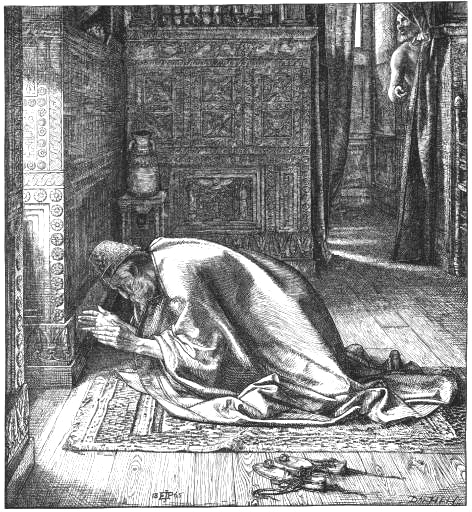
God’s Safe Holding
(Psa. 119:117)
Hold Thou me up, in Christ in heavenly places,
To view my life from that triumphant height,
So shall my soul grow strong with patient courage
To run the race and wage the daily fight.
How light and brief the present conflict seemeth,
And short the way to that eternal rest,
When eyes of faith gaze smiling from the shelter
Of Love’s safe holding to my Saviour’s breast.
Hold Thou me up, in Christ with full dominion
O’er my weak flesh and subtle self-desire,
Spurning each snare, sweet-baited by the Tempter,
Guarding my robe from spot of earthly mire.
Held by Thy power, no darkness can confound me,
Nor haunting fears my trusting heart alarm,
Thy grace and strength are perfected in weakness,
And none can pluck me from Thy ’circling arm.
Hold Thou me up in Christ, my righteous cov’ring,
Till crowned immortal I in glory shine;
For now I live through His life pulsing in me,
As lives the branch by dwelling in the vine.
Father, I yield in grateful heart-submission
To Thy keen blade of purging pain and woe;
Prune as Thou wilt, and perfect love’s fruition:
From luscious grapes sweet wine of joy will flow.
Hold Thou me up, in Christ a living member,
Swift to obey the promptings of His will,
My words and deeds His mind alone expressing
As I with joy my task of love fulfil.
If I would reign with Him, a king in glory,
Here I must share His sacrifice and shame,
So, Father, help me bear the cross with Jesus
Till life will end in praise to Thy dear name.
— Minna Edgar