
The Apostle Paul makes several clear statements which teach that the Tabernacle arrangement was symbolic. We find one such concise declaration in Hebrews 9:11: “…Christ being come an high priest of good things to come, by a greater and more perfect Tabernacle, not made with hands…”
Thus, there is Scriptural confirmation in the New Testament which describes the symbolic spiritual application of the Tabernacle. When speaking of the priests who served Israel’s Tabernacle, the Apostle Paul provided this reference: “Who serve unto the example and shadow of heavenly things, as Moses was admonished of God when he was about to make the Tabernacle: for, See, saith He, that thou make all things according to the pattern showed to thee in the mount.” Hebrews 8:5
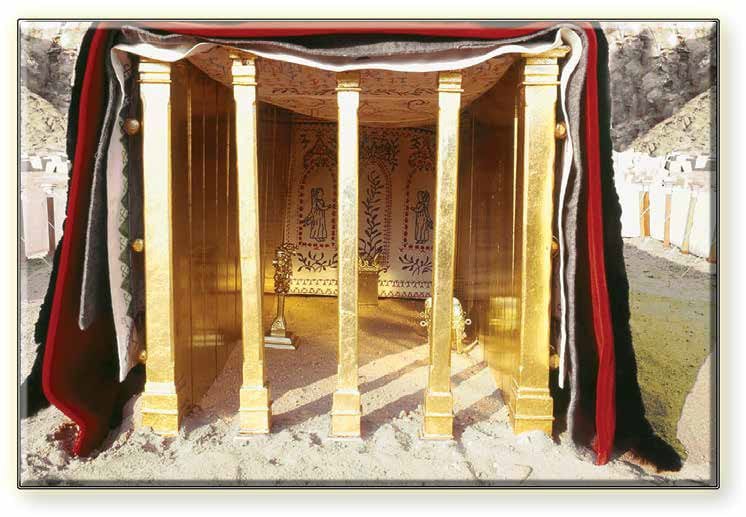
The words example, shadow and pattern help us to understand the nature of Tabernacle symbols as objects with specific characteristics, providing pictorial illustrations of the things symbolized. The New Testament Greek uses a word to describe this concept: “tupos” meaning type.
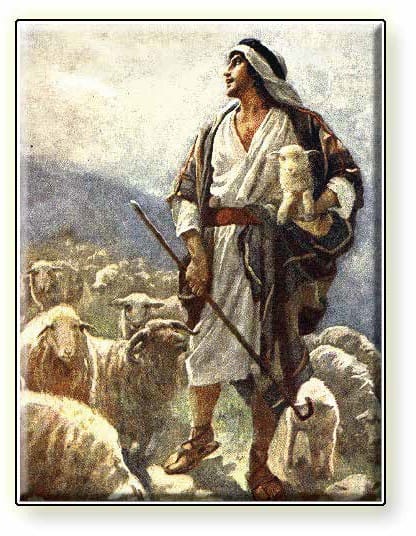 What does a type mean in a practical sense? To understand the answer to this question, we must go back to the example of a lamb. A lamb is meek and submissive. A lamb does not open its mouth when being led to the slaughter. These characteristics apply to Jesus in a powerful way in Isaiah 53:7: “He was oppressed, and he was afflicted, yet he opened not his mouth: he is brought as a lamb to the slaughter, and as a sheep before her shearers is dumb, so he openeth not his mouth.” This scripture is repeated in Acts 8:32 where it specifically refers to Jesus as that lamb. Thus, in a type or illustration, the lamb has specific characteristics which can be applied to Jesus.
The Apostle Paul makes an even broader application of the use of types in Scripture with these words: “Now all these things happened unto them for ensamples: and they are written for our admonition…” (1 Corinthians 10:11) He repeats this application in Colossians 2:17 stating that those things which happened to Israel were “a shadow of good things to come.”
The entire Jewish arrangement is, therefore, identified by Paul as symbolic. He tells us that these symbols contain important and relevant lessons for us as Christians. He emphasized the serious nature of these types and shadows. Because God took them very seriously—the usual penalty for failing to observe the features of the type was death. (See Exodus 28:43; Leviticus 10:1, 2) Thus, it behooves the disciple of Christ to look into the instructions of the Scriptures to learn the symbolic meaning of the Tabernacle arrangement.