
“‘You will not surely die,’ the serpent said to the woman.” Genesis 3:4
Eve wanted to know all about God and the beautiful garden he had prepared for her and Adam. There were so many things she wanted to know. Why was there one kind of tree from which they could not eat? Why did the beautiful intelligent serpent eat of the fruit of that tree and not die?
Satan was cunning in his attempt to deceive this perfect pair. If he had said to Eve, “Come and worship me instead of God,” she would have been shocked and have turned away from him. But Satan watched Eve and studied her ways: she was happy, she loved Adam, she loved God. What was there in her character to which he could appeal? It was her great desire for knowledge!
Knowledge is good. God gives us as much knowledge as we can use wisely. He could have given Eve more knowledge as she continued to love and obey him. At that time the important thing in God’s plan was to teach Adam and Eve that obedience to his laws would be the best for them.
To eat of the tree of the knowledge of good and evil was forbidden for a while as a test of their loyalty and obedience to God. The penalty for disobedience was death. Death is the absence of life. One who is dead does not know anything, nor can he do anything. Ecclesiastes 9:5, 10
Satan wanted to be like the Most High God and have the people worship him (Isaiah 14:12-14). He caused the clever serpent to eat the forbidden fruit. Eve saw that nothing happened to the serpent so she took a bite of the fruit. When Adam realized what she had done, he chose to follow her into death (Genesis 2:17) rather than live without her.
Instead of trusting God, Adam disobeyed and ate of the fruit just as Eve had done. The death penalty came upon him and Eve and all their children.
And so the first lie—“You will not surely die”—caused mankind to start on a downward course of sin and death. We know what the terrible results have been!
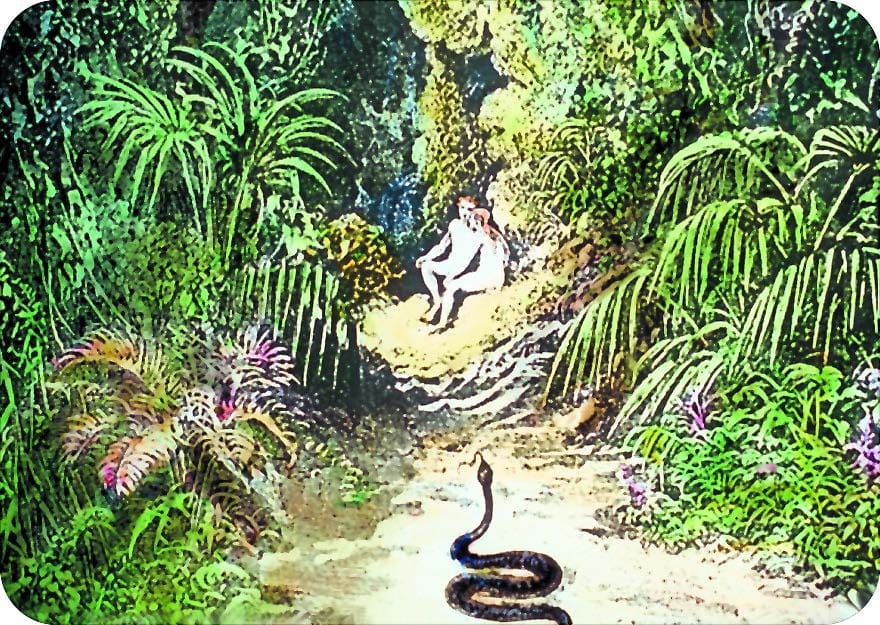
Satan studied Eve to see how he could tempt her.
Link to supplemental lesson worksheet: www.blessedbible.com/linked/a2z-lesson-10.pdf