
“Do your best to present yourself to God as one approved, a workman who does not need to be ashamed and who correctly [accurately] handles the word of truth.” 2 Timothy 2:15
Here and there were men who were not satisfied with the plans of emperors or the words of priests and bishops. They wanted to study the Bible for themselves and learn to follow in the footsteps of Jesus.
Two early reformers were John Wycliffe, born in England in 1320, and John Huss, a Bohemian. They did not believe that God spoke only through the pope, nor that he had a right to take tax money from the people. They admired men who lived simply and served the church faithfully. Huss was burned to death for his beliefs. Many people like Huss loved liberty and hated wickedness and were willing to fight for their beliefs. The various wars caused by this philosophy killed a great many people.
Another English reformer was William Tyndale who wanted to help others study God’s word. He translated the Bible into the English of his day. He, too, was killed for his efforts to serve God and his people.
Martin Luther, perhaps the most well-known of the reformers, was the head of a Roman Catholic college that trained young men to become priests. He studied the writings of other priests and the beliefs of the church. He did not study the Bible because he thought the Catholic books explained it all.
One day Luther read a copy of the New Testament and was surprised that it was so easy to understand. Certain Scriptures showed many errors in Catholic teachings.
Because most people were uneducated and could not read, they could be easily tricked by evil preachers who taught false doctrines. One of the most notorious was Johann Tetzel, a German monk. He convinced many to pay for sins not yet committed, by buying pieces of paper called Indulgences. Schemes like this brought wealth and prosperity to the Roman Catholic Church and eventually caused a revolt called the Protestant Reformation.
Luther listed ninety-five objections against the selling of Indulgences and nailed them to a church door. Printing had recently been invented, so these were soon printed and distributed to people in many countries.
Eventually the Roman church ordered Luther to give up his beliefs. He refused, and even made more reforms. He translated the Bible into German and established the Lutheran church.
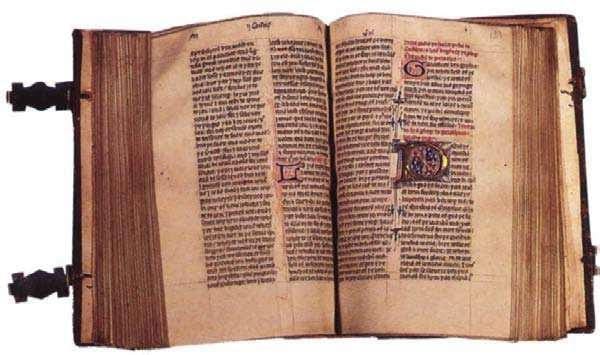 Tyndale and Luther translated the Bible into the people’s language.