
The Bread And The Wine
Editor Watch Tower: I read your article in the April number upon “The Passover,” and am well pleased with it. I believe the Lord’s Supper is the Christian’s substitute for the Jewish Passover, and should be observed annually; but upon one point you did not speak out. I refer to the kind of wine to be used in this Supper. You suggested that “unleavened bread” be used, which I think is perfectly correct, but I ask, What kind of wine should be used? You teach correctly, I think, that leaven is the type of sin, etc., and therefore not a fit type of Christ’s purity. I think the same of fermented, or leavened wine. It is not pure, and therefore not a fit emblem of Christ’s blood! But you did not teach us that we ought to use fresh, pure wine instead of the kind that “biteth like a serpent and stingeth like an adder.”
Can any substance be a proper emblem of Christ’s pure and precious blood after that substance has fermented and becomes poisonous? I conclude that good wine is just as important to a proper celebration of the Lord’s Supper as unleavened bread. Hoping you will think and speak of these things, I am yours truly.
P. D. LANE.
Our Response
In our desire to do nothing to hinder the cause of Total Abstinence, with which we sympathize, we have heretofore refrained from commenting specially on the subject mentioned above, but a number of inquiries, recently, show that the subject is active and needs a reply.
We remark first, that there are many things about our climate and the restless, excited methods of our day, which almost inevitably lead men to excessive use of intoxicating liquors when once its use is commenced. Not only so, but it seems evident that most of the intoxicating liquors, manufactured at the present time, are drugged and adulterated in a manner that greatly increases the dangers and evils resulting from their use.
For these reasons we give the Prohibitionists our sympathy, either in the enforcement of the present laws against those who adulterate liquors, or we should rejoice if they be able (which we doubt) to procure the enactment of new laws which would entirely stop its manufacture and sale. But this, we think, will not be accomplished until the prince of this world—Satan—is bound.
But notwithstanding our sympathy—notwithstanding also our knowledge of the fact that the sympathies and prejudices, too, of a majority of our readers is on the side of Total Abstinence—yet, if we speak, it must be what we consider truth—truth, no matter whose idol is broken or whose theories suffer; and here it is:
The claim is often repeated by zealous temperance advocates, that the Bible never countenances the use of intoxicating wine. They say that the wine Jesus made and drank was simply grape juice and not wine, and that a different Greek word is used when referring to these different liquors. We answer that this is a mistake. The Greek word gleukos, which means grape juice or “new wine,” occurs but once in the New Testament (Acts 2:13), and its use there indicates that, if used to excess, it would confuse the mind. The word from which wine is translated, in every other instance in the New Testament, is oinos, and signifies grape wine of the usual sort, which always intoxicates when used to excess.
As to whether oinos will intoxicate please note the following texts: “Be not drunk with wine, oinos, wherein is excess.” (Eph. 5:18) See also 1 Pet. 4:3; Luke 1:15 and 7:33, 34. But, it is suggested, that if wine contains the elements of leaven it would prove that it was not what Jesus used in instituting “the Supper.” We will admit, that if this were so, it would prove what is claimed; but it is not so. Temperance orators may and do, make this statement, doubtless often ignorantly, but scientific men recognize quite a difference between alcoholic or vinous fermentation and putrefactive fermentation. The result of the former process is to cast out impurities and produce a sweet and pleasant liquid as in wine, while the other process produces sourness and ultimately rottenness. This last process is employed in leavening bread, the decay or fungus growth being arrested in its very early development by baking.
So far as the Jewish custom is concerned, it disproves instead of proves the claim that wine contains the leaven quality, for the Jews use wine at the Passover and put away leaven. They use the REAL wine. The claim that unfermented grape juice was what the Lord used, we can see to be incorrect in another way: The vintage season in Palestine was September and October, and the Passover was about six months later. The wine made in October would of necessity be fermented before April.
The testimony of Jesus is that old wine is better than new (Luke 5:39; John 2:10); and the fact that the wine they used did ferment, is shown by the parable concerning the putting of new wine (in which alcoholic fermentation was not finished) into old bottles [skins] which had been used before, and, having lost their elasticity, would burst under the expansion of gases caused by the ferment.
But, as before remarked, the circumstances, climate, etc., here, as well as the purity of the liquors, differ much from those of Jesus and the Apostles; and if any one should feel himself endangered by tasting wine at the remembrance of our Lord’s death, we would recommend that such a one should use raisin juice instead, which, though not wine, is certainly a “fruit of the vine.” We provide the raisin juice every year, but it was used by only one person at our last celebration of the Supper.
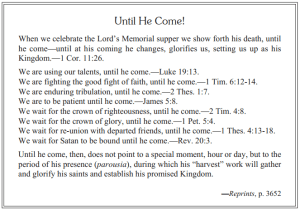
The Passover Supper
As per previous appointment, the Lord’s Supper was celebrated on its anniversary on the evening of March 29. From letters and cards received before and since, we judge that the event was very generally celebrated by the deeply-interested of our readers in every quarter, and doubtless by many from whom we have not heard as yet. In some places there were about a dozen, in others two or three, and sometimes one commemorated alone. To all of these, so far as we have learned, it was as with us at Allegheny City, a very precious season.
Here about one hundred met in our usual “upper room” and celebrated and commemorated our ransom, partaking of the emblems of our Redeemer’s broken body and shed blood. Eight brethren and sisters from New York, West Virginia and various parts of Pennsylvania were present with us, and preceding the celebration, we had a pleasant social meeting, in which our hearts were refreshed by remembrances of our Father’s goodness and care and love. Among other things, it was noted that one of the evidences of our relationship to God, our sonship, was, that he was more and more revealing to us his plans. In this connection, and as a proof of it, the words of Jesus came to mind: “I have not called you servants but friends, for the servant knoweth not what his lord doeth: but I have called you friends for all things that I have heard of my Father, I have made known unto you.” (John 15:15)
When the hour of 8:30 o’clock arrived, which we judged would most closely correspond with the time at which the Supper was instituted by our Lord, we partook of the emblems: first briefly examining their significance. For the benefit of all we briefly review what we there saw.
We remembered the Master’s words concerning the bread: This is my body [representatively] which is broken for you. This is the bread which came down from heaven, of which a man may eat and not die. Except ye eat the flesh and drink the blood of the Son of Man, ye have no life in you. Looking from the symbolic bread to the body of Jesus, we realized that it was indeed the true bread. It came down from heaven in the sense that his being originated not on earth, but in heaven; in the sense that his being was not begotten of the will of the flesh, but that his was a transferred existence. That he who was rich became poor—became of a lower nature—was made flesh, for the special purpose of suffering death on our behalf, that we through his poverty [he gave “all that he had,” even life] might be made rich; that we might have restored to us all those blessings which Adam, our representative once possessed and lost for himself and us. We considered afresh why it was needful for him to be broken—to be slain for us. We saw that it was because we had no life in us. Death was working in and devouring the whole race. All being of the same condemned race, none could secure his own life, nor was there one who could by any means redeem his brother, or give to God a ransom for him—all were condemned and dying. But man’s extremity was God’s opportunity: he provided the one who, because of the same kind or nature, could give a ransom [corresponding price], and who, because not of the condemned Adamic stock [but from heaven], was an acceptable Redeemer. We saw that whereas the race, because of Adam’s sin, was cut off from, separated from the trees of life in Eden, and hence could not live, yet now they had presented to them through Jesus a bread of life, a gift from heaven, the acceptance of which would restore the life and blessings lost.
We saw that though Jesus was this bread of life, it was needful that he should be broken, sacrificed—die for us, before any of our condemned race could partake of his merits. He being a perfect man, gave himself a corresponding price to cancel the curse of death upon all through the sin of the first representative. Now, all that remains is for each one blighted through
Adam to come and partake [eat] of those perfections and rights which Jesus secured for us by his sacrifice on our behalf. We eat or appropriate Christ’s perfections by faith, i.e., by faith we realize that Jesus was our ransom, and by faith we appropriate to ourselves those merits which, as a perfect man, he possessed, and which he broke or sacrificed for us.
Here we saw the beauty of God’s arrangement that though the sacrifice was sufficient for all, none could receive life through it except by accepting and acknowledging the sacrificed one as the Life-giver. Thus seen, not only is an acknowledgment of the ransom an essential to life now, but in the next age also, it will be necessary. Forever it will be true—“Except ye eat of the flesh … ye have no life in you.” That the ransom given is the foundation of all blessing must ever be recognized. “No man cometh unto the Father”—no man has “oneness” with him, except by the broken body and shed blood of the Lamb of God which taketh away the sin of the world. Who “put away sin by the sacrifice of himself.”
We looked also at the blood shed for many for the remission OF SINS—not for ours [the Church’s] only, but also for the sins of the whole world, and we saw in the wine its symbol: “This is my blood of the new covenant, which is shed for many for the remission of sins.” (Matt. 26:28) We glanced at the three great covenants: we saw how the Law covenant under Moses had failed to prove a real blessing and to give life to the dying race, but how the New Covenant would be superior and would accomplish the blessing [restitution] of all the families of the earth, by reason of the Ransom. Thus we saw that his blood—his sacrificed life or human existence—was the ransom which redeemed all, and made their restitution possible, was most emphatically the Blood of the Covenant—the sealing, the ratifying, which makes the New Covenant operative. We rejoiced in the blood so freely shed which gave us access to the Father, and resolved that we should never be of those who lightly esteem the blood and count “the blood of the covenant” a common (ordinary) thing, and do despite to the spirit of God’s favor manifest in that precious sacrifice. (See Heb. 10:16-21 and 26-31)
Having seen this, in the bread and wine as representative of Jesus, we looked further and saw through the Apostle’s words (1 Cor. 10:16, 17) still another significance in the ordinance. He says: “The cup of blessing which we bless, is it not the communion [sharing] of the blood of Christ? The bread which we break, is it not the communion [or sharing in the breaking or sacrifice] of the body of Christ”? His suggestion is: As the Lord blessed and broke and passed the emblems, and thus represented his sacrifice, do not we, while recognizing that, also represent the same thing? namely, that we as members of the body of Christ are consecrated and being broken in sacrifice with our head? “For we being many are ONE LOAF and ONE BODY; for we are all partakers of that one loaf.”
Regarded thus in its fullness, the eating of the emblems had a two-fold significance—representing to us Jesus’ sacrifice which redeemed us, and our sacrifice with him. We saw that it was by reason of our now sharing with Jesus in the sealing of the New Covenant, that we shall in due time be permitted to share with him in bringing upon the world all the blessed provisions of that New Covenant in the “Times of Restitution of all things.” The revival of memory on this subject seemed to strengthen in us all, the resolution to “fill up that which is behind of the afflictions of Christ,” that when his glory shall be revealed we may be glad also with exceeding joy. We remembered the two Apostles whose request was to sit in the throne with Jesus, and we recalled Jesus’ words in reply: “Are ye able to drink of the cup?” We realized our own weakness and the many besetments and allurements of the flesh, the world and the devil, which would conspire to keep us back from sharing the cup of suffering and death symbolized before us in the wine, yet realizing that we could do all things through the strength of our Head we said, Yea, Lord, we will drink it, “we are able” in thy strength; and then we heard from His Word the Lord’s answer to each of us, “Ye shall indeed drink of the cup” “My strength is made perfect in weakness.” “Whatsoever ye shall ask in my name I will do it.”
When we had partaken of the emblems, we sang a hymn, and went to our homes meditating meanwhile upon the scenes of eighteen hundred and fifty-two years ago: The garden, the betrayal, Herod’s soldiers, the crown of thorns, the scarlet kingly robe, Pilate’s endeavor to secure his release from the chief priests and great religionists of his day, how they hated him without a cause, because he exposed their false theories and hypocrisies; we saw and remembered him on the cross saying, “It is finished,” and dying. The eye of faith grasped the situation, and our hearts, while full of grateful love, cried in faith, “It is finished,” we are redeemed, our ransom price has been paid. We have life, we feed upon him, we apply and appropriate to ourselves the life and rights which he surrendered on our behalf. Thank God, “The Lord hath laid upon him the iniquity of us all; he bore [the penalty of] our sins in his own body on the tree. By his stripes has healing come to us. (Isa. 53:5) We sang in conclusion our thanks to him as our Saviour as well as Lord:
“All hail the power of Jesus’ name;
Let angels prostrate fall:
Bring forth the royal diadem,
And crown Him Lord of all.”
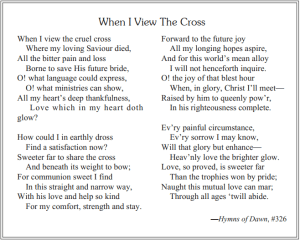
The Lord’s Supper
The anniversary of the Lord’s Supper will this year fall upon Thursday evening, April 7th; and in harmony with a custom among the early Christians, we esteem it as they did, a blessed privilege to commemorate our Lord’s death in the manner which he requested us to observe, and at the time observed by him. Though he has made free from the Law all believers in him who were under it (Israelites), yet he was “under the Law” and was limited by it. Accordingly he could be crucified only upon the fourteenth day of the Jewish month Nisan (which this year commences Thursday evening, April 7th, and ends at 6 P.M. on Friday, the 8th), because his death was the antitype of the death of the lamb whose blood sprinkled upon their doorposts covered or protected the firstborn of Israel. And these firstborn in turn were exchanged for the tribe of Levi (Num. 3:12, 13), of whom came the priests through whose sacrificial ministrations all the people were justified.
The lamb typified Christ Jesus our Lord; its death represented his death. And, in exact correspondence with the type, his sacrificial death, must and did occur at the same date. The firstborn saved by the blood of the typical lamb, typified “the church of the firstborn, which he (Jesus) hath purchased with his own blood.” Those firstborn Israelites, afterward the priests, typified the “Royal Priesthood” of whom the Lord himself is Chief Priest; and this anointed company is to be God’s instrumentality for blessing all people who will come into harmony with him, typified by all Israel. Thus seen, the blood of the typical lamb cleansed and preserved all Israel, though applied at first and directly only to the firstborn. For if the firstborn ones had not been preserved, there would have been no priesthood; and if no priesthood, no reconciliation. So also in the antitype, the merit of the Lamb of God which taketh away the sin of the world, is applied during the gospel night only to the firstborn, the church, the select little flock, the Royal Priesthood, who under the direction of the High Priest, shall soon in the incoming age, bring all of honest hearts (Israelites indeed) into full harmony with God.
Let all of the Church of Firstborns then intelligently and reverently commemorate, not the typical lamb, nor eat it as did the typical people (Israel), but let them celebrate the death of our Paschal Lamb, the Lamb of God. Let us as often as its anniversary recurs, keep it in remembrance of him; for even Christ our Passover [lamb] is slain, therefore (let us not only commemorate his death) but let us joyfully afterward keep the antitype of the Feast of Passover.¹
The “feast” is not the “supper,” but follows it and has a totally different significance. The “Feast” with the Jews lasted a week, and commenced after the lamb had been killed and eaten. Its observance was marked by joy of heart, separation from all carnality and from leaven. It represents the life of joy and purity and separation from sin [leaven] which all who recognize the value of the lamb, etc., are to enjoy.
We do not celebrate the “Feast of Passover” on the night of April 7th. It is celebrated throughout the remainder of our lives which the seven days of its continuance represented; but we will celebrate the Supper, whose elements (bread and wine) symbolize the flesh and the blood of our Redeemer.
And yet the bread and wine are only symbols, and to appreciate what we do we must see deeper than these while using them as our Lord directed, saying, “Do this, in remembrance of me.” The partaking of the bread representing his flesh, to us means a partaking of those perfections which were in him as a perfect man, which we and all, lost through Adam. In partaking of the wine representing his blood, his life, we accept from God again through him, the right to live, lost in Adam. Thus the eating and drinking of the bread and wine, emblematic of his flesh and blood, signifies our complete justification. All of the Redeemer’s human perfections and his right to life—given for us—are thus accepted by us, in this symbol. All believers in the ransom are thus privileged to celebrate or commemorate it, and the blessings it brings.
But among those “believers” there is a class, a “little flock,” to whom it means all this and more. These are those who have consecrated themselves as the under priests, under their great Chief. To these the emblems not only signify the Lord’s sacrifice by which they are justified to human life and all its rights, but also their own consecration to be joined in sacrifice with him, to suffer with him, to be dead with him; to sacrifice all the rights to human perfection and life to which their justification through acceptance of his sacrifice had entitled them. To these the emblems (bread and wine) are not only remembrancers of the Lord’s sacrifice, but also of their own covenant to share the sacrifice with him, if by any means they might fulfill the conditions and be accounted worthy to be “made partakers of the divine nature,” and to be with him, his “joint-heirs” and co-workers in blessing all the people.
Paul calls our attention to this feature of the commemoration, saying: “The loaf which we break, is it not the communion of the body of Christ [the “little flock,” the Church, of which our Lord is the head]? the cup of blessing which we bless, is it not the communion of the blood of Christ [the entire anointed company]? For we, though many, [members] are one loaf and one body, for we are all partakers of that one loaf. (1 Cor. 10:15-17)
All must eat of the flesh and blood of our Lord Jesus: i.e., they must partake of those human rights and privileges which his sacrifice secured for all, either in this age by faith, or in the next age actually, else they will have no life rights, either to make sacrifice of now, or to enjoy (without the privilege of sacrificing them) hereafter. So then we urge all believers to “do this” intelligently, and while using the emblems, to accept and apply and appropriate fully the justification from all sin and the right to life which God holds out through the Lamb of God, and in no other name or way. And especially let all believers who have been immersed with Christ into his death, and thus into membership in his “body” (Rom. 6:3, 4), do this, remembering their justification through his blood and renewing their covenant to be dead with him as human beings, that they may live with him as partakers of the new, the divine nature.
So far as possible meet with such as you can recognize as fellow-members of the same body, and exclude no believer in the ransom. Arrange for the meeting long enough beforehand. It matters not who shall pass the emblems, even Judas may have assisted at the first celebration.
All who can do so are cordially invited to be present and celebrate with the church that is at Pittsburgh. If possible arrange your affairs to stay over the following Lord’s day, which will be the anniversary of our Lord’s resurrection. Turn aside —let us devote a few days to the pursuit of our spiritual interests exclusively.
1. The “feast” is not the “supper,” but follows it and has a totally different significance. The “Feast” with the Jews lasted a week, and commenced after the lamb had been killed and eaten. Its observance was marked by joy of heart, separation from all carnality and from leaven. It represents the life of joy and purity and separation from sin [leaven] which all who recognize the value of the lamb, etc., are to enjoy.
Our Anniversary Supper
On the evening of April 7th, the anniversary of the institution of the bread and wine as symbols of our Lord’s broken body and shed blood, as the Lamb of God which taketh away the sin of the world, the Church at Pittsburgh celebrated the same. The company numbered about one hundred and fifty, and included probably forty from neighboring towns, and a few from distant points—New York, Ohio and Wisconsin. We need scarcely say that it was, as usual, a very impressive occasion.
We briefly reconsidered the significance of the bread and wine as emblems, and the importance and value of that which they symbolize—the broken body and shed blood of our Redeemer. We saw that the eating of the flesh signified our acceptance and appropriation of the perfect humanity and all its rights, which our Lord sacrificed for Adam and all his race. We saw that when our Lord said, “My flesh … I will give for the life of the world” (John 6:51), he meant, I give up, or sacrifice my perfect (unleavened) human nature that the world may have perfect human nature (“that which was lost”), by accepting of my sacrifice and appropriating (eating) my rights and perfections, freely given on their behalf.
We saw that thus the bread is for all who would be restored, and must be accepted and digested (appreciated), before it will benefit any, either in this, the Gospel age, or in the Millennial age. All who would recover that which was lost must accept of the ransom, and thus obtain restitution (actually or reckonedly) as its result. We saw that all who eat of the flesh of the Lamb, do not drink of his blood. In the type—the Passover—the doorposts and lintels of the house were sprinkled with the blood of the Lamb; and so, too, with all who would “eat the flesh” of the “Son of Man” (partake of his merits and justification); they must all recognize and own the blood—the precious life shed for all, for the remission of the sins of the whole world.
But the privilege of drinking of “the cup”—Mark 10:38—(sharing in the sacrifice of life) is offered only during the Gospel age. It is the favor or privilege of this age, to “fill up that which is behind of the afflictions of Christ,” and to get the reward with him of sharing also his glory to follow. So, then, as the eating of the flesh (bread) signifies justification to all human rights and privileges, so the drinking of the blood (wine) signifies our sharing with our Lord in his sacrifice, our becoming “dead with him,” our participation in his sufferings—crucified with him.
This being true, how appropriate that the giving of the wine was after the eating of the bread, and to those only who had eaten it. This teaches, in harmony with all the Scriptures, that only those who are justified from all sin by faith in the merit and sacrifice of the Lamb of God (and no others) are invited to crucify their (justified) humanity and share in the afflictions of Christ in this age, and in his glories which shall follow in the Millennial age and the eternity beyond.
Only those who both eat his flesh (appropriate his merits—justification) and drink his blood (share with him in his sacrifice by rendering their justified humanity a sacrifice to his service) dwell in him, and he in them, as members of the one “body of Christ,” as members of the “true vine.” (John 6:56) Only such (verse 53) can have inherent life: that is, life independent of all conditions—Immortality. (See Vol. 1, Chap. 10)
The balance of mankind, however, may by eating (appropriating) the sacrificed rights of the “man Christ Jesus” obtain a dependent life, which will be supplied to the willing and obedient everlastingly.
These must all be first brought to a knowledge of the Lord, of the sacrifice which he gave, and of the justification and restitution provided in it, and may then partake of it freely and live. Of such it is written, “He that eateth of this bread (without sharing “the cup”) shall live forever,” and “He that eateth me, even he shall live by me”—a dependent life, but surely supplied to all who rely upon Christ, the life-giver, for it. The distinction is, that the Gospel church now being selected—the body of Christ—will, with the head, have immortality, have inherent life, and will be the source of supply to the world, who will come continuously to the fountain for life, and live thereby.
We noticed particularly also the statement of the apostle that “He that eateth and drinketh unworthily—not discerning the Lord’s body—eateth and drinketh condemnation to himself.” (1 Cor. 11:27-29) We saw the import of this to be, that to all who fail to recognize Christ’s sacrifice for their sins, the eating of those emblems implies their guilt as his murderers, in the same sense that the Jews cried out, “His blood be upon us and on our children.” As the Jews made themselves guilty of innocent blood (death), so do all who now by eating the emblems say, his blood is upon us—unless they discern the Lord’s body and blood as their ransom. To all who do not recognize it as their ransom—it must signify an increase of their condemnation as sharers of the guilt of the breaking of his body and shedding of his blood, seeing that to them it speaks no forgiveness—no remission of sins.
The succeeding four days were wholly given up to meetings in which were discussed various topics of interest which we cannot here recast. These meetings seemed to be specially and deeply interesting to the visiting friends who, we trust, went back to their respective fields of service refreshed and strengthened by the strong meat of God’s Word, and the new wine of joy and hope, distilled from the exceeding great and precious promises examined.
During their visit the following nine brethren and sisters embraced the opportunity to symbolize their consecration “even unto death” (Rom. 6:3, 4), to be immersed in water in the likeness of the real immersion into death, as per our Lord’s request (Mark 16:16), and the apostles’ command. (Acts 10:48) Their names are as follows. Brother and Sister A. Bowen, Bro. J. W. Mason, Bro. Thos. R. Jackson, Sister J. Vero, Sister M. J. Wagner, Sister M. Thompson, and Sisters Carson and Mitchell.
Many letters received show that the Brethren and Sisters in every direction remembered the Master’s words, “This do in remembrance of me.” In some places the gatherings were of a considerable number, while in others only one or two. We know that all who did “do this” from the right motives, discerning the Lord’s sacrifice for their sins and their consecration with him, were surely blessed greatly. Many letters received bear the same testimony. You were not forgotten by us, as we assembled here, and your letters assure us, that we were not forgotten by you. This mutual interest of the “body” in all of its members is right, and rejoices our hearts often.
The Import of The Emblems
Of the bread our Lord said: “This is my flesh”—that is to say, the unleavened bread represents his flesh, his humanity, which was broken or sacrificed for us. Unless he had sacrificed himself for us, we could never have everlasting life, as he said: “Except ye eat the flesh of the Son of man and drink his blood ye have no life in you.” (John 6:53)
Not only was the breaking of Jesus’ body thus to provide bread of life, of which if a man eat he shall never die, but it also opened the “narrow way” to life, and broke or unsealed and gave us access to the truth, spiritual food, as an aid to walk the narrow way which leads to life. And thus we see that the broken loaf fitly represented the breaking of him who said, “I am the WAY, the TRUTH, and the LIFE; no man cometh unto the Father but by ME.” (John 14:6)
Hence, when we eat of the broken loaf, we should realize that had he not died—been broken—for us we would never have been able to come to the Father, but would have remained forever under the curse of Adamic sin and in the bondage of death.
Another thought: the bread used was unleavened. Leaven is corruption, an element of decay, hence a type of sin, and the decay and death which sin works in mankind. So, then, this symbol declares that our Lord Jesus was free from sin, a lamb without spot or blemish, “holy, harmless, undefiled.” Had he been of Adamic stock, had he received his life in the usual way from any earthly father, he, too, would have been leavened with Adamic sin, as are all other men; but his life came unblemished from a higher, heavenly nature, changed to earthly conditions; hence he is called the “bread from heaven.” (John 6:41) Let us then appreciate the pure, unleavened, undefiled bread which God has provided, and so let us eat of him—by eating and digesting the truth, and especially this truth—appropriating to ourselves, by faith, his righteousness; and let us recognize him as both the way and the life.
The Apostle, by divine revelation, communicates to us a further meaning in this remembrancer. He shows that not only did the loaf represent our Lord Jesus, individually, but that after we have thus partaken of him (after we have been justified by appropriating his righteousness), we, by consecration, become associated with him as part of the one broken loaf—food for the world. (1 Cor. 10:16) This suggests the thought of our privilege as justified believers to share now in the sufferings and death of Christ, the condition upon which we may become joint-heirs with him of future glories, and associates in the great work of blessing and giving life to all the families of the earth.
This same thought is expressed by the Apostle repeatedly and under various figures, but none of them more forceful than this, that the Church, as a whole, is the “one loaf” now being broken. It is a striking illustration of our union and fellowship with our Head.
We quote: “Because there is one loaf, we, the many [persons] are one body; for we all partake of the one loaf.” “The loaf which we break, is it not a participation of the body of the Anointed one?” (1 Cor. 10:16, 17—Diaglott)
The “fruit of the vine” represents the sacrificed life given by our Lord. “This is my blood [symbol of life given up in death] of the new covenant, shed for many, FOR THE REMISSION of sins.” “Drink ye all of it.” (Matt. 26:27, 28)
It was by the giving up of his life as a ransom for the life of the Adamic race, which sin had forfeited, that a right to LIFE may come to men through faith and obedience under the New Covenant. (Rom. 5:18, 19) The shed blood was the “ransom [price] for ALL,” which was paid for all by our Redeemer himself; but his act of handing the cup to the disciples, and asking them to drink of it, was an invitation to them to become partakers of his sufferings, or, as Paul expresses it, to “fill up that which is behind of the afflictions of Christ.” (Col. 1:24) It was the offer to us that if we, after being justified by faith, voluntarily partake of the sufferings of Christ, by espousing his cause, it will be reckoned to us as though we had part in his sacrifice. “The cup of blessing, for which we bless God, is it not a participation of the blood [shed blood—death] of the Anointed one?” (1 Cor. 10:16—Diaglott) Would that we all might realize the value of the “cup,” and could bless God for an opportunity of sharing with Christ his “cup” of sufferings and shame: all such may be assured that they will also be glorified together with him. (Rom. 8:17)
Our Lord also attached this significance to the “cup,” indicating that it signified our participation in his dishonor, our share in his sacrifice—the death of our humanity. For instance, when asked by two of his disciples for a promise of future glory in his throne, he answered them: “Ye know not what ye ask; are ye able to drink of the cup that I shall drink of?” On their hearty avowal he answered, “Ye shall indeed drink of my cup.” The juice of the grape not only speaks of the crushing of the grape till blood comes forth, but it also speaks of an after refreshment; and so we who now share the “sufferings of Christ” shall shortly share also his glories, honors and immortality—when we drink the new wine with him in the Kingdom.
Let us then, dearly beloved, as we on the evening of the 19th inst. commemorate our Lord’s death, call to mind the meaning of what we do; and being invigorated with his life, and strengthened by the living bread, let us drink with him into his death, and go forth more determined than ever to be broken with him for the feeding of others. “For if we be dead with him we shall live with him; if we suffer we shall also reign with him.” (2 Tim. 2:11, 12)
Who May Partake
It is left open for each to decide for himself whether he has or has not the right to partake of this bread and this cup. If he professes to be a disciple, trusting in the blood of the New Covenant, for forgiveness of sins, and consecrated to the Lord’s service, his fellow disciples may not judge his heart. God alone can read that with positiveness.
Because of their symbolism of the death of Christ, therefore let all beware of partaking of these emblems ignorantly, unworthily, improperly—not recognizing in them “the Lord’s body” as our ransom, for in such a case the partaker would be as one of those who murdered the Lord and would, in symbol, “be guilty of the body and blood of the Lord.” (1 Cor. 11:27)
“But let a man examine himself:” let him see to it that in partaking of the emblems he realizes them as the ransom-price of his life and privileges, and furthermore that he by partaking of them is pledging himself to share in the sufferings of Christ and be broken for others; otherwise, his act of commemoration will be a condemnation to his daily life before his own conscience—“condemnation to himself.” (1 Cor. 11:28, 29)
Through lack of proper appreciation of this remembrancer, which symbolizes not only our justification, but also our consecration, to share in the sufferings and death of Christ, the Apostle says, “Many are weak and sickly among you, and many sleep.” (1 Cor. 11:30) The truth of this remark is evident: a failure to appreciate and a losing sight of the truths represented in this Supper are the cause of the weak, sickly and sleepy condition of the church nominal. Nothing so fully awakens and strengthens the saints as a clear appreciation of the ransom sacrifice and of their share with their Lord in his sufferings and sacrifice for the world. “Let a man examine himself, and so let him eat of that bread and drink of that cup.”
The Cup of the Lord and the Table of the Lord
“Ye cannot drink the cup of the Lord and the cup of devils: ye cannot be partakers of the Lord’s table and of the table of devils. Do we provoke the Lord to jealousy? are we stronger than he?” 1 Cor. 10:21, 22
We find these words of warning addressed, not only to “the Church of God at Corinth,” but also “to them that are sanctified in Christ Jesus, called to be saints, with all that in every place call upon the name of Jesus Christ our Lord.” (1 Cor. 1:2) They apply to the entire probationary membership of the Gospel Church down to the end of the age.
Those whose hearts are still loyal and true to God may at first think strange of such an admonition, and say, “Paul, Paul, why so counsel us when we have no desire to touch or taste or handle the devil’s goods? Such counsel seems to betoken some mistrust of our loyalty to the Lord.” But Paul replies, “Let him that thinketh he standeth take heed lest he fall.” The warning is a wholesome one: our testing and trial are not yet finished: while the Lord’s cup is presented to us, the devil, as an angel of light, and with great subtlety, presents his cup also; and while the Lord spreads his table, the devil spreads his also.
What is the Lord’s cup? Call to mind the Lord’s reference to it—“The cup which my Father hath given me to drink, shall I not drink it?” And again, when its bitter dregs were to be drained to the end, hear him pray, “O my Father, if it be possible, let this cup pass from me! nevertheless, not as I will, but as thou wilt.” And yet again, “O my Father, if this cup may not pass from me except I drink it, thy will be done.” It is the cup of sacrifice, even unto death. And not only is it the sacrifice of life, but of reputation and all that humanity holds dear. The life is sacrificed in the midst of reproaches and persecution and extreme trials of faith and patience. After the last supper with his disciples Jesus took the symbolic cup, saying, “This is my blood of the new testament which is shed for many for the remission of sins. … Drink ye all of it.” (Matt. 26:27, 28) The Apostle (1 Cor. 10:16) refers to the same cup saying, “The cup of blessing, for which we bless God, is it not a participation of the blood of the Anointed one?” And so also, “The loaf which we break, is it not a participation of the body of the Anointed one? Because there is one loaf we, the many, are one body.”
Thus we see that the body of Christ is invited to share the same cup with the Head—the cup of sacrifice, of ignominy and reproach. “Drink ye all of it.” And blessed is he who has thus far so faithfully partaken of the Lord’s cup that he can say, “The reproaches of them that reproached thee have fallen upon me.”
We have seen what is the Lord’s cup: now what is the cup of devils? Well, it is a cup of sacrifice also; and those who drink of it sacrifice their true happiness in the present life and their prospects for the life to come. These, however, are the dregs of Satan’s cup: these do not appear upon the surface. Its surface sparkles with hopes of earthly prosperity, pride, self-exaltation and “honor one of another;” and to attain these hopes, time, talent and influence are sacrificed to the bitter and disappointing end.
That is indeed a cup of intoxication, a cup of deceptions and delusions, whose awful potency finally is unto eternal death. Well does the Apostle say, “The things which the Gentiles [the unbelieving world] sacrifice they sacrifice to devils, and not to God: and I would not that ye [believers, Christians] should have fellowship with devils. Ye cannot drink the cup of the Lord and the cup of devils.” In other words, we cannot partake of the spirit of the world, the spirit of selfishness, ambition, pride, and sacrifice our lives to these ignoble aims, and at the same time partake also of the spirit of Christ, which is unselfish, humble, self-denying and glad to sacrifice earthly ambitions in the service of him who bought us with his own precious blood. We cannot partake of both spirits; for the one is the reverse of and antagonistic to the other. “Ye cannot serve God and Mammon.” Nor can ye long halt between the two. “A double minded man is unstable in all his ways,” and “Let not that man think that he shall receive anything of the Lord.” (James 1:7, 8)
Since this warning is addressed, not to the world, but to those who have already pledged themselves to drink of the Lord’s cup, their partaking now of the devil’s cup implies their turning away from the Lord’s cup. And if any are so foolish as to give the consent of their minds to the partaking in some measure of both the cup of the Lord and the cup of devils—of the spirit of the Lord and the spirit of the world and of devils, of the doctrines of the Lord and the doctrines of devils, he is wilfully despising his covenant and doing despite to the spirit of favor.
Let us consider now what is “the table of the Lord.” It is the board richly spread with a bountiful supply of divine truth—bread of life and meat in due season and honey in the honeycomb, and the choicest beverages of milk and wine, and of the pure water of life, clear as crystal. (John 6:32-35; Matt. 24:45; Psa. 19:10; Isa. 55:1; Rev. 21:6; 22:1)
It is spread for everyone that is hungering and thirsting after righteousness; and blessed are they that come to it, for they shall be filled: they shall be richly fed and abundantly satisfied, and their souls shall delight themselves in fatness. (Isa. 55:1, 2; Matt. 5:6; Psa. 22:26)
This table of the Lord has been spread for his saints, his Church, from the very beginning of the Gospel age; and it has always been supplied with meat in season; and some of the Lord’s people have been appointed to serve. Thus, for instance, the apostles served in the beginning of the age, not only in setting before the Lord’s people the meat in due season, but also in laying up in store food for the Church in future days. (2 Pet. 1:15, 19) Their service has been valuable to the entire Church, even to the present day. And all through the age there have been devout, godly men who called the Lord’s people to his table, and ministered to them from its bounty; and the hungry have been fed and blessed.
But now the end, the harvest of the age, has come, the richest season of all the year, when the buds of prophecy and promise have developed and are now bringing forth their golden fruit, and the table of the Lord fairly groans under its bounty. And not only so, but the Lord of the harvest himself, being now present, according to his promise, comes forth and serves his people. (Luke 12:37) Here, as never in all the past, the richness and fatness of the purposes and promises of God are made manifest in all their completeness. Here is a systematic theology such as the Church has never before known—the plan of salvation set before us in such order and beauty that it surpasses our brightest hopes; a plan consistent and harmonious in every part and wrought out silently and grandly through all the ages past on principles of the most profound moral philosophy, and with a precision and exactness of time and order that are suggestive of the mathematical precision of the great Designer, Executor and Revealer. So glorious is it in its completeness, its symmetry and beauty, that the satisfied soul perceives that no addition could be made to it without marring its excellence, and joyfully exclaims, “It is the Lord’s doing and the Lord’s revealing, and it is marvelous in our eyes;” and “What more can he say than to us he hath said” of his wisdom and love and grace? Though the Lord makes use of human agency to portray and proclaim the riches of his grace and his loving kindness to the sons and heirs of God, and though he permits all at the table to be co-workers together with himself in serving one another at the feast, to God belongs all the glory of both plan and execution; and to our Lord and Head belongs the praise of this service of the revealing, and of the anointing of our hearts to receive it, and our eyes to behold it, and our ears to hear it, and our tongues to declare it. Glory to God in the highest, and unto the Lamb forever and ever! Let the whole earth be filled with his glory!
While the Lord’s table is thus richly spread with a satisfying portion for all who hunger and thirst after righteousness and after the knowledge of God, whom to know is life and peace, there are many other tables spread to which the people of God are invited. Papacy has its table upon which, with some fragments of truth, are found in abundant supply the abominable doctrines of the mass, of eternal torment, and purgatory, and the idolatry of Mary, and the presumed saints, and auricular confession, and implicit obedience to scheming priests, etc., etc. Protestants also have their several tables, upon which may be found some truth, such as the redemption through the precious blood of Christ, baptism, faith in God and in his inspired Word, etc.; but oh! what fragments of truth they have are all befouled; for, says the Prophet (Isa. 28:8—and his words are true), “All [their] tables are full of vomit and filthiness, so that there is no place clean.” They are full of rejected matter—old errors swallowed in the past with thoughtless complacency. But the shakings (Heb. 12:26, 27) of these judgment times are making the people sick, so that they cannot retain those horrid doctrines of eternal torment, the predestination to eternal woe of the great majority of mankind before they were born, etc., etc. And yet, lacking the moral courage openly to disown and abandon them, their tables are therefore polluted with the sickening rejected matter: their tables are all unclean.
Before the “shakings” of this present time produced the nausea that befouled those tables, many of the Lord’s dear people were permitted to sit there and select the good food and to antidote the poison of the errors with larger draughts of the water of life from the fountain of God’s Word. But now, harvest having come, and the separating work being due (Matt. 13:30), all the true people of God are called away from those tables to the bountiful harvest table where the Lord himself is now serving. In obeying the voice of the Lord and abandoning the unclean tables, many enemies are made, but blessed are those who have the hearing of faith and obey the call to the Lord’s table. It was of this the Psalmist sung, saying, “Thou preparest a table before me in the presence of mine enemies: thou anointest my head with oil: my cup [of blessing] runneth over.”
But there are other tables besides the unclean tables of Babylon. There are tables of devils: tables laden with all manner of subtle and ingenious evil doctrines, bringing in “damnable heresies, even denying the Lord that bought them,” wresting the Scriptures, perverting them, undermining their teaching, and substituting human philosophies. Of these are such tables as the Papacy—that “masterpiece of Satanic ingenuity,” Theosophy, Spiritism, Christian Science (falsely so called), Evolution, and all the various phases of human philosophy which ignore the doctrine of redemption through our Lord’s vicarious sacrifice, and aim to teach men how to climb up to eternal life by some other way. These all are tables of devils, against which the Apostle warns us, saying, “Ye cannot partake of the Lord’s table and the table of devils.”
Some, alas! after they have accepted the invitation to the Lord’s table, and have tasted and seen that the Lord is good, do turn away from the Lord’s table to the tables of devils, apparently thinking they can return at their pleasure and be welcomed again at the Lord’s table, and come and go at will and partake of both. “Oh yes,” say they, “we are not narrow-minded weaklings, afraid to taste anything except what we find on one table. True, the table of the Lord is a very good one; but there are good things on the other tables too, and we taste everything; yes, we ‘prove all things, and hold fast that which is good,’ no matter where we find it.”
Such, alas! is the attitude of many, who forget that “Pride goeth before destruction, and a haughty spirit before a fall;” and if the efforts of faithful brethren fail to convince them of the error of their way, it is not long before they begin to manifest a distaste for the food supplied at the Lord’s table, and it becomes more and more evident that soon they must leave it altogether. The unwholesome and poisonous dishes on the devil’s table soon vitiate the taste, undermine the spiritual health, and produce abnormal cravings for that which is not good; and the spiritually sick soul has no longer any disposition to feast at the Lord’s table. Nor does the Lord desire that he should; for in leaving the table of the Lord he has done despite to the spirit of favor, and if he persists in such a course he must depart altogether; for “Ye cannot be partakers of the Lord’s table and the table of devils.” “Ye cannot please two masters.”
In the act of going from the Lord’s table to the table of devils he who does so virtually says that he is not satisfied with the bounties of divine providence, and that he still has some respect for the devil, the great enemy of God. Thus he proves his disloyalty to God by his fellowship with unrighteousness. In quoting the scripture, “Prove all things, hold fast that which is good,” he forgets the accompanying modification, “Abstain from all appearance of evil.” (1 Thes. 5:19-22) We have much to do, and all we can do, if we do it well, in proving the abundant merits of the food upon the Lord’s table, and in appropriating it to our spiritual life and health and serving it to others. We taste and see that the Lord is good, and prove the healthfulness of his doctrines, but we have nothing to do with the doctrines of devils, except to abstain from them, and to warn others of their ill effects, as illustrated in those who have tampered with them.
Any child of God should be able to tell at a glance the devil’s table from the Lord’s table, especially after he has been fed at the Lord’s table. The foundations of any system are easily discovered, and there is only one true foundation—Christ, the ransom. “Other foundation can no man lay.” (1 Cor. 3:11; 15:3) And any one whose soul has been satisfied with the truth, should perceive at once the deformity of error. As a musician’s ear, trained to the beautiful harmonies of sound, quickly detects a discordant note, or as an artist’s eye, trained to all the fine distinctions of form and color and order, quickly marks the defective work of an amateur, so the mind and heart, educated in the beautiful harmonies and the perfect and artistic order and system of the Divine Plan, quickly detect the discord of error, and they need no other satisfaction and can find no higher delight; and the soul armed with this “whole armor of God” needs no other preparation to be able to withstand either the subtle or the brazen-faced incursions and attacks of error. “Put on the whole armor of God, that ye may be able to stand against the wiles of the devil;” rest in the Lord, and be satisfied; and feed at the Lord’s table only, if you would have that spiritual health and vigor which is proof against all the pestilences of this evil day.
To those who are not satisfied at the Lord’s table after having feasted there, apply those words of the Lord by the Prophet Isaiah (1:1-6), “Hear, O heavens, and give ear, O earth, for the Lord hath spoken: I have nourished and brought up children, and they have rebelled against me. The ox knoweth his owner, and the ass his master’s crib; but Israel doth not know, my people doth not consider.” The ox and the ass know enough to return again and again to the owner and crib where hitherto they have been well fed. In this they manifest more discretion than those of the Lord’s people who forsake his table to prove the dishes offered on the devil’s table, or to turn to the unclean tables where all that is good is made unclean by association with that which is unclean.
It is not surprising, then, that the Lord will not permit such to return to his table—“Ye cannot be partakers of the Lord’s table and the table of devils.” Why? Because in thus turning away from the Lord’s table where they have been so richly fed, and where the Lord has girded himself to serve, they have manifested disloyalty to him, and have despised the riches of his grace, and done despite to the spirit of favor. Those who wilfully do so after being once enlightened are of that sinful class typified by rebellious Israel. The Prophet describes them in no uncertain terms, saying, “Ah, sinful nation, a people laden with iniquity, a seed of evildoers, children that are corrupters! They have forsaken the Lord, they have provoked the Holy One of Israel unto anger, they are gone away backward … the whole head is sick, and the whole heart faint. From the sole of the foot even unto the head there is no soundness in it.”
Nor are we narrow-minded in confining our studies to the divine plan, regardless of all vain philosophies and human traditions and speculations; for its scope is as wide as redemption, its science the most exact, and its philosophy the most profound. Having learned the divine plan revealed in the Scriptures, it is the privilege of all who are imbued with its spirit to apply its measuring lines to the whole matter of divine revelation, and thus, by its assistance together with the hallowed influences of prayer and communion with God, to receive that education in spiritual things which enables us to appreciate with a musician’s ear the finer strains of the heavenly melody and its precision of rhythm and order; and with an artist’s eye the fine and beautiful shadings of divine wisdom and grace.
Oh, no! we shall not be narrow-minded in thus following the guidance of the Lord into “the deep things of God,” now revealed in his due time, “which things the angels desire to look into,” and which will be the saint’s delight through all eternity. What think you? Will the saints and angels be narrow-minded when the devil and his tables are all destroyed? Let us away with every evil thing, and find our delight in God, and be satisfied with the consolations of his abundant grace. Let the language of our hearts continually be:
“No longer far from rest I roam,
And search in vain for bliss;
My soul is satisfied at home:
The Lord my portion is.”
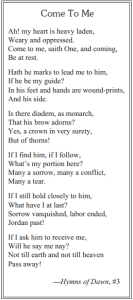
The Memorial Supper
Some friends of the truth in Georgia write that they have not celebrated the Memorial Supper since coming out of Babylon, and give as their reason: “We feel that our minds are consecrated, but our flesh is not, nor can be under surrounding circumstances. We are poor and have large families dependent and cannot deny them. Therefore we have abstained from this much desired blessing.”
If we understand the brethren aright, they are laboring under some misapprehension. If we should wait until our flesh is perfect, none of us could partake of the Memorial Supper, for the Church of this age is not to expect perfection of the flesh; our perfection, if we are faithful, will be as spirit beings in the First Resurrection. Now we have the treasure of the new nature, the new mind or will, in earthen vessels—all of them more or less marred, blemished by sin. But here we have benefit under the New Covenant, by the terms of which God has agreed to accept our perfect wills (backed by our best endeavors) AS OUR ABSOLUTE PERFECTION. All such can say with the Apostle, “The righteousness of the Law is fulfilled in us”—we “walk not after the flesh, but after the spirit,” and as close to it as possible.
Consecration does not imply the neglect nor the forsaking of our families—unless in God’s providence his adversaries and ours should be permitted to kill us, or captivate and imprison us, and thus forcibly hinder our care, or separate us—as was frequently the case during the dark ages. Otherwise God instructs us that reasonable care for our families is his will, and properly our duty.
Full consecration to the Lord means a full surrender of our wills to God’s will and of our bodies to our new wills. It means, consequently, the putting away of sin, to the best of our ability under the direction of the Lord’s Word, and a cultivation daily and hourly of the holy spirit with its fruits and flowers of meekness, gentleness, purity, kindness—Love.
So then, dear Brethren, by faith realize that the Lamb of God was slain for our sins, and that the merit of his sacrifice covers and reckonedly cleanses us from sin in God’s esteem: and so believing, and with hearts, wills, fully given up to the Lord, come to his table and partake of his emblems with mingled meekness and courage.
* * *
We have various questions respecting the fourteenth of Nisan, all of which arise from a failure to recognize that the “Passover,” as understood by the Jews, refers to the Feast of Passover, and has no reference to the killing of the lamb on the 14th— which is the thing we celebrate. With the Jew, the 14th was merely a day of preparation for Passover, and the eating of the lamb, and especially its killing, was only a part of that preparation. The Law provided that the lamb should be killed on the 14th of Nisan at even—or literally, between evenings. It was therefore within the scope of that requirement, if the lamb were killed and eaten on the 14th at any time after 6 P.M. of the 13th.
Let none of us forget to “put away all leaven”—sin—in preparation for the eating of the Passover. Let us cleanse ourselves from all filth of the flesh and of the spirit, perfecting holiness in the reverence of the Lord.” (2 Cor. 7:1; 1 John 1:7) Thus the remainder of life will be a feast of unleavened bread.
Do not make the serious mistake that leaven symbolizes merely false doctrine (Matt. 16:6-12); remember that it is also defined by the Apostle to signify a wicked disposition. Not merely a wickedness which would steal and lie and murder (the grosser forms of wickedness), but a form of wickedness much more likely to assail those who have even nominally accepted Christ; viz., “malice,” producing hatreds, envyings, strifes, back-bitings, evil surmisings, and other works of the flesh and the devil. Let the spirit of love come into our hearts and purge us of the old leaven of malice. See 1 Cor. 5:6-8; Eph. 4:31; Col. 3:8; Titus 3:3.
Let a man examine himself and so let him eat of that bread and drink of that cup. Each should seek to make the most of the occasion in the interest of his own spiritual
welfare. Let each apply afresh the cleansing blood, and renew his consecration to be faithful to the Master until death. Remember, too, the Master’s words, “Watch and pray, lest ye enter into temptation.”
“Brethren, pray for us!”
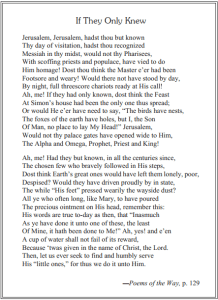
“I Am The Bread Of Life”
JOHN 6:26-37
Golden Text: “Jesus said unto them, I am the Bread of Life.”
After partaking of the miraculously provided supper, the multitude, evidently according to their habit, lay down in the fields, wrapping themselves in their outer garments. Indeed, this is even today a prevailing custom in Palestine with the poorer people when on a journey. In the morning they looked about for their benefactor, evidently expecting to find Jesus in the same vicinity, and no doubt also expecting that he would miraculously provide for their breakfast. But not finding him nor the boat in which the disciples had come they journeyed onward towards Jerusalem, but still on the lookout for the reputed Messiah. When finally they came upon the Lord and his company they told of their search—and our lesson for today begins with our Lord’s reply, You seek me not because of the miracle, but because of the satisfactory and free supper which you received. Here we perceive the wisdom of the Lord in not pressing matters too earnestly. He preached no sermon when he performed the miracle, but allowed it to have its effect; but now, instead of working another miracle, he preached a sermon, using his miracle as a text.
His reproof was not harsh, although it was quite pointed: Strive not for the food which perisheth, but for that kind which will produce everlasting life. This is the kind which the Son of man is prepared to give unto you, for him the Father, even God, hath sealed, indicated, marked as his appointed channel for blessing. The lesson contained in these words is obvious, and is as applicable today as then. The trouble with the whole world is that they have either earthly aims or no aims at all, and of the two conditions the latter is the worse. It is the people with aims, with purposes in life who are accomplishing something in themselves and for others. These are the worldly wise, who make two blades of grass grow where one grew before, who build factories and works and conduct large enterprises, and to whom in large measure civilization owes so much. They have ambition to be rich or to be wise or to be famed, and these ambitions spur them on to works.
But, alas! the great majority of mankind are in a much worse case, for without ambition they are merely eating to live and living to eat—merely animals of a higher intelligence. They labor for the meat that perisheth—it is their aim, their goal, and sometimes includes the inebriating cup, which steals from them whatever of sense they may have. Our Lord would have his hearers, including all his followers down through the age, note this message from his lips: that although the meat that perisheth is necessary under present conditions, those who are his followers will remember that their heavenly Father knoweth they have need of these and will not suffer them to come to serious want. And thus being without anxious care for the bread that perisheth they might turn their entire attention not to earthly but heavenly ambitions—the noblest, the grandest of all they might aspire to, because such blessed children come within the range of divine blessing of life everlasting. The meat, the food that would develop in them such an ambition and lead to its
What Shall We Do?
The discourse had its effect; the people realized that they were leading comparatively aimless lives, or that their aims were earthly and therefore would perish with their dying, and they asked the Lord what kind of work or labor he meant they should perform to secure the food that would bring the divine favor and gain them eternal life. What do you mean by works that would please God? This is just the point that Jesus wished to bring them to and that he wished to answer. He replied that the work for them to do at once was to exercise faith in him as the Sent of God—the Messiah. But they replied, What reason have we to think of you as the Messiah? Work for us some conclusive sign that will prove that you are Messiah and we will believe. The fact that you fed five thousand of us last evening with five loaves and two small fishes does not prove your Messiahship. Messiah is to be like Moses, only greater than Moses, and the miracle you performed is not as great as some that Moses performed. You furnished five thousand one meal and had the loaves and fishes to start with, but Moses fed our fathers for years in the wilderness without any bread as a start. The manna which he provided came down from heaven; as it is written, “He gave them bread from heaven to eat.” They were good reasoners in some respects—they were not going to be too easily converted, they wished to be thoroughly convinced before they would believe Jesus to be the Messiah; they had heard of others who had been deceived by false Messiahs; they were intending to stick close to the Scriptural record and to see that the one they would accept as Messiah must be greater than Moses, able to feed them and all the people every day—and with bread superior to that which Moses gave in the wilderness.
Then was Jesus’ turn to expound his teaching and to show that the comparison as between himself and Moses was not as to who would give a finer kind of earthly food and more of it, but that he would give a heavenly food, a spiritual food, which would secure to them a heavenly life. He therefore called attention first of all to their mistake in thinking the giving of the manna to be the work of Moses, saying plainly, It was not Moses that gave the bread from heaven, but my Father; do not credit that to the wrong source. Moses was indeed an honored servant of the Lord as the Lawgiver of Israel, but he neither gave the manna nor sent it. My Father who sent that manna in the wilderness has now sent another kind of bread, another kind of food, another kind of manna from heaven—not literal, but symbolical. The bread which God is now about to send to his people, also comes down from heaven and is intended to be the Bread of life for the whole world—not merely day by day for a few years, but for life everlasting.
“Evermore Give Us This Bread”
The lessons were going home to their hearts, as we know by their reply, “Lord, evermore give us this Bread.” We note the similarity of expression here with that used by the Samaritan woman to whom the Lord mentioned the gift of life under the figure of the water of life—“Evermore give me this water.” The answers in both cases show us the longings of the people of that time, both Jews and Samaritans, for something superior to what they had. As the poet has declared, “There are longings infinite in the human mind”—longings for life eternal. From remote times history tells us of how people in every clime have sought for health-springs and health-foods that thus they might have a longer continuance of the present life and, if possible, an annulment of death entirely. All realize that this has not yet been attained, and the war still goes on. It is on the strength of such longings of the soul for continued life that patent-medicines thrive. We are glad that there is such a longing in the human mind for a perpetuation of life; it becomes, as in this case and in the case of the Samaritan woman, a basis for further investigation for the eternal life which the Lord proffered.
Our Lord replied, “I am the Bread of life: he that cometh to me shall not hunger, and he that believeth on me shall never thirst.” Again our Lord’s words would undoubtedly be beyond the depth of the people’s understanding. We can imagine their consternation, and to assist us in sympathizing with them we should remember that they were not Spirit-begotten, because Pentecost had not yet come, “the holy Spirit was not yet given because Jesus was not yet glorified.” (John 7:39) Indeed, we find that this question is a very abstruse one with many of the Lord’s people today, and few comprehend it with any clearness except the Spirit-begotten. Let us make the matter as plain as possible by continuing the investigation of the context. Therein Jesus explains that he himself had come down from heaven—not merely like the manna from the clouds, but from heaven itself, having laid aside the glory which he had with the Father before the world was, having humbled himself to an exchange of his previous spirit nature for the earthly nature in which he was then addressing them—the man Christ Jesus. But they could not eat him while he was alive, nor could they even understand what he meant when he said, “My flesh is meat indeed and my blood is drink indeed,” and they reasoned, Will this man give us his flesh to eat? Is that what he means? The lesson was too deep for them; but, thank God, not too deep for us. As then some of the disciples forsook Jesus and walked no more with him, saying, “This is a hard saying, who can receive it?” so today there are some who cannot receive this teaching, which is the fundamental one of the Gospel of Christ. Whoever cannot receive this lesson cannot receive the other lessons which are built upon it. Our Lord further explained, “My flesh I will give for the life of the world.” He had not yet given his flesh, though he was in the process of giving it; he was drawing out its vitality, its strength, in their service, but would complete the work of his sacrifice by surrendering his all to death—even the death of the cross. And this he did later.
“We Eat His Flesh”
We do not eat the flesh of Jesus literally—we eat it by faith; that is to say, we appropriate by faith to ourselves the merit, the efficacy which was in his flesh and which he surrendered to death on our behalf. But why was this, and what did he surrender, and how do we partake of it? We answer that Adam as the head of the race had forfeited his life through disobedience and hence, instead of being able to propagate a race of perfect beings in harmony with God and privileged to have eternal life, his offspring was like himself, dying, unworthy of eternal life. In God’s arrangement a redemptive sacrifice was necessary—some one must take Adam’s place, suffer death for him in order to release him and to justify his race from the original sentence. No human being could be found who was perfect and who could give to Justice a ransom for his brother—for all were sinners, coming short of the glory, the perfection, which God recognizes as essential to eternal life. It was to meet these requirements that God made the arrangement with his Son by which the latter freely, gladly, for the joy set before him, died, the Just for the unjust, that he might bring us to God. (1 Pet. 3:18) So, then, it was our Lord’s flesh or human nature that was given for Adam and his race, and hence given for the life of the world, that the world of mankind might be recovered from under the sentence of death. Thus Jesus, by the grace of God, tasted death for every man and we are all redeemed, not with corruptible things such as silver and gold, but with the precious blood [life] of Christ, as a lamb without spot or blemish. (1 Pet. 1:18, 19)
We see, says one, how it was necessary for Christ to be made flesh and how it was necessary for him to give his flesh for the life of the world by going into death, but how shall we eat his flesh? is the question. Ah, we answer, the matter, as put in that figurative form, is beautifully simple and meaningful when we understand it. The eating of the Lord’s flesh must be an individual matter on the part of all those who would benefit by his sacrifice. The eating represents the appropriating by faith. Thus, when one comes to an understanding of the fact of the redemption and believes therein and goes to God in prayer and by faith accepts the forgiveness of his sins and reconciliation with God, he in so doing is eating the flesh of the Son of man; he is partaking of those benefits or advantages which our Lord’s flesh or sacrifice secured.
Justified By Our “Eating”
The result of such eating by faith signifies the appropriation to one’s self of all the blessings and privileges which our Lord possessed as a perfect man; it implies our justification on the human plane, our relationship to God as those whose sins are graciously overlooked or covered and who have joy and peace and fellowship with God through faith in the precious blood. We are to continue to eat that we may grow stronger and stronger—that we may be able to appropriate more and more the wonderful blessings and privileges, relationships and divine favors which belonged to our Lord, but which he surrendered on our behalf and on behalf of all the members of Adam’s race. Additionally, those who are rightly influenced by the eating—those who are drawn nearer to the Lord and led to a full consecration of their all to him—these receive a special invitation during this Gospel Age to drink of his blood. The blood is the life in Scriptural language, and hence ordinarily the Jews were not to drink blood; to do so would make them guilty or responsible for the death of the person or creature. Thus the Jews said of our Lord, “His blood be upon us”—we assume the responsibility of his death.
And thus also the Apostle explains that those who partake of the blood of Christ symbolically in the communion cup are symbolically representing themselves as being guilty of the blood of Christ, guilty of the death of Christ—unless they partake of it with the proper, the intended signification. What is that intended signification? We answer that our Lord stated the matter at the last Supper, saying to his disciples, “This is the cup of the New Covenant in my blood—drink ye all of it.” This cup of the fruit of the vine represents my blood, my death; by it the New Covenant will eventually be sealed, and I invite you who believe on me to partake of this with me, to partake of this not as those who caused my death, but as those who voluntarily gave up their own lives and joined with me in this death, in this self-sacrifice. As you partake of this cup with me it signifies that you lay down your lives as I laid down mine and that you become participants with me in this cup which speaks, which means the great sacrifice, the great life given through which the New Covenant will be established, under which all the families of the earth will be blessed.
So, then, under the guidance of the holy Spirit through the words of the Apostle we may see a depth of meaning in our Lord’s words which the people whom he addressed did not comprehend. Indeed, we believe that while our Lord addressed these words to the Jews he intended them more particularly for us to whom they have been communicated and by whom they have been more fully understood. We rejoice, then, in the justification which we have through partaking of his flesh—through being justified by the sacrifice of his humanity—our appropriation of our share of human justification. And we rejoice also that eventually the whole world shall be privileged to eat of that flesh—to accept the grace of God in the cancellation of their human sins and weaknesses, and to realize that all those blessings of restitution times, the blessings of the Millennium, will come to them because Christ died for their sins, because he gave to them his flesh to eat. The whole world is to eat of that Bread, and, as the Apostle intimates, the Church is now privileged to be a part with the Lord in the Loaf that is being broken, as well as to be participants in the cup of ignominy and self-sacrifice which the Father poured for him and which he permits us to share with him—for if we suffer with him we shall also reign with him, if we be dead with him we shall also live with him, if we drink of his cup we shall also share in his joys in the Kingdom by and by. (2 Tim. 2:12)
Whom The Father Giveth Shall Come
The multitude who had eaten of the bread the night before, and who now had received the explanation respecting the higher food necessary to eternal life, did not believe, although they recognized Jesus as a very wonderful personage indeed, and probably, like another multitude, were ready to declare, “Never man spake like this man.” (John 7:46) Was our Lord disconcerted and disappointed because these thousands of Israel, heirs of the promises, received him not, heeded not his message? Nay, verily! Nor should we his followers think strange of it that in this harvest time the divine message should be incomprehensible to the great majority of the household of faith of our time. We read nothing of our Lord’s becoming excited to a frenzy and appealing to the people and teaching them that they were about to fall into an eternity of torture if they did not receive him. We read nothing about the apostles going out amongst them and urging them to a mourner’s bench. Quite to the contrary of all this. Jesus evidently expected that few would believe; he even turned to his disciples and said, “Will ye also go away?” But they answered, No; to whom should we go? from you we have the message of eternal life which comes from nowhere else. Master, we will stand by you; we could not do otherwise, our every interest is bound up in this glorious message which we have heard from your lips. We are ready to die with you, to drink of your cup.
Instead of manifesting any perturbation our Lord said to the multitude, This is what I told you before; ye have seen me, ye have believed not. Why? Because ye are not of the flock of sheep whom my Father hath given me to lead at the present time.
Other sheep I have which are not of this flock; by and by I will attend to them. But now, “All that the Father hath given me shall come to me; and him that cometh to me I will in no wise cast out”—reject. What is this if not an election, a selection? How much in harmony it is with what our Lord uttered in his prayer on the night before his crucifixion, “I pray not for the world, but for those whom thou hast given me … that they all may be one; as thou, Father, art in me and I in thee, that they also may be one in us; that the world may [then, later] believe that thou hast sent me!” (John 17:9, 21) As our Lord was not expecting all to come to him and to accept of his gracious offer and God’s gracious provision in him and thus to be justified through eating his flesh, so he could not expect either that many would go on still further and make the consecration to walk in his steps in the narrow way and thus be partakers of his cup and prospective joint-heirs with him. Oh, no! these in all, from first to last, are but a Little Flock, but a very blessed Little Flock to whom, as the Master declared, the Father will give the Kingdom. (Luke 12:32) And when they shall be changed and are like their Master and shall receive the Kingdom power and glory and dominion—then will come through that Kingdom the overthrow of the prince of darkness, the prince of this world; the overthrow of sin and the work of blessing, enlightening and uplifting all the poor world of mankind who are not now called and drawn by the Father!
Note our Lord’s words in this connection, “No man can come unto me except the Father which sent me draw him.” (John 6:44) There is an exclusiveness about this: the time had not yet come, mentioned in Revelation, when the water of life shall flow freely, and whosoever will may come. (Rev. 22:17) That glorious time belongs to the Millennial Kingdom and not to the present time, which is devoted to the election or selection of the Bride class of joint-heirs which the Father is now drawing, calling, sealing. Mark the distinctive difference between this drawing of the present time by the Father and that later drawing of the Millennial Age, which will not be by the Father but by the Son, and which will not be exclusive but inclusive, including all mankind. Hearken to our Master’s words to this effect, that “I, if I be lifted up, will draw all men unto me.” (John 12:32) All men are not yet drawn to the Lord. Why? Because the lifting up is not yet complete. The Head was lifted up not only at Calvary but was subsequently highly exalted as a reward, and the members of his Body, the members of the Bride class who follow in his steps, must finish their course and also be highly exalted as his joint-heirs before the lifting-up process will be complete.
With that glorious “change” of the First Resurrection the Millennial Kingdom will be ushered in and during that wonderful reign of righteousness, that shining forth of the sun of light and truth for the blessing of the world, all mankind will be drawn away from sin and selfishness, away from sickness, pain and sorrow, away from everything that is evil, toward the Lord, that they may partake of his flesh indeed and have eternal life with all the blessings of restitution which God has provided through the great Redeemer. We are not in this teaching Universalism, for as many of those who are called and drawn now to be of the Bride class can, and many do, resist the drawings, or, as the Apostle says, “receive the grace of God in vain.” So it will be possible to resist the drawings of the Millennial Age, as is pointed out in the Scriptures in various statements, of which this may suffice, “It shall come to pass that the soul that will not hear [obey] that Prophet, shall be destroyed from amongst the people”—in the Second Death, without hope of any recovery. Note again the Lord’s promise to these Elect ones whom the Father now draws and who now come and feed upon our Lord’s flesh and who drink of his cup, his blood, and participate with him in his sacrifice. Their hope is stated in these words, “I will raise him up at the last day.” The last day, the great seventh day, the Millennial day. Ah, yes! We remember it is written respecting the Church, the Bride class, “God shall help her right early in the morning” (Psa. 46:5)—the morning of that Millennial day. The six days, epochs of one thousand years each, from Adam have passed, the seventh is already dawning and the time is near at hand when the Bride, all glorious, shall be presented to the great King, the Father, by the great King, his Son, our Lord—“with gladness and rejoicing shall she be brought: they shall enter into the King’s palace.” (Psa. 45:15)
“I Will In No Wise Cast Out”
How glad we are that our dear Master added these words. Without them we might have doubted the efficacy of the calling and the drawing which we receive; and some might have said, Yes, I was indeed drawn, but evidently the Lord Jesus did not count me worthy of a place amongst his followers. He here assures us that the drawing of the Father which brings us to him with a desire to be his disciples will insure for us his aid, his succor, his assistance, his acceptance. Thus we may know that if we fail of the grace of God now provided for us in the high calling, it will be our own fault, because of failure to give heed to the voice of the Shepherd and to walk in his steps.
The Memorial, April 14
After six o’clock on Tuesday evening, April 14th, readers of this journal in all parts of the world will gather as ecclesias of Christ to memorialize his death with “unleavened bread” and “fruit of the vine” as emblems of his broken body and shed blood. The largest of these will probably assemble at Allegheny Carnegie Hall—not a great multitude meeting anywhere—while the little ecclesias will be numerous—for, as the Master said, “Wherever two or three are met in my name, there am I in their midst.” (Matt. 18:20)
We urge that none neglect this annual privilege, for any reason. There is a special blessing in its observance. If you incline to feel discouraged, go partake of the broken loaf, asking the Lord for a fresh realization of your justification, and a fresh appreciation of your consecration to be broken (sacrificed) with him, as reckoned members of the one loaf—his Church, his Body. Then as you taste of “this cup” remember that it speaks of our Lord’s sufferings on our behalf—his tasting death for every man. Remember, also, that this is “our high calling”—“to suffer with him that we may also reign with him.” This is the significance of his words, “drink ye all of it.” And, as the Apostle declares, it is the communion in his sufferings. (1 Cor. 10:16)
Let us not forget that the Memorial is meaningless or worse unless thus accepted and appreciated. But let nothing hinder us—neither sins, nor coldness, nor feelings of unworthiness. Go to the Lord and make a clean breast of all your shortcomings. Go to your brethren or any whom you have wronged—make full acknowledgment, whether they acknowledge faults toward you or not. Get yourself right with your Lord and so far as possible with every man, and then eat—yea, feast upon the rich provision the Lord has made for all who accept, now or in a later “due time.”
Such a heart-searching and cleansing, we remember, was shown in the Passover type given to the Jews. Before they gathered to eat their Passover-lamb they searched everywhere throughout their habitations for anything containing leaven or putrefaction, bones, crusts, everything. These all were burned—destroyed. So must we fulfill the antitype and “put away the old leaven” of anger, malice, hatred, strife. (1 Cor. 5:7, 8)
But remember that this kind of leaven of sin cannot be thoroughly put away unless it be burned; and only love can burn it out—heavenly love, the love of God. If we have that love shed abroad in our hearts it will consume everything of the opposite character—jealousy, hatred, evil speaking, etc. Put off all these, urges the Apostle, and put on Christ and be filled with his Spirit. Do not be discouraged. True, for the time you ought to be further along, nearer to perfect love. But learn the lesson and start again with fresh resolutions and increased appreciation of the fact that of yourself, without the Master’s aid, you could never gain the prize. He knows this better than do we, and says “Without me ye can do nothing.” It was because of our need that the Father thus arranged for us. “Be of good courage!” is the Master’s word to all who are longing and striving to be of the class called “Conquerors.”
Your Adversary The Devil
Temptations seem to be specially permitted at this season of the year. “Roots of bitterness” seem to sprout and grow al- ways, but at this season with tenfold vigor. Let us remember that Love, not Knowledge, is the final test of our disciple- ship. “A new commandment I give unto you, that ye love one another.” It was because the apostles had not enough love for one another that they disputed as to which should be the greatest in the Kingdom, and were so determined not to stoop to one another that they neglected also to wash the Master’s feet, and gave him the opportunity even in menial things to be servant of all. It was this wrong spirit—this lack of the Lord’s Spirit—that made them susceptible to the Adversary’s power and led Judas to betray and Peter to deny the Lord’s Anointed.
Let us then take heed to ourselves and watch and pray and be very humble and very loving, lest we fall into temptation. Not since that time probably has our great Adversary been more alive than now to do injury or to entrap or to stumble the followers of Jesus.
For the benefit of readers “at the ends of the earth” we published as early as in our February 1st issue a treatise on this Memorial subject (Reprint 4127); and again in our March 1st is sue we discussed the Bread of Life (Reprint 4146). We commend a fresh examination of those presentations and of our treatment of the subject in Vol. 6, page 457.
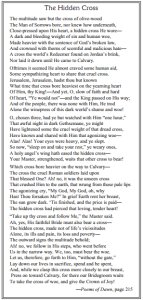
Parable Of The Leaven
MATT. 13:33
Throughout the Scriptures leaven is used as the symbol of sin. Thus when Jesus in His purity was to be symbolized as the “bread from heaven,” the Jews were directed to use unleavened bread. Again, at their annual Passover season, the Jews were directed to cleanse their houses of leaven, to burn it up, to destroy it. Here again leaven was a symbol of sin, corruption. St. Paul, commenting on this, writes to the Church, “Purge out, therefore, the old leaven [sin, malice, hatred, strife, etc.], that you may be a new lump”—that you may be, with Christ, the one unleavened loaf. It is of this Loaf that he declares, “For we, being many, are One Loaf, and one Body; for we are all partakers of that One Loaf.” (1 Cor. 10:17)
It is true that in one of the official sacrifices bread was to be baked with leaven; but this, we believe, was for the very purpose of symbolizing or representing us, the Church, and the fact that we were by nature sinners, children of wrath, even as others, and that the baking would arrest the corrupting influences of the leaven; and this baking represented symbolically the experiences through which the Church must pass in order that sinful and corrupting tendencies might be completely destroyed in us.
In this parable our Lord represents a woman mixing leaven with a family baking of meal, with the result that the whole mass was leavened. Consequently, if any of the family desired pure, unleavened bread, it would be unobtainable, because the leaven pervaded the entire baking. What does this represent? We reply that in Scriptural symbolism a woman represents an ecclesiastical system. The woman in the parable represents a system organized and in power at an early date, and possessed of the pure meal—the pure food provided by the Lord for the household of faith.
The woman mixed leaven, error, false doctrine, with all the meal, with all the food supplied. Not a particle of it was left uncontaminated. The result has been indigestion. The Word of God, originally pure, is no longer accepted. The leaven, or fermentation, has spread so that today the entire mass of theological doctrine is putrid and offensive to all Christian people of all denominations.
The parable was a prophecy of what has occurred. It is time all true Christians were hearkening back from the creeds of the Dark Ages to the Words of Jesus, the Apostles and the Prophets. We are glad to note that “His Holiness, the Pope,” is prominent amongst those who are pointing back again to the teachings of the Bible, as being the unadulterated Word of God, which alone “is able to make us wise unto salvation,” and by which alone “the man of God may be thoroughly furnished unto every good work.” (2 Tim. 3:15-17)
Our “Cup Of Blessing”
“The cup of blessing, for which we bless God, is it not a participation of the blood of the Anointed One? The loaf which we break, is it not a participation of the body of the Anointed One? Because there is one loaf, we, the many, are one body.” —1 Cor. 10:16, 17, Diaglott
The cup of blessing, for which we bless God,” is indeed a cup of blessing in many respects. It represents the blessed privilege of suffering with Christ, and the blessed things which will come as a reward of those sufferings. The Lord declares that the promise will have fulfillment in the Kingdom, when we shall share the Kingdom joys. The Church is represented as being a part of the great Vine which God has planted; as Jesus says, “I am the Vine, ye are the branches.” (John 15:5) Our Lord tells us of the precious fruit of this Vine, the development of which represents the sorrowful part of our experience. There is a sense in which the cup represents the joy which we shall have when we shall have passed beyond the sufferings of this present time and shall have entered into glory. (Matt. 26:29) The expression, “for which we bless God,” may be understood to mean, for which we give thanks and praise to the Lord. Whoever receives the cup without thankfulness of heart, without appreciation, will not get the great reward. In order to receive the blessing designed, we must receive the cup with thankfulness for this great privilege of suffering with Christ.
In considering this question of the Apostle, “is it not a participation [common union] in the blood of Christ?” we should have a double thought before our minds: first, of the literal cup to which he refers, the literal fruit of the vine, which represents the blood of Christ; and second, the fact that we have the privilege of partaking of His cup, the sacrificial cup. We have the privilege of sharing in His death, sharing in His sufferings. This thought is borne out in other Scriptures—that Jesus is the Head of the Church which is His Body, etc. He is to be the great Prophet, Priest, King, Judge and Blesser of the world.
According to the Scriptures, the great Head was glorified, after having endured the sufferings even unto death, after having laid down His life for the world. And He has adopted us as His members—members now in the flesh, to be His members shortly in glory. We use the word members in the sense that we speak of members of the House of Parliament. The body of Parliament has many members, and so the Body of Christ has many members. The terms on which they may make their calling and election sure are that they shall believe in Christ and shall give themselves to God. Then our Lord will adopt them as His members, members now on earth and afterwards members of Him in glory.
“Drink Ye All Of It”
On condition, then, that we drink faithfully of this cup (Matt. 26:27), we shall make our “calling and election sure.” (2 Peter 1:10) The injunction, “Drink ye all of it,” had a double signification: first, it must all be drunk before the end of the Gospel Age; and secondly, all who would be members of His Body must drink of it. St. Peter spoke of the sufferings of The Christ, Head and Body, which have now been going on for more than eighteen centuries, and of the glory that shall follow. (1 Peter 1:8-12; 4:1; 5:1) As soon as the last member shall have passed into the Heavenly condition, all the sufferings of The Christ will be over, and none others will have the privilege of sharing in the “sufferings of Christ,” even as some others will have the privilege of sharing in His glory and becoming His “Bride, the Lamb’s Wife.”
It is one cup, though it contains the juice of many grapes; and it is one loaf, though made from many grains. The grains cannot retain their individuality and their life if they would become bread for the world. The grapes cannot maintain themselves as grapes if they would constitute the life-giving spirit. Thus we see the beauty of the Apostle’s statement that the Lord’s people are participants in the one loaf and the one cup. There is no other way by which we may attain the new nature than by accepting the Lord’s invitation to drink His cup, and by being broken with Him as members of the one loaf; by being buried with Him in baptism into His death, and thus attaining with Him a resurrection to glory, honor and immortality, attaining unto the First Resurrection.
The Church’s Part In The One Loaf
The loaf represents primarily the Lord Jesus’ body, which is broken for us and for the world in general. In a larger sense it includes all the Body of Christ, all who become His members. Thus the breaking of the loaf, the breaking of the Body, has continued for more than eighteen centuries.
We read that in the institution of the Lord’s Supper Jesus broke the loaf. As a matter of fact, He was the only one at that time who could break the loaf. All others of mankind were unjustified in God’s sight until Jesus by His sacrifice and exaltation made good the deficiency of a certain class. So Jesus was the first to break the loaf. Today, as the unleavened bread at the Memorial season is passed to each of us, and as each takes a portion of it, he breaks it for himself.
The fact that our Lord first broke the bread does not mean that we should not have our individual part. We recall that the Heavenly Father had to do with the breaking of our Lord’s body. As it is written, “It pleased Jehovah to bruise Him; He hath put Him to grief.” (Isa. 53:10) This was not done against our Lord’s will. While the Heavenly Father had to do with His breaking, so, in harmony with the Divine arrangement, the breaking of our share of the loaf.
The Apostle’s statement in the succeeding chapter, “Ye do show forth the Lord’s death,” applies exclusively to the death of Jesus. The setting of the words indicates that it is the Lord Jesus personally who is mentioned: “As often as ye eat this bread and drink this cup, ye do show forth the Lord’s death till He come.” (verse 26) “He is thy Lord, and worship thou Him.” (Psa. 45:11) The Church is never spoken of as the Lord.
Furthermore, we are to remember that Jesus said, “This do in remembrance of Me.” (Luke 22:19) He did not say, This do in remembrance of yourselves—in remembrance of your own share in the sacrifice. We are to be dead with Him. We remember that we must share with Him in the sufferings of this present time if we would share in the glories to follow. The Father gave Him to be the Head—“God blessed forever.” (Heb. 3:1; Rom. 8:17, 18; 9:5)
The Life Is In The Blood
The Scriptures say that the life is in the blood. (Lev. 17:11) In harmony with that statement, the Jews were bidden to always refrain from eating the blood. The animals must be bled before they were permitted to eat the flesh. Nor was any stranger sojourning with them to eat any blood. (Lev. 17:10-14) In this way, God would seem to say that life is a very sacred thing. This life principle that He gave to man seems to reside in the blood. As long as the blood is passing through the organs of circulation, there is life; but when the blood is shed, the being dies.
When our Lord laid down His earthly life, He did not retain a right to that earthly life in the sense of using it for Himself. He tells us in the parable that all who would gain “the pearl of great price” (Matt. 13:45, 46), must sell all that they have; that is, all that they enjoy of earthly life or privileges. Our Lord had a perfect earthly life. He gave up that life. “He poured out His soul [life] unto death.” (Isa. 53:12) On what basis? On exactly the same basis He has put before us; if we would live, we must die; if we would reign, we must suffer; we must be dead with Him. (2 Tim. 2:11, 12) So we who follow in His steps do the same that He did.
If we, as His disciples, lay down our life for the brethren, we are doing what Jesus did. This is all to be applied for the world. He took that earthly life, not to keep it, but to turn it over, eventually, to all mankind. The right to human life is still in His control. He is the One who, as the great Mediator, will give to the world of mankind the life He poured out.
He now imputes His merit to the Church, that we may share with Him in His suffering and in His glorious Kingdom, on the spirit plane. This cup, then, represents the full renunciation of earthly life and of all claim thereto. Our Lord’s earthly life was not forfeited, but merely laid down. (John 10:17, 18) The intention in laying it down was to abandon it, personally, forever, that humanity might get it. He has not yet accomplished this, in the sense of turning life over to them, but He gave up His life with that purpose in view.
Unforfeited Earthly Life-Right
Our Lord undertook to accomplish the Divine will in the redemption of the world, and He has proceeded in the accomplishment of it, but has not yet completed the purpose. He laid down His life, but did not forfeit it. When He was raised from the dead He still had a right to that earthly life, with the understanding, however, that He was not to use it for Himself, but that He would give that life to all the world who were willing to receive it, assigning it to them at the end of His Reign of a thousand years, during which His Church will Reign with Him.
So then, His life was not taken from Him; for His life could be taken from Him only by His disobedience. (Lev. 18:5; Ezek. 20:11; Luke 10:28; Rom. 10:5) He laid it down voluntarily, in harmony with the Divine will. He laid it down that it might become an asset in the hands of Divine Justice, so that when the time should come He might use that asset for mankind. (John 6:51)
In the beginning it was the Divine purpose that our Lord’s human life should be laid down forever, that He should not take it again. He consecrated His life at Jordan and finished the sacrifice at Calvary. Throughout the Gospel Age He has been sacrificing His Mystical Body. Just as soon as He shall have finished the sacrificing of all these Body members, then their life-right, which belongs to the great High Priest, will be used for the purchase, the redemption, of the world, by the sealing of the New Covenant. Immediately after this, His Kingdom will be established. This further application of His merit, His life-right, which will not be made until the whole Church has passed beyond the veil, is symbolized by the sprinkling of the Mercy Seat with the blood of the goat. The blood of our Lord and the blood of His Body is all one blood. It is one Priest of many members. It is one Atonement for all—for the sins of the whole world. (1 John 2:2)
The blood represents not only the death of Christ, but also the death of all the members of His Body, to whom merit is imputed. This the Apostle expresses in the same connection, saying, “The cup of blessing which we bless, is it not the communion [common union, or participation] of the blood of Christ? The bread [loaf] which we break, is it not the communion [common union, participation] of the Body of Christ?” that is to say, a union in common with Him, a partnership, as represented in the cup and in the bread [loaf]. The whole matter has its origin in Him. But we are celebrating also our own individual share as members of the Church in the sacrifice of the flesh, in our participation in the sufferings of Christ.
Significance Of Eating Our Lord’s Flesh And Of Drinking His Blood
“Except ye eat the flesh of the Son of Man, and drink His blood, ye have no life in you.” John 6:53
In this chapter the Lord is addressing the Jews, who believed not on Him, but murmured because He told them He was the true Bread from Heaven. His expression, “eat the flesh and drink the blood,” had a deep spiritual significance which none but Israelites indeed could receive. And this is still true today. The world, when dealt with in the next Age, by Jesus, will indeed have the opportunity to eat of His flesh—to appropriate the merits of His sacrifice; but they will have no opportunity of sharing in His Cup—of drinking His blood. Symbolically, the Cup signifies the sacrificed life. The world will have no share in the sufferings of Christ, represented in the Cup.
Our Lord’s words imply, If you accept My proposition of the Gospel Age, you may have life, and have it more abundantly than man has ever had it or could have it. You may have inherent life—“life in you.”
The Two Salvations Pictured
There is a difference, we believe, maintained in the Scriptures between the bread, which symbolizes the Lord’s flesh, and the wine, which symbolizes His blood. The Church, in order to be accepted of the Lord as members of His glorified Body, must share in both of these by participation. The loaf, as the Apostle explains, not only represents to us our Lord, as the Bread of Life necessary for us, but it also represents us as His members to be broken as our Lord was broken; and the wine represents not only our Lord’s blood, but also the blood of the Church—that we are sharers with Him in His sacrificial sufferings. (1 Cor. 10:16, 17)
The privilege of sharing our Lord’s Cup is not for the world. They will not share in the sufferings of Christ, because all opportunity to share in His sufferings and glory will have ended when the Church is glorified. The Lord said, “Drink ye all of it”—drink it all. There will be none for the world to drink. And we who are of the Church class “fill up that which is [left] behind of the afflictions of Christ.” (Col. 1:24)
“The flesh of the Son of Man” represents Restitution to human privileges, i.e., the means to its attainment, and restores to man the life which he had forfeited—the life lost in Adam—human life, earthly life. It will be the gift of God through Christ. But the supplying of this Bread will not be sufficient. The world will need to eat of the Bread and to have the assistance the Lord will give them through His Kingdom. Jesus said (verse 51), “I am the living Bread which came down from Heaven; if any man eat of this Bread, he shall live forever.”
From one viewpoint the world may be spoken of as not dead. They have lost their right to life, but God has made arrangements through Jesus by which that life will be restored. It was lost in Adam, but will be restored through Christ, the second Adam. During these six thousand years the world has been in a starved and fallen condition. But God has provided this Bread and it will be for them in the Millennial Age.
It is not shown symbolically anywhere in the Scriptures that the world will partake of the blood, and thus participate in the sufferings of Christ. Only a few are represented as partaking of the blood. This is shown in Lev. 16. The blood sprinkled the second time on the Mercy Seat is for all the people, thus satisfying Justice. This represented the release of all humanity from the sentence of death, giving all an opportunity to eat of the Bread and not die.
In another picture, we find the blood used representing man’s acceptance of the Divine arrangement. In the sealing of the Law Covenant, which is a type of the New Covenant, Moses first sprinkled the books of the Law, representing the satisfaction of Justice. Then with the same blood he afterwards sprinkled all the people. (Heb. 9:19; Exod. 24:8) The sprinkling of the books of the Law required only a few seconds; but the sprinkling of the people required a long time.
At the beginning of the Millennial Age—as soon as the Church is joined to her Head beyond the veil—the blood will be sprinkled to satisfy Justice for the world. Then, as the Mediator, Christ will proceed to do a work for all who will receive it. And that work is symbolically represented as sprinkling the people with the blood. In other words, every member of the race will be privileged to come into Covenant relationship with God through the Mediator, by accepting the terms which He will hold forth during the Millennial Reign.
Most Valuable Food And Drink Known
If they meet the requirements during Messiah’s Reign, by the close of that period they will be perfect; and He will present them before the Father, and all will be received into full covenant relationship with Him, who endure faithfully the test then applied.
In our context (verse 54), we read, “Who so eateth My flesh, and drinketh My blood, hath eternal life.” Our Lord’s statements in many instances are made so broad that they cover, not only the Little Flock, but the Great Company as well, and therein show great wisdom. In this verse the Lord does not say, “hath eternal life” in him; for of those who now make a Covenant of sacrifice, and become sharers of the Cup as well as of the Bread, there are some who will not attain to inherence of life—immortality— but who will come through great tribulations and attain life on a lower spirit plane. They will not have inherent life, though it will be everlasting life. Those who attain immortality will have eternal life, on the highest plane. Those of the Great Company will have eternal life, but not immortality—not life in themselves.
When our Lord said, “For My flesh is meat indeed, and My blood is drink indeed” (verse 55), we understand Him to mean that this is the most valuable food and drink ever known. No other bread has such value, and no other drink could be so precious as this, by the partaking of which one may attain to glory, honor and immortality—the Divine nature, life in itself.
Antitypical Showers Of Manna
The Bread from Heaven was our Lord’s flesh, which He was to give for the life of the world. And Jesus explains this to be what was typified by the manna that fell in the wilderness. He said, “Your fathers did eat manna [in the wilderness], and are dead. He that eateth of this Bread shall live for- ever.” He also said (John 12:24), “Except a corn of wheat fall into the ground and die, it abideth alone; but if it die, it bringeth forth much fruit.” And He did fall into the earth and die. And we become sharers with Him in His death. We participate in His sufferings and death, which the world will never do. They share in its outcome.
All the work of this Gospel Age, is the getting ready of the food for the world, and of the blood which will be sprinkled upon them. But the Message of our Lord in our text was not intended for the world. As He tells us, “Unto you it is given to know the mysteries of the Kingdom of Heaven.”
It is only a special class who could know anything about the Mystery of God all through these nineteen hundred years— the two millenniums. These things have been hidden from the world in general. But now we believe that the time is here when they are to be given to the world, making the world conscious of the blessing that God has in store for them soon. The Scriptures tell us that the Mystery will be unfolded during the sounding of the seventh trumpet—which is now sounding. This making of these truths known, therefore, would seem to be the showering of the manna.
“Are Ye Able?”
“Are ye able to drink of the Cup that I shall drink of?” Matthew 20:22
We recall the circumstances under which these words were uttered by our Savior: It was just a few days before His crucifixion. Jesus had promised His disciples that they should sit with Him in His Throne in His Kingdom. So confident were they that this would be as the Lord had said that they were discussing the position they might occupy. The mother of the two disciples, James and John, came to Him and asked whether her two sons might sit, the one on His right hand and the other on His left, in the Kingdom. And Jesus, turning to the two disciples, replied by asking them: “Are ye able to drink of the Cup that I shall drink of, and to be baptized with the baptism that I am baptized with?”
We know that Jesus’ baptism in water took place at the beginning of His ministry. In harmony with the Divine Plan, He was to die as the Savior of men. And He symbolized this death as soon as He was thirty years of age—as soon as was possible under the Law. During the three and a half years of His ministry, He was accomplishing this baptism, He was pouring out His soul unto death, and this death He finished at Calvary. Jesus said, “The baptism that I am [being] baptized with”—now—not a baptism which was either future or past.
But He spoke differently of the Cup—“the Cup that I shall drink of.” He thus implied that the Cup was future—not in the present nor in the past. He had told His disciples that He would go up to Jerusalem; and that there He would be crucified, and on the third day He would rise again. And He said on another occasion, “Except ye eat the flesh of the Son of Man, and drink His blood, ye have no life in you.” What the Master said about His being crucified the disciples did not understand. But Jesus understood the situation, and He knew that this Cup was about to be poured for Him. And so He spoke of it again, saying of Himself, “The Cup that My Father hath poured for Me, shall I not drink it?”
Our Lord’s Special Trial
We might think of the word, Cup as representing various experiences of life—that everybody has his Cup of mingled joy and sorrow. But Jesus used the word in a different sense. When He was in the Garden of Gethsemane He prayed, “O My Father, if it be possible, let this Cup pass from Me! Nevertheless, not as I will, but as Thou wilt.” And again, the same night He prayed, saying, “O My Father, if this Cup may not pass away from Me, except I drink it, Thy will be done!” In the matter of His baptism into death, there was no hesitation on our Lord’s part. On the contrary, from the very beginning He voluntarily participated in it. The ignominious death was the thing that He prayed might pass, if it were possible. But this was what He learned was the Father’s will for Him, and He was content to have it so.
There was nothing in the Law to indicate that our Lord should be executed as a blasphemer of the Divine Law. Yet blasphemy was the charge preferred against Him. The Sanhedrin decided that He was a blasphemer in that He had said, “Destroy this Temple, and in three days I will raise it again,” and also in claiming that He was the Son of God. Apparently, then, the thing which was specially weighing on His mind and from which He would have liked to be relieved was the ignominy and shame of being crucified as a criminal, as a blasphemer of the Father He loved so well. Jesus knew that He had come into the world to die, and that He must suffer. But this part of His experience He had not fully understood. Evidently He knew that “as Moses lifted up the serpent in the wilderness, even so must the Son of Man be lifted up”; for comparatively early in His ministry He had stated this in His conversation with Nicodemus. But as He came down nearer and nearer to the time of His humiliation, His degradation, and realized all that it meant, He felt a great shrinking from it and poured out His heart in the cry, “If it be possible, let this Cup pass from Me!” But immediately—proving that His affirmation, at the time of His consecration, “Lo I come to do Thy will, O God,” was not empty words—He added, “Nevertheless, not as I will, but as Thou wilt!” (Matt. 26:39)
Are We Willing To Share His Ignominy? And so to His disciples our Savior said: Are you able to lay down your lives completely, even though this shall mean to you injustice in the taking away of your lives? Are ye able to drink of the Cup that I shall drink of? There will be disgrace and ignominy connected with it all. Are ye willing to share with Me in this, My Cup? They answered: “We are able.” They were willing. This, we see, is the same Cup represented in the Communion Service. The bread represents the body and the wine the blood of our Lord. The Cup especially represented the shame and ignominy connected with His death; and the two disciples said that they were willing to share His Cup—they had no hesitancy. At any cost they would be faithful. They would comply with any conditions He would make. They did not, of course, yet know the full import of the word baptism or of the word cup. These were things all His disciples were feeling after. When Pentecost should come, these things that Jesus had spoken to them would come to their remembrance, as He had foretold. (John 16:4; 13:19) But they were willing and anxious. And that is all that we can be. Jesus guaranteed that, being willing, they should have these experiences; that, continuing willing, continuing to suffer with Him here, they should reign with Him in His Throne. But as to the particular place for each in the Throne, that would not be for Him to say, but for the Father.
The courage, the fortitude, of our dear Redeemer in walking the narrow way fills us with admiration. How strong and brave was His character! He had no thought of looking back; His whole being was intent upon accomplishing the will of His Father in Heaven—upon sacrificing Himself in the interest of the world. What a noble Example was set before the Apostles!—greatness in humility, victory through entire self-surrender!
Drinking Of The Lord’s Cup By The Church
The drinking of the Lord’s Cup by the Church, represents our participation in the sufferings of Christ in the present time. None shall be a member of the Body of the great Mediator of the New Covenant unless he come in now under the proper terms. The drinking of the blood, then, is the sharing of the Cup. For if we drink not of His Cup, neither shall we share with Him in His glory. He said, “Drink ye all of it.” All must drink, and the entire Cup must be drained during this Age.
It is a very great privilege that we are permitted to have a share in the sufferings of Christ. “If we suffer [with Him], we shall also reign with Him.” We shall participate in the inauguration of the New Dispensation, and in dispensing its blessings. The Antitype of Moses, who will do the sprinkling, is Christ the Head and the Church His Body, glorified, of whom we read in Acts 3:22: “For Moses truly said unto the fathers, A Prophet shall the Lord your God raise up unto you of your brethren, like unto me”—that is, Moses was His type, on a smaller scale. The Body is now being raised up. Jesus was first raised up, then all the Apostles; and following after, the remaining members of His Body.
As Moses sprinkled all the people, so this antitypical Moses, when completed, will “sprinkle” the world of mankind; and this will mean the bringing of them into harmony with the Divine Law. It will require the thousand years to “sprinkle” mankind. So there is a great difference between the drinking of the Cup and the sprinkling of the blood. The sprinkling with the blood represents justification, while the drinking of the Cup by the Church represents, not only justification, but sanctification.
Our Lord’s Recognition Of The Divine Purposes
Our Lord, in His memorable words to St. Peter—“The Cup which My Father hath given Me, shall I not drink it?”—referred, evidently, to His dying experiences, which were severe in the extreme. He was dishonored of men and reckoned as an enemy of God—a blasphemer. His physical sufferings He knew would be intense, but to His perfect mind the shame and disesteem, the opprobrium, added greatly to the poignancy of His anguish. Yet this was the Cup the Father had given Him; it was the Divine purpose respecting Him.
Our Lord had all the experiences necessary for proving and testing His loyalty; for it was necessary that He manifest His loyalty before both angels and men. The whole matter had been Divinely arranged from before the creation of man. He was “the Lamb slain from the foundation of the world.” (Rev. 13:8) Everything pertaining to that slain Lamb was foreknown by the Father. Jesus was to drink the Cup which belonged to the sinner, in order that He might redeem man and might thus be a faithful and merciful High Priest. This was the Cup of suffering and death. It was necessary that Jesus should suffer the death of the cross, in order that He might redeem the Jew.
Love And Loyalty Manifested By Submission
All His sufferings were foretold in the Scriptures. The crucifixion was pictured by the lifting up of the brazen serpent in the wilderness. All of His experiences were foreknown, fore arranged and necessary. When He came to earth to do the Father’s will, He did not know of all that was to come. But He learned obedience by the things which He suffered, the things which were “written in the Book.” He submitted Himself to all the Father’s will, and thus He proved His loyalty. As He Himself declared, “I came not to do Mine own will, but the will of My Father which sent Me!” As the hour of the consummation of His sacrifice drew near, in the lonely shades of Gethsemane, the Master prayed, “My Father, if it be possible, let this Cup pass from Me!” We are not to suppose that He prayed for the Cup of death to pass away; but He wondered whether or not the ignominious experiences of the crucifixion might pass. Yet we find that He did not murmur nor rebel, but said, “Not My will, but Thine, be done!”
Special Supervision Of Our Cup
We see that our beloved Lord drank of the bitter Cup to its dregs, and did so thankfully. And we are to remember that He gave the Cup to us, that we should all drink of it—not that we should all have exactly the same experiences that He had, but that we must all drink of the Cup of suffering and death in the Father’s own way. Jesus was the Perfect One, and the Father dealt with Him in a very particular manner.
In our cases the experiences would be different; because of our imperfection we could not be dealt with from the standpoint of perfection. We are, therefore, not to think of our Cup as a definite, fixed program as was the Master’s, but rather that the Father permitted us to have a share in the Cup of death with His Son. Our Cup is supervised by our Savior, although it is the Cup poured by the Father; for it is the Father’s Program.
In the Master’s case the Cup was necessary for the sins of the whole world. In our case it is not necessary, but it has pleased the Father to grant us a share in the sufferings and glory of our Lord. Jesus makes good our deficiencies and develops our characters, fashioning us into His own glorious Image. Without this supervision of our Cup by our Lord, we might be very poorly developed in many qualities; therefore our Cup needs to be specially super- vised. And so He assures us that, while the necessary experiences are coming to us, at the same time His grace will be sufficient; and His strength will be made perfect in our weakness, and all things will be made to work together for our good. Let us never forget that unless we partake of His Cup, unless we are immersed into death with Him, we can have no share in His Kingdom of glory, we can never sit with Him in His Throne. Let us then count all the things of this earth as loss and dross that we may attain this Pearl of Great Price. As the experiences of suffering come to us, let us not be affrighted, nor “think it strange concerning the fiery trials that shall try us, as though some strange thing happened unto us”; for even “hereunto were we called,” to suffer with our beloved Master now, and by and by be glorified together with Him in the Kingdom eternal!
“Are ye able to walk in the narrow, strait way,
With no friend by your side,
and no arm for your stay?
Can ye bravely go on through the darkening night?
Can ye patiently wait till the Lord sends the light?
“Ah, if thus ye can drink of the Cup He shall pour,
And if never the banner of Truth ye shall lower,
His beloved ye are, and His crown ye shall wear,
In His Throne ye shall sit, and His glory shall share!”
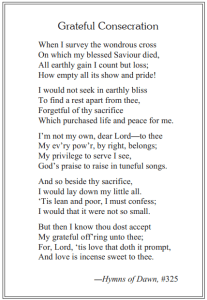
The Blessing Of The “Cup Of Salvation”
“What shall I render unto the Lord for all His benefits toward me? I will take the cup of salvation, and call upon the name of the Lord. I will pay my vows unto the Lord now, in the presence of all His people.” Psalm 116:12-14
To spiritual Israel these words have a peculiar significance which they could not have had to the Prophet David. Nevertheless, we would suppose that the Prophet had to a considerable degree the proper thought as to the sentiment of the words. King David no doubt felt an appreciation of God’s goodness. His Psalms show us that he had a very appreciative heart, grateful for the blessings that came to him from the Lord. Properly enough his heart cried out: “What shall I render unto the Lord?” What return can I make for all His lovingkindness?
David knew of God’s promise to Abra- ham; he knew that God would sometime bless all the families of the earth, and that this blessing would come through the Seed of Abraham. The Children of Israel knew that they were Abraham’s seed. King David was one of these, and he felt that in some way he would be identified with this Promise. The matter was more or less vague to him; but, nevertheless, Abraham’s Seed was to bless the world.
In proposing to “take the cup of salvation,” we think the Psalmist had in mind that whatever experiences the Lord might consider necessary for him he would accept; for he must have a share in that salvation. He would continue to call upon the Lord that he might have such a share; he would pay his vows unto the Lord “in the presence of all His people.” He had made solemn vows, and he would fulfill them—he would consider this a privilege; he would delight in doing God’s will.
Deeper Significance To Spiritual Israel
To the Christian, however, all this has a much deeper significance. Beginning with our Lord Jesus, these words have a special meaning to each of the sons of God called to joint-heirship with the great Head of the Church. Having been begotten of the Holy Spirit and received into sonship, these wish to make a special return for all God’s mercies. These have the actual forgiveness of their sins through Jesus, as David did not. His sins were only typically covered; and if he could say: “What shall I render?” surely much more should we say: “What shall I render unto the Lord?”
The Apostle Paul exhorts us: “I beseech you, brethren, by the mercies of God, that ye present your bodies a living sacrifice, holy, and acceptable unto God—your reasonable service.” This is what we gladly render, then—our bodies as living sacrifices. In every truly noble heart gratitude is the responsive chord to kindness and love; and no harmony is sweeter or more inspiring to noble deeds and lofty purposes. God would have His children cultivate for their own sake, as well as for the sake of others, all the graces of true nobility and moral excellence. It is therefore most fitting that we should note every deed of love and kind- ness toward us, and be careful to return the gratitude and appreciation due. How often does love go unrequited because selfishness or thoughtlessness crowds out the nobler instincts of the soul!
While human love and acts of kindness often draw largely upon us for the exercise of this grace of gratitude, appreciation, how much more does the constant loving-kindness and tender mercy of our Heavenly Father thus fittingly draw upon our inmost being to respond in grateful acknowledgement and praise! To Him we are indebted for every good that we possess. What this implies only those can know who have been brought by His love into the secret place of the Most High, and made to feast upon the “finest of the wheat,” the wealth of our Father’s Storehouse. We are the special objects of His grace.
“His Loving Kindness, Oh, How Great!”
And who of us cannot trace a long line of special providences on our behalf? Who of us as we take a mental retrospect of our lives cannot exclaim with the poet:
“Looking back I praise the way God has led me day by day!”
How wonderfully the Lord has guided His people! His children have ever been His constant care. No good thing hath He withheld from them, and all things have been made to work together for their good if they obeyed Him. Who that has trusted the Lord through many years, through sunshine and shadow, through smiles and tears, by still waters and through storm and tempest, has not proved the verity of His precious promises and His abiding faithfulness! Surely, “Not one thing hath failed of all the good things which the Lord your God spake concerning you!” (Josh. 23:14) In the smallest and in the greatest affairs of our lives He has ever watched for our interests. Every cloud has had a golden lining!
What, then, shall we render unto the Lord for all His benefits? What have we, indeed, that we have not received from Him? Nothing! As a tender parent loves to see his child appreciatively accept his favors, so does our Heavenly Father regard our attitude toward Him, and our manifestation of appreciation of His favors and love toward us. His unspeakable gifts to us were purchased at a great cost to His heart. Then we will thankfully take the cup of salvation, through faith in our Redeemer, and pay our vows unto the Lord. We will drink this cup with our dear Master—this cup of suffering and of joy. “We will trust and not be afraid.” The Father has made a special provision for those who have made a full surrender of themselves to Him. The experiences which He has arranged for them constitute “the cup of salvation.” And in accepting this cup from the Lord, we are accepting all the experiences that come to us in His providence, whatever they may be—joy or sorrow, pain or pleasure or anything. As Jesus exclaimed: “The cup which my Father hath poured for me, shall I not drink it?” so should this be the language of our hearts. It had in type been foretold of our Lord that He should be lifted up, even as Moses lifted up the serpent in the wilderness. He knew that He was to be the great antitypical Sin-Offering; that He was to be “made sin” for fallen man. Yet this cup that the Father had poured for Him He declared Himself very willing to drink. And this is the cup which He has given to us.
Our Savior said to His disciples who desired to sit next to Him in the Kingdom: “Are ye able to drink of the cup that I shall drink of?” He Himself continued to drink of that cup until the end—He drank the dregs of the cup. And so it will be with His followers. We are to drink of this same cup. It is our individual cup, and yet it is His cup. If we be truly loyal we will accept our share of the cup thankfully, gladly. And we know that as we drink of it He will be with us; we shall not be alone. He supervises the experiences of each of His members; and with every temptation and trial He will provide some way of escape, if the trial threatens to become too severe.
The Cup Of Joy In The Kingdom
On the occasion of the institution of the Memorial of His death, the Master in His conversation with the Apostles said: “But I say unto you, I will not drink henceforth of this fruit of the vine until that Day when I drink it new with you in My Father’s Kingdom.” (Matt. 26:29) Our Lord was here contrasting two great Days—the Day of suffering and the Day of glory. This Gospel Age has been the Day of suffering. The Millennial Age will be the Day of glory, and is especially spoken of as “the Day of Christ.”
The fruit of the vine, the literal cup, represents two thoughts. The cup of wine is produced at the cost of the life of the grape. The grape loses its own individuality. The juice is pressed out, and thus the fruit of the vine is made ready for use. The cup of wine—the juice of the grape—represents, however, not only the crushing of the grape, but also the exhilaration that comes as the result. So in our drinking of this figurative cup. To us it symbolizes our Savior’s sufferings and death, and our own participation with Him in these sufferings. But wine also represents joy, gladness, and is thus used in the Scriptures. So in the sense in which the Lord used the words “fruit of the vine,” quoted in the preceding paragraph, the cup represented the joys of the Kingdom.
In the earthly experiences of our Lord Jesus the Father marked out for Him a certain specific course. This course constituted His cup of suffering and death. But the Father promised Him that after He had drunk this cup faithfully, He should be given a different cup, a different experience—glory, honor and immortality. And then the Savior was authorized by the Father to make the same proposition to those who might desire to become His followers—that if they would suffer with Him, would drink His cup of death with Him, then they should participate with Him in His future cup of joy.
“Now Is The Acceptable Time”
Our cup is a cup of joy and also a cup of bitterness. But when we are called upon to drink a bitter draft, let us remember Him who bravely and faithfully partook of this bitterness, rejoicing to do the Father’s will; and let us take courage, and likewise rejoice that we are accounted worthy to share this cup with our beloved Lord. And as He who was perfect needed strength and help Divine in connection with His experiences in the drinking of the cup, as He sought the Father in earnest prayer for the needed as- sistance, so must we do. We should also be continually on our guard lest we enter into temptation, lest we look away from Him from whom alone cometh our help.
“I will pay my vows unto the Lord now,” said the Psalmist. And “now is the acceptable time—now is the Day of Salvation”— for the Church. Now is the time sacrifices are to be offered—not by and by. The Lord has so arranged that this Vow which we take upon ourselves, this Covenant of Sacrifice, must be fulfilled by us. The flesh which we consecrate must be consumed. If we seek to withdraw the sacrifice from the altar, we shall be dealt with in such a manner as to destroy the flesh; else we ourselves shall be destroyed. If we faithfully drink of the cup which the Father has prepared for us, we shall afterward receive the blessings which He has promised to those who thus drink. Therefore, now, in the present life, we drink of this cup He has given us; for unless we do this now, we shall have no share in the Kingdom blessings in the life to come.
In our Lord’s case, literal crucifixion was necessary. He must bear the fullest measure of the Law’s demand; He must bear the penalty of its every violation, even as in the case of the vilest criminal under the Law; otherwise He could not have redeemed every Jew. He must bear the curse of the Law—He must hang on a tree. But in our experiences, the cross will not be a literal cross of wood; the nails will not be literal nails; but bitter words and slander and misrepresentation will surely be our portion—and perhaps physical violence in some form to some of the last members of the Body. We do not know.
By Way Of The Cross
“Whosoever will save his life shall lose it.” We are all to pass through the trying experiences represented by the wine-press. We are to lay down our lives in the Divine service. We are to submit ourselves to the crushing experiences, to be obliterated as individuals, in the human sense, and to become New Creatures. “If we suffer [with Him], we shall also reign with Him”—not otherwise. So we joyfully accept the invitation to drink of His cup. And not until the cup has been drained to the last shall we receive the other cup—the cup of Kingdom joys. While our Lord had a great blessing in the obedience which He rendered to the Father, yet it was a trying time for Him down to the last moment, when He cried, “It is finished.” And so with the Church. We must drink all of the cup; none of the contents is to be left. We must endure all of the experiences.
All the sufferings of Christ will be complete when the Body of Christ shall have finished its course. The new cup of joy was given our Lord when He was received up into glory. Then all the angels of God wor- shiped Him. Soon our cup of joy will be given to us. No doubt it was a glorious time when the sleeping saints were awakening in the spring of 1878, and entered into their reward and received the cup of blessing. And one by one, those who were alive and remained at the Coming of the Master are being gathered Home. Undoubtedly we shall all partake of this joy with them soon, if we are faithful. We believe the fulness of joy will not be reached until all the members of Christ are with Him beyond the veil. Then we shall share His Throne and partake of His glory. Then with our beloved Lord we shall drink of the “new wine” in the Kingdom; for the promise is to all His faithful saints.
“Ye Are My Witnesses, Saith Jehovah”
The concluding statement of the Psalmist as given in our text is that he would pay his vows “in the presence of all His [God’s] people.” It is not enough that we shall be loyal in our hearts; but the Lord desires a public confession, a witness before men. “With the heart man believeth unto righteousness, and with the mouth confession is made unto salvation.” (Romans 10:10.) And all the witnesses for the Truth must be martyrs for the Truth. They must, in other words, be willing to suffer for it. And so it will be to a large extent with those who are faithfully, courageously, holding up the banner of Truth. They will be targets for the Adversary.
Our Master said that whoever would not confess Him before men, He would not confess before the Father and before the holy angels. Only those who are thoroughly loyal are to be of this very select company of which our Lord is the Head, and which is soon now to be gathered into the Heavenly Garner.
Then let us appreciate more and more this “cup of blessing” which we are privileged to drink with our blessed Master; and let us “call upon the name of the Lord” for grace to help in every time of need. We need Him daily, hourly, momentarily. And we may come to the Throne of Grace at any time in the name of our great Advocate.
Our Father’s ear is ever open to the cry of His children. They are as dear to Him “as the apple of His eye.” They “are graven upon the palms of His hands.” “As one whom his mother comforteth, so will I comfort you,” is His promise to His own. All that we can render will be at best very, very little in return for all His bounties, for all His matchless grace toward us. But the measure of love and zeal that accompanies our little all will indicate the measure of our gratitude to our Heavenly Father and our great Redeemer.
“What shall I render, Lord, to Thee?
Thy love surpasses all my thought!
What can a fitting tribute be
To Him who my poor life hath bought?
“Who sought me in my low estate,
And raised me up to heights Divine!
What words can fitly sound Thy praise,
Or thought encompass love like Thine?
“What shall I render, Lord, to Thee?
My heart, my strength, my life, I bring!
My hands, my voice, in service glad,
To Thee, my Savior and my King!”