
Go through, go through the gates; prepare ye the way of the people; cast up, cast up the highway; gather out the stones; lift up a standard for the people. Behold, the LORD hath proclaimed unto the end of the world, Say ye to the daughter of Zion, Behold, thy salvation cometh; behold, his reward is with him, and his work before him. And they shall call them, The holy people, The redeemed of the LORD: and thou shalt be called, Sought out, A city not forsaken. –– Isaiah 62:10-12
John Thomson, in his The Land and the Book, notes that Middle Eastern farmers do not gather out the stones but do “gather up stones from their field and cast them into the highway,” thus rendering the paths both uncomfortable and dangerous. In our text, however, it is not the preparation of a field for planting but the construction of a highway that is under consideration. As throughout Isaiah, this is the “highway of holiness” (Isaiah 35:8-10) which is to bring man from a condition of sin to one of holiness and righteousness.
The context of Isaiah 62 seems clearly to refer to a work for the children of Israel. They are to be part of the construction crew for this new highway — a “super” highway indeed. As the hymn so aptly phrases it:
And a highway shall there be cast up,
And the stones shall be all gathered out,
And errors no weak ones shall trip,
And no lions of vice stalk about.
The Stones
The stones represent impediments in one’s walk. If not removed, they become stumbling stones along the way. They may be incorrect thoughts or wrong patterns of life. In either case, they impede progress. Our text assigns the removal of these hindrances to the children of Israel. Their entire life as a nation has prepared them for this grand task. Many of the faults of mankind have been experienced by this nation. Far from being the most righteous of nations, the people of Israel often proved to be the most recalcitrant. Our attention is called to this fact in Deuteronomy 9:6, “Understand therefore, that the LORD thy God giveth thee not this good land to possess it for thy righteousness; for thou art a stiff-necked people.”
While stubbornness is a negative trait of character, the stubborn person who has learned his lesson often becomes one of strong positive will and is greatly capable of teaching others a better way. Each era of Israel’s experiences was an intensive course in the frailties common to the human race.
Egypt and the Exodus
Israel was born as a nation while in Egypt. There they soon learned the rigors of forced servitude. They felt the normal human emotions common to those under stern and unrelenting taskmasters. The lessons of that generation will match those of countless millions who, throughout history, have been likewise deprived of all rights, from the victims of the African slave trade to the subjects of totalitarian regimes.
Their next course was in learning to quell the rebelliousness of discontent. For forty years they murmured and complained over their lot as wilderness nomads. The Apostle Paul, in 1 Corinthians 10:1-14, traces at least five of these experiences, adding that these were “for our [the Church’s] admonition” (v. 11). He implies further, in verse 13, that these were things such as were “common to man.” That generation of wilderness wanderers will be particularly qualified to deal with the stones of human rebellion that lie in so many of the races.
In the Promised Land
Entering Canaan, the Jews found new experiences awaiting them. Now the commandment of the Lord was to drive out the inhabitants of the land and possess their inheritance. “Yet it came to pass, when the children of Israel were waxen strong, that they put the Canaanites to tribute; but did not utterly drive them out” (Joshua 17:13). Here was another human impediment—the temptation to compromise. They paid dearly for their lack of full obedience, for the enemies left in the land were not only hostile but an ever-present temptation for assimilation and intermarriage.
Consider the valuable lessons that these generations will have for the vast number of people who prefer compromise to full obedience!
Once the land was fully conquered, the nation entered a new set of experiences under the judges which were raised up to lead them for over four centuries. The lessons of this period are succinctly summarized in the last verse of the book of Judges. “In those days there was no king in Israel: every man did that which was right in his own eyes” (Judges 21:25). Left to their own devices, Israel became a divided nation, with each family and tribe more interested in their welfare than in that of the nation. The lesson they learned, was phrased later by King Solomon in Proverbs 14:12, “There is a way which seemeth right unto a man, but the end thereof are the ways of death.” Self-centeredness is another one of the stones that need to be gathered out of that future “highway of holiness.”
During the next era of their history, the period of the kings, their fortunes were, as before, checkered. Though they prospered under the reigns of good kings, they found they were more frequently chastened. The vast majority of their rulers followed not in the ways of Jehovah. During this time, they learned God’s blessings were dependent upon the quality of the king. This has been a lesson repeated time and time again to the human race. So often have human leaders ruled for their benefit, the very word “politician” often conjures up the image of corruption. With such cynicism toward rulers, it will surely take a while for the completely benign and beneficial rule of Christ and his Church to win acceptance from disillusioned humanity. To this end, the experiences of Israel under their kings will provide invaluable lessons to be passed along to all the peoples of the earth.
A Nation Cast Out
From the overthrow of their hierarchy by the forces of Babylon until the permission to return by the Medo-Persian ruler Cyrus, Israel had to relearn the lessons of accepting God’s chastisements. It has been said, “The mark of maturity is the ability to accept the consequences of your actions.” To a large measure, this lesson was well learned during the Babylonian captivity, for never again do we read of Israel entering into the worship of idolatry as did so many of their ancestors. However, the lessons of assimilation were still there, so much so that only a small portion of the Israelites who were taken into captivity returned during the favorable reigns of Cyrus and, later, Artaxerxes. Even those who did return began again to marry the women of the land (see Ezra 10 and Nehemiah 10).
During the harsh oppressions of the inter-testamental times, especially under Antiochus Epiphanes, Jewish religious nationalism rose under the leadership of the Levitical family of the Maccabees. Victoriously cleansing the temple and establishing a semi-autonomous government, Israel came under the leadership of the Hasmonean dynasty. Power struggles soon emerged spawning such diverse religious groups as the politically-compromising Sadducees and the ultra-religious Pharisees. While the Sadducees lost much of their faith in the Old Testament doctrines, the Pharisees, by their outward show of religiosity, became hypocritical. The religious polarization of these groups was matched by the political polarization of the Herodians and the Zealots — the former favoring coexistence with their Roman rulers and the latter advocating the violent overthrow of their oppressors. Such polarization, both in religious and political spheres, is another of the stones man will need to rid himself in order to walk the “highway of holiness.”
The Diaspora
For nearly 2000 years Israel has been going through her Diaspora. Scattered amongst all the countries of the five continents, the Wandering Jew has been a people without a homeland. Enduring persecution and successive waves of anti-Semitism, the Hebrew people have remained a separated people — separated by their fierce and unmovable faith in their religion and its traditions.
The worldwide nature of her scattering has left the Israelites with first-hand knowledge of all the cultures of the earth. Few countries exist that have not had a Jewish enclave. They have felt the pathos of their neighbors while, at the same time, feeling the uniqueness of their heritage. This has placed them in a position of special knowledge of the stones and hindrances that all humanity will feel when they return from the grave and traverse upward on that Millennial “highway” to the lofty plateau of full righteousness.
Lifting Up the Standard
In addition to gathering out the stones, Israel will also have a standard to lift up to the people. The Living Bible, with great interpretative freedom, translates this as “the flag of Israel.” While that is a manifest interpretative gloss, it does not miss the mark too far.
The standard to which all men must rally is total righteousness. This will not be instantaneously attained but learned over the thousand-year course of that road. Righteousness will not only be taught as a set of principles to be followed and obeyed but it will also be demonstrated.
Paul, 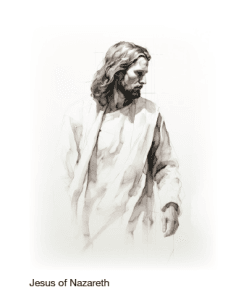 in enunciating a principle of the heavenly calling, reiterates an eternal method of God’s dealings — “to the Jew first, and also to the Gentile” (Romans 2:9,10). Having been under the special tutelage of Jehovah for some 4,000 years, Israel must take the leadership in showing what righteous living means and the reward of prosperity it brings. Then the surrounding nations will say, “We will go with you, for we have heard God is with you” (Zechariah 8:23).
Of all the examples of righteousness that have ever been given, there is one example above all others. This is the Messiah of Israel. He alone is the one designated the ensign, or standard, which will be raised among the peoples. “And in that day there shall be a root of Jesse, which shall stand for an ensign of the people; to it shall the Gentiles seek: and his rest shall be glorious” (Isaiah 11:10).
When Israel has come to identify their Messiah and identify him they will, they will discover that his life and his teachings are the full embodiment of righteousness. It is to this standard that all nations of the world must rally. Apostle Paul’s conviction that Jesus of Nazareth filled this role led him to say to the assembled Athenian philosophers, “Because he hath appointed a day, in the which he will judge the world in righteousness by that man whom he hath ordained; whereof he hath given assurance unto all men, in that he hath raised him from the dead” (Acts 17:31).
A Reward and a Work
When these things have fully come to pass and their chastisement is over, God’s ancient people of Israel will find out what a great reward is in store for them. It will be not merely a reward for a position but, more importantly, a reward for work to do. It will be then, as that highway opens, that the lessons that Israel has learned from gathering out the stones in this life will be applied to all human beings as they climb upward to that perfection lost in Adam.
What a glorious future, then, is in reserve for the regathered people of God and what untold blessings it will hold, not only for them but for the entire human race.
–– The Herald of Christ’s Kingdom 1998/3