
Isaiah’s Prophecy About Jesus’ Birth
Centuries before the birth of Jesus, the prophet Isaiah had been allowed to pierce the veil of time and see this happy occasion of the birth of Jesus. Upon seeing it, he wrote with exultation, “Unto us a child is born!” But Isaiah saw still further than that. His prophetic vision leaped another thirty years and he saw, not the babe, but the perfect and mature man Jesus, offering himself as the corresponding price for the perfect man Adam, who had sinned. Isaiah added, almost in the same breath, “Unto us a son is given!” In other words, “This is the son of God, who became the son of man to become the Saviour, which is Christ the Lord.”
When the redemptive work of the son is complete, Mother Eve will have had her sweet vengeance, which will be God’s vengeance, upon the serpent who beguiled her. It will be the promised seed who will “lay hold on the dragon, that old serpent, which is the Devil and Satan,” and bind him for a thousand years (Revelation 20:2); then he will be exterminated. (Revelation 20:10) “Unto us a Son is given.”
“For God so loved the world, that he gave his only begotten Son, that whosoever believeth in him should not perish, but have everlasting life.” John 3:16
What a precious gift! What an unspeakable gift! What overwhelming evidence of God’s great love for us and for all mankind.
After saying “unto us a child is born, unto us a son is given,” the prophet says, “And the government shall be upon his shoulder.” There is a great fallacy in the nominal Christian world today. Taking as their authority the mistranslated scripture “The kingdom of God is within you” (Luke 17:21), they teach that Christ rules only in the hearts of men, that when a man accepts Christ, Christ comes to that man; when all men have accepted him, he shall have fully come.
They say that will constitute the kingdom of Christ.
Even the pagan Roman ruler, Herod, knew better than that. He was a hard and realistic man. When he heard from the wise men of the East that someone had been born King of the Jews, he gave no mystical meaning to it. He considered it a threat to his physical rulership of one segment of the Roman Empire. Believing in direct and decisive action, he went to the highest Jewish authorities he knew the Chief Priests and Scribes, and demanded to know where, according to their prophets, this new king should be born. They quoted the prophecy of Micah (5:2):
“And thou, Bethlehem, in the Land of Juda, art not the least among the princes of Juda; for out of thee shall come a Governor, that shall rule my people Israel.” Matthew 2:6
In other words, “The government shall be upon his shoulder.”
Herod did not ascribe some symbolic meaning to this prophecy. He did not limit it to a mere spiritual rulership in the hearts of men. On the contrary, he considered his worst fears confirmed. Here was a definite threat that, unless he acted, the government might be wrested from the Roman Empire and vested in another king.
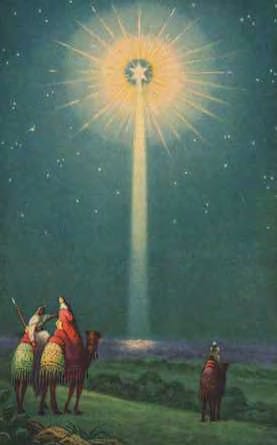
At that time it was the policy of Rome to rule the Jews as benevolently as possible, with “kid gloves” so to speak. Yet, the cynical Herod was so thoroughly convinced that Jesus imperiled the rule of Rome that, when his efforts to locate the child were frustrated, he abandoned discretion and brutally “slew all the children that were in Bethlehem, and in all the coasts thereof, from two years old and under.” (Matthew 2:16) Would he have taken such drastic action if he believed that Jesus was destined to rule only in the hearts of men?
In those days the Jews were in great expectation of their Messiah. They expected him to be a powerful leader who would literally reestablish the throne of David and break the Roman yoke right there in Palestine. They had no spiritual or heavenly hopes.
The early disciples also believed in a literal earthly government headed by Jesus. The only thing they were confused about was the time of its establishment, hoping that it would be immediately inaugurated. Later, when the holy spirit was given, they understood that it was to be in the future. But they still anticipated a kingdom on earth with Christ as king; they hoped to live as spirit beings and reign with him a thousand years. They expected that kingdom on earth to solve all the world’s problems. They believed that “there shall be aresurrection of the dead,” and a “restitution of all things,” including the Adamic paradise.
After the death of the apostles and other early disciples, errors began to creep in. Men became increasingly impatient at the delay and sought to establish the kingdom themselves. A false system was set up and under this monstrosity of Satan, the truth of Christ’s kingdom on earth all but disappeared. After the reformation there was a tendency to give a purely spiritual connotation to the earthly kingdom promises. It was then that the translation was rendered, “The kingdom of God is within you.” It should have actually read, “God’s Royal Majesty is among you.” In other words: “The king is present. Christ is here. He is in your midst!”
At the end of the age, a great light began to dawn. In due time the returned Lord found a watching servant. Under the ministrations of “that faithful and wise servant” the brilliant and pure light of kingdom truth burst upon those who had eyes to see just as the heavenly light shone upon the shepherds near Bethlehem on that night so long ago. Those who had ears to hear appreciated the beautiful and harmonious features of God’s divine Plan of the Ages. It was heavenly music to them like that which entranced the shepherds abiding in the field.
We know the full manifestation of God’s kingdom is near, a literal and actual kingdom on the earth. The signs are numerous and unmistakable. With the establishment of the nation of Israel, the fig tree is budding. Men’s hearts are failing them for fear. There has always been fear, but the prospect of atomic warfare has brought heart-failing fear to men, as they plainly see approaching: “A time of trouble such as never was.” (Daniel 12:1) False prophets have arisen and deceived many, showing seemingly wonderful accomplishments, such as millions upon millions of books published, tens of thousands of converts to a Society, armies of people baptized. There are many other significant signs:
“When these things begin to come to pass, then look up, and lift up your heads, for your redemption draweth nigh.” Luke 21:28,31
Then he adds:
“When ye see these things come to pass, know ye [absolutely no doubt about it] that the kingdom of God is nigh at hand.”
That government shall be upon his shoulder. It will be a visible government taking strong, physical control of earth’s affairs. It will bring such wondrous blessings, such a feast of fat things, that men will say: “This is what we’ve always wanted!” As Isaiah expresses it:
“It shall be said in that day, Lo, this is our God; we have waited for him, and he will save us. This is the Lord; we have waited for him, we will be glad and rejoice in his salvation.” Isaiah 25:9
“Glad and rejoice,” the prophet said. “Good tidings of great joy,” the angel said that night. When the government, which is to be upon his shoulder, has done its work, it will come to pass “that at the name of Jesus every knee shall bow … and that every tongue should confess, that Jesus Christ is Lord, to the glory of God, the Father.” (Philippians 2:10,11)
Living One’s Life Over Again
Many years ago someone, out of the longings of his heart, wrote a poem entitled: “In the Land of Beginning Again.” The poet imagined a land where one could start one’s life all over again from the beginning, while retaining every memory of the previous life. Thus every mistake of the past could be rectified, every decision that had proved wrong would be reversed. Sins of omission and commission which, in the previous life, had resulted in injury and grief to one’s self and others, would be avoided. All the opportunities to bestow love, understanding, and happiness which were missed before could now be grasped. All the pain, heartaches, and regrets could be avoided. In this “Land of Beginning Again” one would know how to live, love and serve God because of the rich experience of the past. Life would be meaningful, full, and satisfying, free of doubt and corroding worry. The way would be clear. No matter what one made of his life before, one would have another chance. All the troubles and tribulations of the past, instead of being worse than useless torments, would be valuable guides. Remembering the lessons of the past, one would walk serenely and confidently in the right way.
I have long since forgotten the words but this is the impression I have of its content. It was a sad poem because it seemed so utterly impossible. It was just a desire, a cry of the soul. Any practical person knew such a thing was impossible. Yet the heart fervently wished it could be true, that it should be true, that the experiences of the present life, the lessons learned at the cost of so much pain and heartbreak, should not be wasted, that these lessons should, somehow, be useful in re-living and re-forming one’s life! Death should not be the irrevocable end of human existence; there should be a Land of Beginning Again!
These are universal human longings. How many times have you heard the expression, “If I only had my life to live over again!” Or, “If I only knew then what I know now!” Or the despairing cry, “I know I was wrong; but now it is too late!”
Adam and Eve may have used that very expression: “Oh, to have another chance! Please give me one more chance!” This is a universal desire. The Bible says, “The desire of all nations [or peoples] shall come.” (Haggai 2:7) The “Land of Beginning Again” is exactly what the kingdom will accomplish. The permission of evil has been for man’s experience. It would have been futile and useless torment unless man were given an opportunity to use his experience. Such is the significance of these words from Job:
“If there be a messenger with him, an interpreter, one among a thousand, to show unto man his uprightness. Then he is gracious unto him and saith: Deliver him from going down to the pit; I have found a ransom. His flesh shall be fresher than a child’s. He shall return to the days of his youth.” Job 33:23-25
That will be “The Land of Beginning Again.”
“Thus saith the Lord: Refrain thy voice from weeping and thine eyes from tears; for thy work shall be rewarded, saith the Lord, and they shall come again from the land of the enemy.” Jeremiah 31:16
The present evil world under Satan’s rule has been “the land of the enemy.” The grave to which man’s present existence has led is also “the land of the enemy.” But they shall return to another land to God’s kingdom on earth under Christ, to the government that shall be upon his shoulder a Land of Beginning Again!
“Therefore the redeemed of the Lord shall return and come with singing unto Zion; and everlasting joy shall be upon their head. They shall obtain gladness and joy and sorrow and mourning shall flee away.” Isaiah 51:11
“And the work of righteousness shall be peace, and the effect of righteousness, quietness, and assurance forever. And my people shall dwell in a peaceable habitation, and in sure dwellings, and in quiet resting places.” Isaiah 32:17,18
What a wonderful plan, what “good tidings of great joy, which shall be to all people!” It is our high calling to be the administrators of that glorious kingdom!
What Is God Doing in the Earth Today? [A dialog between Paul and Timothy.]
Timothy: In view of the disturbing things that are happening in the world, this is a good and timely question. Indeed, what is God doing in the earth today? He appears to be doing nothing, even though he is all-powerful. He is a just God, but injustice and oppression are allowed to prevail on every hand. He is all-wise, but stupidity and ignorance are rampant in the earth. He is loving and compassionate, yet calamities, misfortunes, and cruelties are permitted to occur. It would almost seem that God has lost control of earth’s affairs. What is the answer, Paul?
Paul: Let me assure you, Timothy, that God has not lost control of earth’s affairs. He is very much the master of the situation.
According to his plan and under his direction, powerful forces are working behind the scenes for the good of mankind. Wonderful things are about to happen.
Timothy: How can we know what is going on behind the scenes?
Paul: We are given the information in the Bible. Written thousands of years ago by holy men of God, it reveals God’s plan of the ages. The Bible foretold centuries ago what is now happening in the earth. It tells of tremendous events that are to come to pass in the near future for the benefit of mankind.
Timothy: Can we be sure that these Bible prophecies refer to the time in which we are now living?
Paul: There can be no doubt about it. One ancient prophecy in particular traces history from the time it was given to the present day, with an uninterrupted sequence of events. There can be no doubt that the yet unfulfilled portion applies now and to the immediate future. This prophecy is so extraordinary that it may be described as history written in advance.
Timothy: This is very interesting! Please tell me about it.
Paul: It is found in the second chapter of Daniel. At that time the kingdom of Babylon ruled the world. It was the first universal empire and Nebuchadnezzar was its king. The king had a remarkable dream one night, and it disturbed him greatly. It was such a vivid dream that he knew it must have an important significance. So he called upon his wise men to interpret the dream for him, but they could not do so. Then God, who had given Nebuchadnezzar the dream, revealed the interpretation to the prophet Daniel, and Daniel went before the king. This is what happened:
“The king said to Daniel … Art thou able to make known unto me the dream which I have seen, and the interpretation thereof? Daniel answered in the presence of the king, and said, … There is a God in heaven that revealeth secrets, and maketh known to the king Nebuchadnezzar what shall be in the latter days. . . . Thy dream, and the visions of thy head upon thy bed, are these. Thou, O king, sawest, and behold, a great image. This image’s head was of fine gold, his breast and his arms of silver, his belly and his thighs of brass, his legs of iron, his feet part of iron and part of clay. Thou sawest till that a stone was cut out without hands, which smote the image upon his feet that were of iron and clay, and brake them to pieces. Then was the iron, the clay, the brass, the silver, and the gold, broken to pieces together, and became like the chaff of the summer threshing floors; and the wind carried them away, that no place was found for them. And the stone that smote the image became a great mountain, and filled the whole earth.” Daniel 2:26-35
Timothy: What an unusual dream! I can well understand king Nebuchadnezzar’s anxiety to know its meaning. I, too, would like to know. What did the image represent?
Paul: It represented a succession of universal, or worldwide, empires, of which Babylon was the first. Let us now read Daniel’s interpretation. He is speaking to Nebuchadnezzar:
“Thou art this head of gold. And after thee shall arise another kingdom inferior to thee; and another third kingdom of brass, which shall bear rule over all the earth. And the fourth kingdom shall be strong as iron; forasmuch as iron breaketh in pieces and subdueth all things. And as iron that breaketh all these, shall it break in pieces and bruise. And whereas thou sawest the feet and toes part of potter’s clay and part of iron, the kingdom shall be divided. But there shall be in it of the strength of the iron, forasmuch as thou sawest the iron mixed with miry clay. And as the toes of the feet were part of iron and part of clay, so the kingdom shall be partly strong and partly broken. And in the days of these kings shall the God of heaven set up a kingdom which shall never be destroyed. And the kingdom shall not be left to other people, but it shall break in pieces and consume all these kingdoms, and it shall stand forever. Forasmuch as thou sawest that the stone was cut out of the mountain without hands, and that it brake in pieces the iron, the brass, the clay, the silver, and the gold; the great God hath made known to the king what shall come to pass hereafter. And the dream is certain, and the interpretation thereof sure.” Daniel 2:38-45
Timothy: Daniel told us that the image’s head of gold represented ancient Babylon, but the succeeding kingdoms are not named. Are we now able to identify these subsequent world empires?
Paul: Yes, Timothy; we can identify them very accurately. It is a matter of history. After Babylon there arose another universal empire illustrated by the image’s breast and arms of silver. This, as history shows, was Medo-Persia. Then Greece, represented by the belly and thighs of copper, conquered Medo-Persia. Then in turn it gave way to Rome.
The Roman Empire, the image’s legs of iron, ruled the world at the time of Jesus’ birth. It was indeed an iron empire, exceedingly strong and ruthless; and it endured longer than its predecessors. In fact, traces of it still exist in the various governments of Europe. This brings us to modern times without a break in sequence.
Timothy: But what did the stone represent and what was foretold by its striking and destroying the image, then filling the whole earth?
Paul: Just as the various sections of the image represented universal kingdoms, the stone also represents a universal kingdom. As it was hewn without hands, this kingdom is not of human fabrication, but is of divine origin. It arrives and makes itself felt in the days of the kingdoms or governments represented by the ten toes of the image. It strikes and destroys the entire image. This shows that by the setting up of God’s righteous government under Christ, every evil rule over mankind must be eliminated. Then the stone becomes a mountain and fills the earth. This is the kingdom for which we are taught to pray, “Thy kingdom come; thy will be done in earth, as it is in heaven.” This prayer, which has been ascending for twenty centuries, will at last be answered, when God’s kingdom takes full control of all earth’s affairs. It was foretold that this would happen in what Daniel calls “the time of the end,” or” the latter days.” We are now living in those days. One age is ending, and another is beginning. The great universal kingdom of God is about to manifest itself to the world. There are many other prophecies of similar import. So let us not accuse God of inaction. He is now preparing the earth for his kingdom. He is plowing that he might sow. He is wounding that he might heal. He is making known to those who will hear, the great blessings which are about to come. This is what he is doing in the earth today.
The present calamities and tribulations of men are permitted for their experience so that when the blessings of God’s kingdom come, they will be glad and rejoice in its righteousness. “This sore travail hath God given to the sons of man, to be exercised therewith.” (Ecclesiastes 1:13) Then, as Isaiah states it, “It shall be said in that day, Lo, this is our God; we have waited for him, and he will save us. This is the Lord; we have waited for him; we will be glad and rejoice in his salvation.” Isaiah 25:9
What Is the Soul?
MANY believe that when a man appears to die, he is really changed into a spirit being and continues to live in a higher form. They compare a man’s death to a crawling worm which goes to sleep in a cocoon and appears to die, then is transformed into a beautiful butterfly, able to freely navigate the air. They say that every man has within himself an immortal soul that cannot die, and that is released when he seems to die. This soul is supposed to go either to a heaven of bliss or a hell of torment depending upon the man’s deeds in his temporary life upon the earth. This is not what the Bible teaches.
The Bible tells us that man was created perfect and that the earth was given to him for his permanent home. We know from Genesis 3:22 that perfect food was provided for him, that he might “put forth his hand, and take and eat, and live forever.” He was to live forever upon the earth, to have children, and fill the earth with a perfect human race. When he was put to the test, no heaven was promised for obedience, nor a hell of torment for disobedience. The prospect God presented to Adam was simply that of life or death:
“In the day that thou eatest thereof, thou shalt surely die.” Genesis 2:17
If a hell of eternal torment were the penalty for disobedience, would not this have been the time and place for God to tell Adam about it? Would God not have given Adam prior notice of the penalty he risked receiving? Even after Adam had sinned, God said not a word about a hell of torment awaiting him. When God pronounced sentence upon Adam, he said, “Dust thou art, and unto dust shalt thou return.” (Genesis 3:19) The penalty was, simply, death. Many heathen religions teach that every human being has an immortal soul, but not the Bible. The expression “immortal soul” is nowhere to be found in the Bible.
A concise description of the human soul is given when Adam was created:
“And the Lord God formed man of the dust of the ground, and breathed into his nostrils the breath of life, and man became a living soul.” Genesis 2:7
God designed the intricacies of the human body and planned all its functions to the minutest detail. Then he formed the body of Adam using the elements of the earth, which the ancient record calls “the dust of the ground.” There it lay, on the green grass of Eden, complete and perfect in every respect. But it did not move. Its eyes did not see. Its ears did not hear. Its heart did not beat. Its brain and nervous system received and transmitted no impressions. It had no thoughts. This body lacked just one thing: the breath of life! It wasn’t breathing! So God “breathed into his nostrils the breath of life.” God simply inflated the man’s lungs with the air necessary for any form of life on earth. Suddenly the body breathed and lived! The heart began to beat, carrying the life-containing blood to all parts of the body. The brain awakened, the eyes opened, and the man became a living soul! What is a soul? A soul is the combination of body and breath; it is a living, thinking creature. Man does not have a soul.
Man is a soul.
When a man dies, the process is reversed. Genesis 2:7 describes the beginning of human life by saying that the Lord God “breathed into his nostrils the breath of life, and man became a living soul.” Psalm 146:4 describes the termination of a man’s life: “His breath goeth forth; he returneth to his earth. In that very day his thoughts perish.”
It is just the reverse. We know the soul is not immortal because the Bible plainly states, “the soul, that sinneth, it shall die.” (Ezekiel 18:4,20) We have seen that when a man dies, “in that very day, his thoughts perish.” He is really, he is surely dead. God said to Adam, “Thou shalt surely die.” It was Satan, the father of lies, who first suggested that man has an immortal soul when he said, “Thou shalt not surely die.”
Is there no difference between the death of a man and the death of an animal? There is a great difference. Whereas animals remain dead, men shall live again! God says:
“I will ransom them from the power of the grave. I will redeem them from death. O death, I will be thy plagues; O grave, I will be thy destruction.” Hosea 13:14
“There shall be a resurrection of the dead, both of the just and unjust.” (Acts 24:15) God takes note of the death of every person. He holds them lovingly in his memory. They are ransomed, they are precious in his sight. He will cause them to be restored to life and have an opportunity to live forever. “Ransom” means a “corresponding price,” the price corresponding to the value of the person held for ransom which, when paid, releases the captive.
Suppose a nobleman is convicted of an offense against his king. He is stripped of his estate and condemned for life to a penal colony at hard labor. His wife accompanies him. While he is a convict, he rears a family of children. They share his sentence and are not permitted to leave the penal colony so long as their father is confined there. Many years pass, and hope grows dim. But one day another nobleman, of equal dignity and rank, presents himself to the king. He offers himself and all his earthly goods as a substitute for the first nobleman, volunteering to serve his sentence in his stead, to ransom him. The king graciously accepts the offer and the first nobleman is released and restored to his estate. Because he is now free, the family he reared in captivity is also free. These children, who have never known real liberty because they were born prisoners under their father’s sentence, are now redeemed and may leave their prison house and inherit the restored estate of their father together with him.
This is the state of Adam and his posterity. If some qualified person could be found who would offer himself to God as a substitute for Adam, who would willingly assume Adam’s sentence of death, giving up his own life for Adam’s, someone perfect as Adam was before he sinned and whom God could accept as a corresponding price for Adam, then Adam might be redeemed from death and all his descendants with him. But where could such a person be found? All are born sinners. “There is none righteous, no not one.” (Romans 3:10) The situation appeared to be hopeless. It would seem that mankind must continue to go down into the pit of death. Then came to earth the grandest, most joyful and gracious news ever proclaimed among men. Aransom was found! The prophecy of Job was fulfilled:
“Then he is gracious unto him, and saith, Deliver him from going down to the pit. I have found a ransom!” Job 33:24
A babe was born in Bethlehem. His mother had been told, “Thou shalt call his name Jesus, for he shall save his people from their sins.” The angels had announced:
“I bring you good tidings of great joy, which shall be to all people; for unto you is born this day, in the city of David, a Savior, which is Christ the Lord.” Luke 2:10,11
Christ the Lord! The second “nobleman” had at last made his appearance! This was the Logos, the only begotten son of God. He came to earth as a ransom for Adam. He was born a human being. He had a human mother, God was his Father. He was therefore born a perfect human being, inheriting none of the defects of Adamic stock. Athis maturity Jesus was the exact and perfect equivalent of Adam before Adam sinned. Jesus was obedient unto death. By laying down his perfect, unforfeited life, Jesus ransomed Adam and his race:
“For as by one man’s disobedience, many were made sinners; so by the obedience of one shall many be made righteous.” Romans 5:19
With this understanding of the soul and the reality of death, and knowing how a ransom was provided to assure a resurrection for all, we find a new and wonderful significance in that beloved old text:
“For God so loved the world, that he gave his only begotten Son; that whosoever believeth in him should not perish, but have everlasting life.” John 3:16
What Say the Scriptures About Spiritism?
THROUGHOUT the entire world there is a great deal of interest in Spiritism. Millions of people attempt to communicate through mediums with what they think are the spirits of departed loved ones. They are convinced that they really do so because information known only to the deceased is often imparted using his voice and mannerisms. It is not only the ignorant and superstitious who are convinced. Recently a bishop of very high rank wrote a book about his supposed communications with his dead son. The ancient practice of witchcraft is also being revived. There is even a cult frankly worshipping Satan himself, with priests, altars and obscene ceremonies.
We also find much interest in the supernatural among scientists. Societies of top-ranking intellectuals have been formed for the investigation of what they call “psychic phenomena.” These have demonstrated under conditions which preclude fraud or trickery, that superhuman intelligences do indeed exist and that they do exert supernatural powers.
But there are some peculiarities common to all these spirit communications. The information secured is invariably trivial, inconsistent and unsatisfactory. There are frequent contradictions and even outright lies. Bad advice is given and eventually the spirits exhibit a low morality and make evil suggestions.
What does the Bible say about these things? It teaches that these intelligences that speak through mediums and perform supernatural acts are not the spirits of deceased humans. They cannot be because according to the Bible, there is no consciousness in death. Thus it is written, “The living know that they shall die; but the dead know not anything. Whatsoever thy hand findeth to do, do it with thy might;
for there is no work, nor device, nor knowledge, nor wisdom, in the grave whither thou goest.” Ecclesiastes 9:5,10
When Adam disobeyed God, he was condemned to death. God told him the penalty for disobedience plainly in Genesis 2:17 saying, “Thou shalt surely die” not be kept alive in a spirit form after death. It was Satan, the devil, the father of lies (John 8:44) who said, “Ye shall not surely die.” (Genesis 3:4) Whom should we believe?
The entire human race inherited death from father Adam. Their only hope is in a future resurrection from the dead. That is what a loving God has planned:
“For God so loved the world, that he gave his only begotten Son, that whosoever believeth in him should not perish, but have everlasting life.” John 3:16
“For since by man came death, by man came also the resurrection of the dead. For as in Adam all die, even so in Christ shall all be made alive.” 1 Corinthians 15:21,22
“Marvel not at this; for the hour is coming, in the which all that are in the graves shall hear his voice, and shall come forth.” John 5:28,29
If the mysterious intelligences who communicate with mankind and perform supernatural acts are not the spirits of deceased humans, who and what are they? The Bible tells us that they are really fallen angels, “angels that sinned.” (See 2Peter 2:4.)
Let us trace the origin of these evil beings. Early in human history before the flood, God permitted the holy angels to come down to earth and, although invisible, to exert a good influence upon the people. This is implied by Hebrews 2:5. Satan suggested to these angels, “You can do much more good to mankind, and have more influence over them, if you will assume human bodies and appear as men among them. You can then be their visible leaders.” God had not authorized the angels to do this. Their estate was spiritual. Their habitation was in heaven but some of the angels listened to Satan, took on human bodies, and appeared among men. Jude 6 refers to these as “the angels which kept not their first estate, but left their own habitation.” Peter refers to them as spirits “which sometime were disobedient, when once the longsuffering of God waited in the days of Noah.” (1 Peter 3:20) Satan suggested to them, “Are not the daughters of men beautiful? Why don’t you marry them? Take as many wives as you like. It will increase your influence among men still more.” Thus we read:
“And it came to pass, when men began to multiply on the face of the earth, and daughters were born to them, that the sons of God saw the daughters of men that they were fair; and they took them wives of all which they chose. … And there were giants in the earth in those days, and also after that; when the sons of God came in unto the daughters of men, and they bare children to them, the same became mighty men, which were of old; men of renown.” Genesis 6:1,2,4
These unauthorized hybrid offspring of the sons of God and the daughters of men were of unusual strength and vitality. Instead of being an influence for good, these angels now openly allied themselves with Satan. They and their giant offspring tyrannized mankind and saturated the earth with sin and violence:
“And God saw that the wickedness of man was great in the earth, and that every imagination of the thoughts of the heart was only evil continually. The earth also was corrupt before God; and the earth was filled with violence.”–Genesis 6:5,11
God determined to terminate those conditions. This he did by bringing a great flood of water upon the earth, saving only righteous Noah and his family. All the unauthorized offspring of the angels died in the flood and the earth was cleansed of the violence and corruption which had prevailed under their tyranny.
The angels that sinned did not perish in the flood. When the waters rose, they survived by abandoning their human bodies and again assuming their spirit bodies. So these evil angels, or demons, are very much alive today. In 2 Peter 2:4 we read, “God spared not the angels that sinned, but cast them down to hell.” The word “hell” is a mistranslation. In the Greek it is “Tartarus,” meaning the atmosphere of this earth. The scripture continues: “And delivered them into chains of darkness, to be reserved unto judgment.” So we know who they are and where they are. They still exercise much evil influence over mankind by operating upon their minds and by spirit manifestations of various kinds. They are called in the Bible, “evil spirits,” “lying spirits,” and “seducing spirits.” Any contact with them is prohibited. Much of the wickedness and anarchy in the world today is incited by these evil spirits. Any communication with them is extremely dangerous. Sometimes they invade the minds of those submitting to them and take complete control, driving their victims to insanity. Many thousands in insane asylums today are really spirit obsessed; those who act as mediums are in special danger.
A favorite device of these spirits is to impersonate the dead. By thus making people believe that it is possible to talk with their dead relatives, they perpetuate Satan’s lie, “Ye shall not surely die.” It is a cruel and heartless deception.
In league with their chief, Satan, they are the special enemies of those who are trying to follow righteousness, and are in constant warfare with such. Thus it is written:
“We wrestle not against flesh and blood [merely], but against principalities, against powers, against the rulers of the darkness of this world, against spiritual wickedness [or wicked spirits] in high places.” Ephesians 6:12
The time will soon come when the kingdom of God will eliminate these wicked spirits and all evil from the earth. In the meantime, no prudent person who loves righteousness and values his sanity will have anything to do with spiritism or occultism in any form. These are snares of the adversary and should be shunned by all right- minded people.
Whatsoever Things
“And be not conformed to this world; but be ye transformed by the renewing of your mind, that ye may prove what is that good, and acceptable, and perfect, will of God.” Romans 12:2
“To put off, according to the former course of life, that old man, corrupted by deceitful desires; and to be renewed in the spirit of your mind; and be ye clothed with that new man, who, according to God, has been formed in righteousness, and holiness of the truth.” Ephesians 4:22-24, Diaglott
BOTH of these texts emphasize the importance of renewing our minds, of changing our thinking. In the Romans text Paul says if we do this we will be “transformed.” In the Ephesians text he says that by so doing we will change our former course of life, and be clothed with a “new man” or character, a character formed in the “righteousness and holiness of the truth.” In other words, we will become a new person; a new creature.
There is a power in thought second to no other power in the universe. The mind is a most powerful instrument. Man can accomplish almost anything he imagines he can. This fact is shown very early in the scriptures. When the world was young, a group of people that today would be called technicians, got their heads together in a place called Shinar. They decided to build a skyscraper, a literal skyscraper. They designed it, assembled the materials, and started construction. The account is in Genesis chapter 11. The Lord didn’t want that tower built so he halted the work by confusing their language, by interfering with their cooperation one with another. On that occasion the Lord recognized the tremendous power of the mind, particularly of many minds concentrating on the same objective,. He said:
“And this they begin to do; and now nothing will be restrained … which they have imagined to do!” Genesis 11:6
Men have imagined the most fantastic things and by sheer power of mind, have made them come true. They imagined aviation, and we now can fly miles above the earth, even faster than the speed of sound, in luxurious comfort. They imagined radio and television, and these miracles have become so commonplace that we do not give them a second thought. They imagined nuclear fission, the unleashing of the ultimate energy of the universe. Today the world stands in terror of atomic warfare. They imagined space travel, visiting first the moon, then the planets. Today the moon has been visited. Just as those who started the Tower of Babel sought to “reach unto heaven,” these too have their objective of breaching the atmosphere of this earth and wandering at will throughout the universe.
What a man thinks, he does. Well has the wise man said, “As a man thinketh in his heart, so is he.” (Proverbs 23:7) Because thought controls such power, it is appealed to on every hand.
A teacher appeals to it. An honest and God-fearing teacher can so direct a young mind that the child grows into an upright and honorable adult, providing the “good ground” in which the seeds of truth can flourish. On the other hand, a cynical and atheistic college professor can poison the mind of a student by subtly injecting ideas of evolution and higher criticism that blinds his mind to God’s word.
The politician appeals to the mind by giving bias to the facts, suppressing those that do not serve his purpose and over-emphasizing those that do. He influences thinking, controls votes, and through votes, the destinies of nations.
The communist appeals to the mind. By mouthing high-sounding idealisms that are so contrary to the nature of an imperfect human and impossible to attain, and by contrasting violent actions, he holds entire nations and millions of people in hideous oppression without hope and without God.
The nominal religionist appeals to the mind. Ostensibly using the word of God he misrepresents God to be a fiend of torment. Through this fear he holds millions of people in bondage and in ignorance of God’s glorious character.
The advertising man appeals to the mind. With enticing words and often without regard to the health and welfare of the people, he extols his product, considering only the potential profit. Thousands of pamphlets, books, newspapers, and magazines, published in every land and in every tongue, all appeal to the mind, as do the radio and television programs that are producing a new generation of mentally lazy people who accept without thinking what is poured into their ears day and night.
Thus seen, thinking may be a dangerous matter in the absence of absolute knowledge upon which to base and exercise the reasoning faculties. Anything uttered as truth by someone is contradicted by someone else. “Truth is only relative,” they say. They don’t recognize it when they see it. As Pilate said to Jesus, “What is truth?” (John 18:38) But we, the Lord’s people, do have absolute knowledge. We are blessed indeed. The Lord has protected his faithful children by providing us with his word. God’s word gives us the proper basis for reasoning on all subjects, involving our duty to our Creator, to our brethren in Christ, and to our fellow men. The scriptures lay down certain broad lines of absolute certainty, of divine revelation, and invite God’s people to reason within these lines of revelation. God said, “Come now, and let us reason together.” (Isaiah 1:18) By reasoning thus, we taste and see that the Lord is gracious and good, that he is the embodiment of love; we come to a clearer knowledge of him and a better understanding of his character and plan. Do you see how blest we are? We don’t have to listen to every theory and sophistry, or wade through tons of rubbish to find if possible a tiny gem of truth here and there. We have access to the source of pure, unadulterated wisdom, revealed by God, and perfectly suited to our needs from which our spiritual life is derived.
The Importance of the Will
But there must be an act of will. We must desire to be taught of God, to conform our thoughts to his. Thoughts can be controlled, just as words and actions can be controlled. With all the diversions and pre- occupations of life, one’s will must be exercised. It must decide which thoughts and sentiments it will entertain and encourage and which it will repel. Our wills must be kept active. It is this to which the wise man refers when he says: “Keep thy heart [will] with all diligence, for out of it are the issues of life.” (Proverbs 4:23) Keep it active, keep it effective. The will must be used to curb those thoughts that it recognizes to be evil, and to stimulate those thoughts that it recognizes to be good, helpful and beneficial. Our wills must be in harmony with God’s will, to think the Lord’s thoughts and on his ways and his methods. This is the significance of, “My son, give me thine heart, and let thine eyes observe my ways.” (Proverbs 23:26) The heart, the will, thus given over to God, seeks to know the divine will, to catch the divine thought, and to obey it in word and act. In proportion as this condition of the new mind is attained, in that same proportion will there begin to be a newness of life in every respect–in ambitions, hopes, sentiments, and efforts. A wonderful transformation of character is thus effected by thinking on those things that have the heights and depths and breadths of the wisdom of God.
Since right thinking is of paramount importance to the child of God, and since we have the power to exercise our wills to control our thoughts to a large extent, should we not expect to find detailed instruction in the word of God telling us what we should think about? I think we should, and we do! Such instructions are found in many places throughout the scriptures. “Precept upon precept, line upon line … Here a little, and there a little.” (Isaiah 28:10) But there is one place where very specific directions are given by one of the most logical minds that ever lived. The apostle Paul, a prisoner in Rome, is at the end of his Christian career. He said he is ready to be offered; the time of his departure is at hand; he has fought a good fight; he has kept the faith; a crown has been reserved for him. (2 Timothy 4:6-8) In the process of completing his Christian career, he has accumulated a tremendous wealth of knowledge and experience in the narrow way. He has used his mind with powerful effect in his ministry. He knows how to think, and what to think about. He imparts to us out of the wealth of his experience, final, specific and detailed instructions. He writes:
“Finally, brethren; whatsoever things are true; whatsoever things are honest; whatsoever things are just; whatsoever things are pure; whatsoever things are lovely; whatsoever things are of good report; if there be any virtue, and if there be any praise, think on these things.” Philippians 4:8
Let us consider these things one by one.
Things That Are True
Does this mean to think about anything that is true, any truth at all? There are hundreds of branches of science, each based upon profound truths. Are we to master these, to think on these things? Are we to submerge ourselves in the study of the truths of nuclear science, electronics, astronomy, geology and aerodynamics, to name but a few? Besides such truths a these, there are many unwholesome, scandalous and trivial things that are also true. Are we to fill our minds with these? Of course not. It is evident the apostle’s words require some qualification, a “rightly dividing of the word of truth.”
When Paul enjoins us to think upon “whatsoever things are true,” he is speaking of “the truth” as we use and understand the word a knowledge of the great Divine Plan of the Ages, the only way of salvation revealing God to be a God of love and compassion and mercy; the philosophy of the ransom whereby Christ died for all, that God “will have all men to be saved and come to a knowledge of the truth” (1Timothy 2:4); that there will be “times of restitution of all things which God hath spoken by the mouth of all his holy prophets since the world began” (Acts 3:21); the great mystery of Christ, the head, and the church, his body (Ephesians 5:32); “Christ in you, the hope of glory” (Colossians 1:27); the “exceeding great and precious promises” (2 Peter 1:4); the Lord’s special care over his church, leading them in the narrow way, polishing them, fitting them and preparing them to make their calling and election sure. As David said:
“Show me thy ways, O Lord; teach me thy paths. Lead me in thy truth, and teach me; for thou art the God of my salvation. On thee do I wait all the day.” Psalms 25:4,5
These are the things that are true and upon which we are to think. This is THE TRUTH present truth God’s word of truth. We are constantly to remind ourselves of these things, and remind each other of them. As the apostle Peter wrote:
“Wherefore I will not be negligent to put you always in remembrance of these things, though ye know them, and be established in the present truth.” 2 Peter 1:12
These are the things truth people must think and talk about:
“Then they that feared the Lord spake often one to another; and the Lord hearkened and heard it, and a book of remembrance was written before him, for them that feared the Lord, and that thought upon his name. And they shall be mine, saith the Lord of hosts, in that day when I make up my jewels.” Malachi 3:16
If we want to be the precious treasure of the Lord, if we want him to claim us as his own, we must establish habits of thought that will keep the truth fresh, lively and inspiring to us.
But how can this be done? We can do it by using every incident of our lives. Each morning we can greet the new day by thinking, “This is the day which the Lord hath made; we will rejoice and be glad in it.” (Psalms 118:24) We can regularly at the breakfast table read the manna texts and the inspiring comments by Brother Russell. These contain the essence of truth and often start a train of thought that sets the pace for the entire day. Everything we see during the day can remind us of some feature of truth. If the day is sunny, we will think of “the Sun of Righteousness … with healing in his wings.” (Malachi 4:2) If it is rainy, we will think of our loving and merciful Heavenly Father who “maketh his sun to rise on the evil and on the good, and sendeth the rain on the just and on the unjust.” (Matthew 5:45) When we thank the Lord for our food, we will think of Jesus’ words: “Man shall not live by bread alone, but by every word that proceedeth out of the mouth of God.” (Matthew 4:4)
When we are thankful for shelter, for the house we live in, we will think of him who made himself so poor for our sakes that he said, “The foxes have holes, and the birds of the air have nests; but the Son of man hath not where to lay his head.” (Matthew 8:20) On our way to work, if we chance to see some flowers and lawns of grass which are so plentiful and beautiful in California, we will think of Jesus’ assurance of God’s care over us:
“Consider the lilies of the field, how they grow, they toil not, neither do they spin, and yet I say unto you that even Solomon in all his glory was not arrayed like one of these. Wherefore, if God so clothe the grass of the field, which today is, and tomorrow is cast into the oven; shall he not much more clothe you?” Matthew 6:28-30
When seeing the birds flying overhead, we will think of Jesus words so comforting and reassuring:
“Behold the fowls of the air; for they sow not, neither do they reap, nor gather into barns, yet your Heavenly Father feedeth them. Are ye not much better than they?” Matthew 6:26
If we take some form of rapid transportation to work, it will remind us of the prophecy of Daniel which proves we are now living at “the time of the end”:
“But thou, O Daniel, shut up the words and seal the book even to the time of the end, many shall run to and fro, and knowledge shall be increased.” Daniel 12:4
When we open our newspapers to the inevitable headlines of wars and rumors of wars, we will think of the words of Jesus:
“And ye shall hear of wars and rumors of wars; see that ye be not troubled; for all these things must come to pass, but the end is not yet. For nation shall rise against nation, and kingdom against kingdom.” Matthew 24:6,7
We will also read about food shortages in various parts of the world, as well as epidemics. Earthquakes, too, seem to be on the increase. These items will remind us of the next verse: “And there shall be famines, and pestilences, and earthquakes, in diverse places.”
We may read something about the nominal churches of Christendom trying to unite. This may remind us of, “Associate yourselves O ye people, and ye shall be broken in pieces … gird yourselves and ye shall be broken in pieces.” (Isaiah 8:9) We will also think of the words of the householder in the parable of the wheat and tares:
“In the time of the harvest I will say to the reapers, Gather ye together first the tares and bind them in bundles to burn them; but gather the wheat into my barn.” Matthew 13:30
Instead of saddening us the obituary columns of the paper will make us think joyfully of the time when there will be no more death notices published daily. This will suggest some of the scriptures promising a resurrection, such as
“As all in Adam die, even so all in Christ shall be made alive.” 1 Corinthians 15:22
“The hour is coming in the which all that are in the graves shall hear his voice, and shall come forth.” John 5:28,29
“And many of them that sleep in the dust of the earth shall awake.” Daniel 12:2
“And God shall wipe away all tears from their eyes; and there shall be no more death; neither sorrow, nor crying, neither shall there be any more pain; for the former things are passed away.” Revelation 21:4
If we pass a hospital and think of all the illnesses and infirmities in the world today, we remember Isaiah’s prophecies of that wonderful time when, “the inhabitant shall not say, I am sick,” and that “then the eyes of the blind shall be opened, and the ears of the deaf shall be unstopped. Then shall the lame man leap as an hart, and the tongue of the dumb sing.” (Isaiah 33:24; 35:5,6)
I could go on and on with such examples but I am sure you get the point. Whatsoever things are true, whatsoever things are of the truth what God’s word of truth teaches think on these things! As we thus contemplate the truth and meditate upon it all the day, let us thank God for his Plan of the Ages. Let us especially think of our part in it, if faithful, that we will actually be God’s instruments in bringing these things to pass, and thus blessing the world.
Things That Are Honest
This is a basic quality. We cannot even start our Christian course without honesty. Jesus taught this by one of his parables, found in Luke chapter 8. On this occasion Jesus went out of the city into the countryside; the common people who loved him and heard him gladly sought him out until, as the record says, “Much people were gathered together.” (Luke 8:4) Probably seeing many farmers in his audience, Jesus spoke a parable they could appreciate and would remember, even though they did not then understand its full import. Then he added, “He that hath ears to hear, let him hear” it must have significance. Those who felt a hunger to know had ears to hear. They separated from the others, came close to Jesus and asked: “Master, what does this parable mean?” Of course Jesus had been expecting the question and he commended them for asking it, saying, “Unto you it is given to know the mysteries of the Kingdom of God, but to others, in parables.” Then he gave the answer:
“Now the parable is this: The seed is the word of God. Those by the wayside are they that hear. Then cometh the devil and taketh away the word out of their hearts, lest they should believe and be saved. They on the rock are they, which, when they hear, receive the word with joy; [but] these have no root; which for a while believe, and in time of temptation fall away. And that which fell among thorns are they, which, when they have heard, go forth, and are choked with cares and riches and pleasures of this life; and bring no fruit with patience.”
Jesus taught by this parable that it is necessary to have a good and honest heart to first receive the truth of God’s word, and that it is necessary to maintain an honest condition of heart to keep the truth.
Paul says, “Let us walk honestly as in the day.” (Romans 13:13) What does he mean by “as in the day”? I think the “day” referred to is the Millennial day. In the one-thousand-year day people will have to walk honestly if they are to receive the earthly blessings of that age. Punishment for dishonesty will be prompt and decisive so people may learn and finally attain human perfection. But we as new creatures have a much higher calling than that. The apostle suggests that we should voluntarily give the same meticulous attention to our conduct now, as we should have to do were we of the earthly class in that day. “Let us walk honestly as in the day.”
The Diaglott renders this part of our text: “Whatsoever things are honorable … think on these things.” This does not take away the thought of honesty but rather adds to it. An honorable man performs his obligations. We have earthly obligations as well as spiritual or heavenly obligations. For example, we are instructed in Romans 12:17 to “provide things honest in the sight of all men.” Paul makes this very emphatic:
“If any provide not for his own and especially for those of his own house, he hath denied the faith and is worse than an infidel.” 1 Timothy 5:8
This is strong language! But it is reasonable. God provides all things needful for his house, His household of faith, and one who would be God-like is expected to the best of his ability to provide for his own house.
We should be honorable in all our affairs. Professing to be children of God and professing to be walking in the footsteps of Jesus, any dishonorable act of ours will bring dishonor on God’s name. Just what is it to be honorable in our affairs? The scope is wide. If employed, we will give our best efforts to our employers an honest day’s work. If in business, we will give full count and full value to our customers. In the ecclesia we will give our best efforts in whatever service we undertake, rightly dividing the word of truth.
The word of God must be handled with absolute integrity and without deceit:
“[We] have renounced the hidden things of dishonesty, not walking in craftiness, nor handling the Word of God deceitfully; but by manifestation of the truth, commending ourselves to every man’s conscience in the sight of God.” 2 Corinthians 4:2
To the brethren we will give love out of a pure heart, fervently; to our children, a wholesome upbringing, with loving care, training them in the fear and admonition of the Lord. All these things we will do “as unto the Lord,” heartily and in full measure, which Jesus described as “good measure, pressed down, and shaken together and running over.” (Luke 6:38) Thus we will honor our heavenly Father. He has said: “Them that honor me, I will honor.” (1 Samuel 2:30) Therefore, “whatsoever things are honest, or honorable … think on these things.”
Things That Are Just
That which is just is that which is right. Justice and righteousness are synonymous terms. Our God is a God of rock-like justice and righteousness. Of Him it is written:
“He is the Rock; His work is perfect; for all his ways are judgment. A God of truth and without iniquity; just and right is He.” Deuteronomy 32:4
“Great and marvelous are thy works Lord God Almighty; just and true are thy ways thou King of saints.” Revelation 15:3
“Justice and judgment are the habitation of thy throne; mercy and truth shall go before thy face.” Psalms 89:14
What a wide and wonderful scope this gives for our thinking, as wide and as wonderful as God! Note that justice and judgment are coupled with mercy and truth. This describes the character of God and explains his actions.
God required that Adam should be obedient to him to live. This was an entirely just requirement. This was justice. When Adam disobeyed God, judgment followed and Adam died. This could have been the end of the matter if God’s only attributes were justice and judgment. But instead mercy immediately followed. A ransom was provided whereby man could live again and justice be completely satisfied as well. This is what is meant by, “The Lord killeth and maketh alive. He bringeth down to the grave and bringeth up.” (1 Samuel 2:6) This is what Paul was referring to when he wrote, “To declare … at this time his righteousness that he might be just and the justifier of him who believeth in Jesus.” (Romans 3:26) He is called “a just God, and a Savior.” (Isaiah 45:21)
This is the essence of the truth and it epitomizes the Divine Plan of the Ages: “Justice and judgment are the habitation of thy throne; mercy and truth shall go before thy face.” We can think of these things and emulate our God. Although in the present evil world we see injustice on every hand unjust men and unjust causes prospering we should not allow our minds to run along lines that would be unjust. We should learn to apply the test of justice to every thought, word and act of ours. In fact we must not stop there. Just as God is also merciful, we must view the conduct of others from the standpoint of mercy, pity, forgiveness and helpfulness. We are not to judge others now. Jesus said: “Judge not, that ye be not judged.” (Matthew 7:1) But as for ourselves, we should scrutinize and criticize every thought we entertain, everything we say and write, every plan we mature, that justice be not infringed by us with our heart’s consent. It will keep our minds pretty busy, thinking upon “whatsoever things are just.” But it will not be burdensome. It will be a constant delight once it becomes a habit of thought.
Things That Are Pure
Jesus said, “Blessed are the pure in heart, for they shall see God.” (Matthew 5:8) The “heart” refers to the intention or will. Purity of intention is essential. Purity of mind and conduct must be developed and established insofar as possible. It must command our best efforts. We must think on these things.
But I think this text also refers to pure doctrine, to the pure message of truth given by the Lord for our enlightenment. There are many scriptures that support this:
“The words of the Lord are pure words; as silver tried in a furnace … purified seven times.” Psalms 12:6
“The commandment of the Lord is pure, enlightening the eyes.” Psalms 19:8
“Thy word is very pure; therefore thy servant loveth it.” Psalms 119:140
“But the wisdom that is from above is first pure.” James 3:17
We also have Zephaniah’s prophecy referring to the pure doctrine the world of mankind will receive in the millennial kingdom: “For then will I turn to the people a pure language.” (Zephaniah 3:9) The early church had the pure truth. They had the apostles with them to keep them straight in doctrine. As Paul said, “I have not shunned to declare unto you all the counsel of God.” (Acts 20:27) When the apostles died, the light began to fade. Perverse and impure doctrines were introduced. Paul’s prophecy came true:
“For I know this, that after my departing shall grievous wolves enter in . . . speaking perverse things, to draw away disciples after them.” Acts 20:29,30
This is exactly what happened. The great anti-Christ system developed and during the Dark Ages, the truth all but disappeared. But the Lord determined to restore the pure doctrine of truth to a household of faith at his second presence by the hand of a faithful servant:
“Who then is a faithful and wise servant whom his Lord hath made ruler over his household, to give them meat in due season? Blessed is that servant, whom his Lord when he cometh, shall find so doing.
Verily I say unto you, that he shall make him ruler over all his goods.” Matthew 24:45-47
We believe this prophecy describes the ministry of Brother Russell who was used to revive the great truths, the pure truths, taught by Jesus and the apostles. It was God’s due time, the time of Christ’s second presence. This very fact further identifies Brother Russell, because our text says: “Blessed is that servant, whom his Lord when he cometh, shall find so doing.” Doing what? Giving the Lord’s household “meat in due season.” Whom did the Lord find so doing? There was no-one else extensively preaching dispensational truths at the time of our Lord’s return. The timing is perfect it just couldn’t be anyone else but Brother Russell.
In this same text we have a statement of tremendous significance: “He shall make him ruler over all his goods.” This means that all the beautiful and harmonious doctrines of the divine plan were restored and dispensed by the ministry of “that servant.” All the basic truths spoken by the mouths of all God’s holy prophets since the world began were restored. Brother Rus sell was a modest man, but he knew he had the truth, He was so certain of it, that his modesty did not forbid him to write the first forty-nine words of his first volume of Studies in the Scriptures, as follows:
“The title of this series of Studies, The Divine Plan of the Ages, suggests a progression in the Divine arrangement, foreknown to our God and orderly.”
Now note what he says:
“We believe the teachings of Divine Revelation can be seen to be both beautiful and harmonious from this standpoint AND FROM NO OTHER.”
These are pure basic truths of the divine plan and are not subject to change. They are eternal truths. Remove one, or tamper with any one of them, and the whole structure is damaged. It is still true, and always will be, that Jesus died for Adam, the just for the unjust; by this means became the ransomer and Saviour of his race. It is still true, and always will be, that there shall be a resurrection of all the dead, both just and unjust. It is still true, and always will be, that God “will have all men to be saved” from death and be given a real opportunity to “come unto the knowledge of the truth.” These are pure truths worth thinking about, holding to, and fighting for. As Jude says: “[we] should earnestly contend for the faith which was once delivered unto the saints.” (Jude 3) Whatsoever things are pure, the pure truth, think on these things.
Things That Are Lovely
The Diaglott uses the word amiable, which means “worthy of love.” There are so many lovely things we can think about. The Divine Plan of the Ages is lovely. God, the author of the divine plan, is most worthy of love. The beautiful poetry of David expresses it so well:
“Thy mercy O Lord is in the heavens, and thy faithfulness reacheth unto the clouds. Thy righteousness is like the great mountains; thy judgments are a great deep: O Lord, thou preservest man and beast. How excellent is thy lovingkindness O God! Therefore the children of men put their trust under the shadow of thy wings. They shall be abundantly satisfied with the fatness of thy house; and thou shalt make them drink of the river of thy pleasure; for with thee is the fountain of life; in thy light shall we see light. O continue thy lovingkindness unto them that know thee; and thy righteousness to the upright in heart.” Psalms 36:5-10
An object of great loveliness is Jesus who is called, “altogether lovely.” (Cant. 5:16) We never tire of thinking of him. On the contrary, it stimulates and invigorates our minds to think of Jesus. As Paul said:
“Looking unto Jesus, the author and finisher of our faith; who, for the joy that was set before him, endured the cross, despising the shame, and is set down at the right hand of the throne of God. For consider him that endured such contradiction of sinners against himself, lest ye be wearied and faint in your minds.” Hebrews 12:2,3
We can also think of that incredible and lovely arrangement that “if we suffer with him, we shall also reign with him.” (2Timothy 2:12) Yes, “whatsoever things are lovely … think on these things.”
Things That Are of Good Report
I think this primarily refers to the gospel or good news which we are to think about and tell others as we have opportunity. This is the way the scriptures use the word “report.” Referring to Jesus and the fact that the Jews would reject the gospel of the kingdom that he preached, in spite of his many miracles by the power of God, Isaiah said prophetically: “Who hath believed our report? And to whom is the arm of the Lord revealed?” (Isaiah 53:1)
But there is another very important meaning to this scripture suggested by Paul: “By honor and dishonor, by evil report and good report; as deceivers, and yet true.” (2 Corinthians 6:8) An “evil report” about one is that which injures the reputation. This thought is further bolstered by the Diaglott rendition of our text: “Whatsoever things are reputable.” The fallen human nature is inclined toward evil. Although we are begotten as new creatures we are still hampered by our fallen human dispositions. Paul refers to this as “the sin which doth so easily beset us.” (Hebrews 12:1) One fallen human trait is to believe evil of a person more readily than to believe good of a person. What is worse, the good things we know about a person are often forgotten, but the evil things we think we know are repeated and circulated sometimes with relish. This can have terrible results and seriously hamper a person’s usefulness in the Lord’s service. It doesn’t make any difference whether the evil things are true or not. Just because they are true is no excuse for telling them.
Consider the case of Paul. Suppose everywhere he went on his missionary journeys the friends got their heads together and gossiped. One could say: “Look out for that man. He’s a Pharisee from way back! You know what they’re like!” Another could chime in: “Remember when they stoned Stephen? Well, this man consented to that stoning! He thought it was a good idea! He actually held their coats while they did it!” Someone else could say quite truthfully: “Yes, and afterwards he breathed out threatenings and slaughter against the disciples of the Lord. Sounds like a vicious man to me!” And another: “Have you heard that later he actually went to the high priest and got letters to the synagogues giving him the authority to capture those believing in Jesus and to bring them bound to Jerusalem, even the sisters? He would probably have had them stoned like they did Stephen! But the Lord struck him blind, right there on the road to Damascus. He got what he deserved!” Summing up they could say: “What an evil and depraved man Paul is. The Lord couldn’t possibly be using him. You can go and hear him speak if you want to, but not me!”
Do you see what I mean? All Paul’s faults, all the evils are paraded, but not a word about his virtues: of his humble repentance, of his complete conversion, his zeal for the ministry of Christ, that of the Jews five times he received forty stripes, save one. Thrice was he beaten with rods or clubs. Once he himself had been stoned as was Stephen. In the faithful service of the Lord he had suffered shipwreck and had been a night and a day in the deep. In almost constant journeyings in the ministry he had been subject to great perils of floods and robbers; in the cities perils from the Jews who were now his enemies; in the wilderness, perils from heathen savages; and always in peril from false brethren, spies from the Jews who sought to kill him. As he himself put it: “In weariness and painfulness; in watchings often; in hunger and thirst; in fastings often; in cold and nakedness.” All for Christ’s sake. Do you see how vicious and damaging the evil report of gossip can be? Let us try to overcome this natural fallen human trait of believing the worst and instead “whatsoever things are of good [reputable] report, think on these things.”
Virtue and Praise
Peter says that we have been called to “glory and virtue.” (2 Peter 1:3) To be virtuous is to be praiseworthy. While we should not think to praise ourselves nor strive to obtain praise, yet we should strive to be praiseworthy. The primary reference is to the praise of God.
When applied to God, praise means to extol the virtues of God. When we get to know God, to understand something of his glorious character, to see that his every act is motivated by love and that he loves us particularly and individually, our spontaneous reaction is to praise him. David reacted this way:
“Because thy lovingkindness is better than life my lips shall praise thee.” Psalms 63:3
“Praise ye the Lord. O give thanks unto the Lord, for he is good; for his mercy endureth forever. Who can utter the mighty acts of the Lord? Who can show forth all his praise?” Psalms 106:1,2
Praise to God is an acceptable act of worship and calls forth God’s love and favor. There is a fine example of this in 2 Chronicles chapter 20. At that time Jehoshaphat was king of Judah. He was told that the combined armies of the people of Ammon, Moab, and Mount Seir were marching to attack Judah. Jehoshaphat was not prepared for battle. He had no defense. So he turned to the Lord. He proclaimed a fast and all Judah gathered together to ask help of the Lord. Jehoshaphat led them in prayer and praise:
“O Lord God of our fathers, art not thou God in heaven? And rulest not thou over all the kingdoms of the heathen? And in thine hand is there power and might, so that none is able to withstand thee? Art thou not our God who didst drive out the inhabitants of this land before thy people Israel, and gave it to the seed of Abraham, thy friend forever?” 2 Chronicles 20:6,7
This is praise. God knew all these things already, but for Jehoshaphat to remember them and to recount them to the Lord was a pleasing and acceptable act of worship. Then Jehoshaphat went on to state his problem and to ask God’s help. The answer quickly came through God’s prophet:
“And he said, Hearken ye, all Judah, and ye inhabitants of Jerusalem, and thou king Jehoshaphat; thus saith the Lord unto you. Be not afraid nor dismayed by reason of this great multitude; for the battle is not yours, but God’s. Ye shall not need to fight in this battle. Set yourselves, stand still, and see the salvation of the Lord with you. … Fear not nor be dismayed … for the Lord will be with you. And Jehoshaphat bowed his head, with his face to the ground; and all Judah, and the inhabitants of Jerusalem fell before the Lord worshipping the Lord.” 2Chronicles 20:15-18
Do you see the wonderful power of praise? But that isn’t the end of the account. Even after God had heard his prayer and promised him the victory, Jehoshaphat persisted in his praise:
“And the Levites … stood up to praise the Lord God of Israel with a loud voice on high. And they arose early in the morning and went forth … And when Jehoshaphat had consulted with the people, he appointed singers unto the Lord, that should praise the beauty of holiness, as they went out before the army, and to say, Praise the Lord, for his mercy endureth forever.” 2 Chronicles 20:19-21