
The Harvest
What a glorious time the harvest has been for the Lord’s faithful people! To see the very truth that was enjoyed by the early church unfold and restored in all its beauty and purity! To see the divine plan of the scriptures topically arranged, as a series of Studies in the Scriptures, and a Chart of the Ages! To see the fulfillment of the prophecy, “Write the vision, and make it plain upon tables, that he may run that readeth it.” (Habakkuk 2:2) To enable the called ones to run for the prize of the high calling! To have the truth firmly and unchangeably established as a rallying point for all the people of God to gather around! To enable God’s children in Babylon to hear, understand, and heartily respond to the call: “Come out of her, my people!” (Revelation 18:4) To realize that the Millennial Age has actually started, that we are living in it! This was the joyful message that first attracted many of us to the truth. It was the main feature of the Harvest Message.
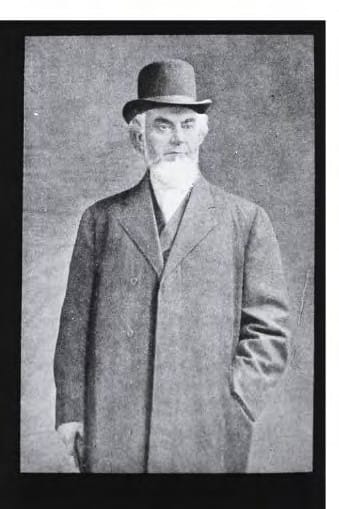
Brother Russell’s Last Sermon
Before Brother Russell started on his last trip during which he passed beyond the vail, he wrote a sermon. He intended to deliver it at the New York Temple upon his return. He never gave that sermon in person, but it was printed in December 1916 and also as the last sermon in the Sermon Book. In it Brother Russell, with a tone of exultation, reiterated what had been the theme of his preaching from the very beginning. He said:
“Let us awake, and take note of the fact that the dawning of the New Age is already here. We have been in it, and enjoying many of its blessings for the past 42 years. . . . Some few have been calling attention to the fact that we have been in the Millennial dawn ever since the year 1874. Bible chronology quite clearly teaches that the six thousand years from Adam’s creation have ended; six great days of a thousand years each, mentioned by St. Peter “a day with the Lord is as a thousand years.” (2 Peter 3:8) Now the great Seventh Day, also a thousand years long, has commenced! We have been enjoying its dawning. It is to be a grand Day!” Reprints, page 6013.
In the October, 1916, foreword to the second volume, written only a few days before his change, Brother Russell said:
“The Bible chronology herein presented shows that the six great thousand-year days, beginning with Adam, are ended; and that the great seventh day, the thousand years of Christ’s Reign, began in 1873. The events of these 43 years, which this volume claims as the beginning of the Millennium, we still find fully corroborating Bible prophecies, as herein set forth.”
In passing, it is interesting to note how the Dawn Magazine came to be so named. We read from a Dawn publication:
“It was called THE DAWN in keeping with the original MILLENNIAL DAWN literature; and because of a deep conviction that we are living in the dawn of the Millennium.” When Pastor Russell Died, 1946 edition, page 28
This is still “meat in due season.” Here are some of the scriptures that clearly indicate that the reign of Christ has begun and that it began before the time of trouble started:
“And the seventh angel sounded; and there were great voices in heaven, saying, The kingdoms of this world are become the kingdom of our Lord and of his Christ; and he shall reign for ever and ever. . . . Thou hast taken to thee thy great power and hast reigned; and the nations were angry and thy wrath is come.” Revelation 11:15,17,18
“Why do the nations rage, and the people imagine a vain thing? The kings of the earth set themselves, and the rulers take counsel together, against the Lord, and against his anointed. . . . Then shall he speak unto them in his wrath, and vex them in his sore displeasure. Yet have I set my king upon my holy hill of Zion.” Psalms 2:1,2,5,6
“And at that time shall Michael stand up, the great Prince which standeth for the children of thy people. And there shall be a time of trouble, such as never was since there was a nation.” Daniel 12:1
“And in the days of these kings shall the God of heaven set up a kingdom which shall never be destroyed. And the kingdom shall not be left to other people, but it shall break in pieces and consume all these kingdoms, and it shall stand for ever.” Daniel 2:44
Then there is a scripture proving Christ reigns as king during the harvest:
“And I looked, and behold, a white cloud, and upon the cloud one sat like unto the Son of man, having on his head a golden crown, and in his hand a sharp sickle.” Revelation 14:14
We are told by Isaiah what the theme of the preaching of the feet members of the body of Christ should be:
“How beautiful upon the mountain are the feet of him that bringeth good tidings; that publisheth peace; that bringeth good tidings of good; that publisheth salvation; that saith unto Zion, THY GOD REIGNETH!”–Isaiah 52:7
This is the same “God” as described in another prophecy of Isaiah:
“And the government shall be upon his shoulder; and his name shall be called Wonderful, Counsellor, The Mighty God, The Everlasting Father, The Prince of Peace.” Isaiah 9:6
Brother Russell comments on this scripture:
“This proclamation [“Thy God Reigneth”] is now due, before the feet are joined to the body in glory, and before the judgments of the Lord go abroad; for then it will need no proclamation.”
Meat and Milk
All cannot digest meat. Some of the Lord’s children are on a milk diet. They are immature and easily led away from “the meat in due season.” The scriptures said it would be so. Paul said that such:
“are dull of hearing. For when for the time ye ought to be teachers, ye have need that one teach you again which is the first principles of the oracles of God; and are become such as have need of milk, and not of strong meat. For every one that useth milk is unskilful in the word of righteousness, for he is a babe. But strong meat belongeth to them that are of full age; even those who by reason of use have their senses exercised, to discern both good and evil.” Hebrews 5:11-14
Then Paul counseled us:
“That we henceforth be no more children, tossed to and fro, and carried about with every wind of doctrine, by the sleight [or trickery] of men, and cunning craftiness, whereby they lie in wait to deceive [“in systematic deception” Diaglott).” Ephesians 4:14
“Therefore we ought to give the more earnest heed to the things which we have heard, lest at any time we should let them slip.” Hebrews 2:1
“Ye should earnestly contend for the faith which was once delivered unto the saints.” Jude 3
Paul indicated to Timothy the serious necessity of holding to sound doctrine, that he would be saved by so doing:
“Take heed unto thyself, and unto the doctrine. Continue in them; for in doing this, thou shalt both save thyself, and them that hear thee.” 1 Timothy 4:16
“O Timothy, keep that which is committed to thy trust; avoiding profane and vain babblings, and opposition of science falsely so called; which some professing have erred concerning the faith.” 1 Timothy 6:20,21
“But shun profane and vain babblings; for they will increase unto more ungodliness. And their word will eat as doth a canker.” 2 Timothy 2:16,17
Paul, invoking the name of God and of Christ, gave a solemn charge and a grave warning to Timothy. He indicated that it would especially apply at the end of the age during the time of his second presence, just before the full establishment of the kingdom which will bring about the resurrection of the dead. In other words, he described the time in which we are living:
“I charge thee, therefore, before God, and the Lord Jesus Christ, who shall judge the quick and the dead at his appearing and his kingdom; Preach the word; be instant in season, out of season.
Reprove, rebuke, exhort, with all longsuffering and doctrine. For the time will come when they will not endure sound doctrine; but after their own lusts shall they heap to themselves teachers, having itching ears. And they shall turn away their ears from the truth, and shall be turned unto fables. But watch thou in all things.” 2 Timothy 4:1-5
As we would say today, “Watch out!” This solemn advice of Paul’s is “meat in due season” to which we do well to take heed. We read of those who are:
“Always learning something new, and yet are never able to arrive at a real knowledge of the truth.” 2 Timothy 3:7, Weymouth Instead let us be as one described in Titus:
“Holding fast the faithful word, as he hath been taught, that he may be able, by sound doctrine, both to exhort and to convince the gainsayers. For there are many unruly and vain talkers and deceivers.” Titus 1:9,10
How very precious the truth should be to each one of us! How grateful we should be to the heavenly Father for opening our eyes to the grandeur of the Divine Plan of Salvation, and our part in it! How very much we should appreciate and honor the instruments he has used: the prophets, the apostles, the early disciples, the reformers, and, at this end of the age, the returned Lord himself who used a special pastor, a faithful and wise servant, to give us his “meat in due season”! Let us eagerly and heartily partake of it! May it be said of us:
“These wait all upon thee, that thou mayest give them their meat in due season. What thou givest them, they gather. Thou openest thine hand, they are filled with good.” Psalms 104:27,28
Let us gather what the Lord has given us and be “filled with good.”
Miracles at the Sea of Galilee
THE incidents of our lesson occurred in the early part of the third year of our Lord’s ministry, in the spring nearing the time of the passover. John the Baptist had just been beheaded by King Herod, which greatly surprised and stunned the people of Israel. The ministry of John, followed by the ministry of Jesus, had stirred their minds and awakened them to Messianic kingdom hopes. Huge numbers were attracted by Jesus’ healing activities and by the gracious words which proceeded out of his mouth. Up to now their civil rulers had been conciliatory and permissive. The Romans seemed to have adopted a “hands-off” policy toward Israel.
The people first began to get uneasy when John the Baptist was imprisoned. Now they were appalled to learn that he had been beheaded under the most ghastly circumstances. This spread consternation among those who had appreciated his ministry as well as among those who recognized Jesus as the Messiah. Devout Jews were greatly shocked and considerable excitement prevailed. There was speculation as to what Herod might do next. Would the Lord Jesus himself be safe? What of the apostles and those who trusted in him?
The matter aroused great interest and drew unusually large crowds to the preaching of Jesus especially at this season when hundreds of thousands of Jews were enroute to the usual passover festival at Jerusalem. Business was practically suspended by a considerable proportion of the population. As some departed others were coming; thus our Lord and his apostles were kept extremely busy. It soon reached the point that they were not getting enough rest and were even interrupted during the few minutes they took for their meals.
Although Jesus himself could stand the stress, he was always tenderly alert to the needs of those around him. He realized they were near collapse and should get away from all the pressure for a while. So we read in Mark 6:31, “And he said unto them, Come ye yourselves apart into a desert place and rest awhile.” Weymouth says, “A quiet place.” Moffatt says, “And get a little rest.” The verse continues in explanation: “For there were many coming and going, and they had no leisure, so much as to eat.” We can imagine that Philip now spoke up and said, “Master, I know just the place, near my home town of Bethsaida. We can go there by boat and thus avoid the crowds.”
So this is how it was that the Lord and a few of his disciples entered a fishing boat and sailed across the northern tip of the sea of Galilee, landing near Bethsaida. Leaving their boat they walked leisurely up a pleasant grassy hillside and sat down in the shade of a grove of trees overlooking the sea. As John 6:3 describes it, “Jesus went up into a mountain and there he sat with his disciples.” It was quiet and pleasant, and as Jesus talked to them and reassured them, their tensions and fears left them. The Master’s voice was sweet music to their ears and they relaxed in the warmth of his radiant and loving personality. What a wonderful little one-day convention of Bible Students that was! In our conventions today we do feel the nearness of the Lord and hear his words through the lips of his servants; it is an exalting experience. But how very blessed it must have been for those disciples to have the Lord right there before them, to feel the magnetism of his literal presence, to hear the melody of his own voice speak the wonderful words of life to them!
It seems that they had not brought any food with them. One wonders at this until it is remembered that Philip’s home was in nearby Bethsaida. Perhaps they had planned to go there for their evening meal before returning across the sea. But their plans suddenly changed. A cloud of dust appeared on the horizon raised by thousands of tramping feet. The disciples were alarmed. Was it a Roman legion coming to take Jesus and them to suffer the fate of John the Baptist? Jesus calmed their fears. He knew who they were. The multitude had missed Jesus. Some had seen him enter the boat and sail in a northerly direction across the lake. Word got around spreading like wildfire, and a huge segment of the multitude began to walk around the lake in that direction to find Jesus. It was a spontaneous thing. They depended upon him so much. They needed him. He was all they had. He healed them and taught them and sympathized with them, and told them about the Kingdom of God. He gave them love and hope. No one else did this. Other leaders had failed them. This Jesus was indeed their Messiah sent from God. So they came, singly and in family groups, women, children, and aged ones, leaning upon their staffs. Many were sick. Some had to be carried on stretchers. Now they had found him at last! They assembled on the grassy hillside below where Jesus was standing, a very great company. Matthew 14:21 says there were “about 5,000 men, beside women and children.” From this we might estimate the total number to be as high as 15,000 people.
Jesus Had Compassion
As he looked upon them, Jesus’ heart was deeply touched. We read in Mark 6:34 that Jesus “was moved with compassion toward them because they were as sheep, not having a shepherd.” There is nothing more pitiful than a sheep without a shepherd. Sheep are helpless and dependent. Unless led they will go astray and be lost. They must sicken and die. They must be led to streams of pure water or else they will die of thirst. They cannot defend themselves against wild animals. If they fall into a ditch, they cannot extricate themselves. They are easily injured and require attention to their hurts. They must be treated gently. All these things the shepherd must do for them.
The Lord had always set shepherds over his people Israel. Moses was their first great shepherd, leading them like a flock. Jesus identified the shepherds of his day saying in Matthew 23:2, “The scribes and the Pharisees sit in Moses’ seat.” But these shepherds were not functioning. Not only were they neglecting the sheep, but instead they were feeding upon the flock, enriching themselves by virtue of their positions. Thus they fitted the prophecy of Ezekiel 34:2-5,
“Son of man, prophesy against the shepherds of Israel; prophesy, and say unto them, Thus saith the Lord God unto the shepherds, Woe be to the shepherds of Israel, that do feed themselves! Should not the shepherds feed the flocks? Ye eat the fat, and ye clothe you with the wool, ye kill them that are fed, but ye feed not the flock. The diseased have ye not strengthened, neither have ye healed that which was sick, neither have ye bound up that which was broken, neither have ye brought again that which was driven away, neither have ye sought that which was lost; but with force and with cruelty have ye ruled them. And they were scattered because there is no shepherd; and they became meat to all the beasts of the field when they were scattered.”
This is what Jesus must have thought of when he looked out over that vast multitude. Neglected and betrayed by their leaders, they had followed him into the wilderness as lost sheep seeking a shepherd.
They loved him and trusted him. Jesus’ heart went out to them. He came down the hillside and mingled with the crowd. He quickly sought out those that were sick. At each touch of his strong hands a tremendous surge of vitality flowed into them and healed them. As is written in Matthew 14:14 of this occasion, Jesus “was moved with compassion toward them, and he healed their sick.” Thus he became their shepherd in contrast with the evil shepherds that had failed them. As he himself said, “I am the good shepherd. The good shepherd giveth his life for the sheep.” John 10:11
After he had healed all their sick we can imagine that he stood upon a rock and the multitude crowded around to hear him. He began to speak. The account says, “He began to teach them many things.” (Mark 6:34) Without the need of a public address system his beautifully resonant voice reached the ears of each one of that vast multitude, encouraging them, inspiring them, and telling them of God’s love for them and of the coming kingdom of God. Thus in the Lord’s providence the little one-day convention of Bible Students culminated in a very well attended public meeting.
Late in the afternoon the disciples began to get worried on behalf of the people. Perhaps they heard some of the little children whimpering for food. We read:
“And when the day was now far spent, his disciples came unto him, and said, This is a desert place, and now the time is far passed. Send them away that they may go into the country round about, and into the villages, and buy themselves bread; for they have nothing to eat.” Mark 6:35,36
Matthew 14:16 tells us, “But Jesus said unto them, They need not depart. Give ye them to eat.” Now we read from John 6:5-8 that Jesus turned to Philip, whose home was in the vicinity and asked, “Philip, whence shall we buy bread that these may eat? And this he said to prove him, for he himself knew what he would do. Philip answered him, Two hundred pennyworth of bread is not sufficient for them, that every one of them may take a little.”
Two hundred pennies was no small sum in those days. We know from a parable of Jesus that a penny was a day’s wages at that time. We continue from John’s account:
“One of his disciples, Andrew, Simon Peter’s brother, saith unto him, There is a lad here which hath five barley loaves and two small fishes. But what are they among so many?”
Then we read that Jesus said, “Bring them hither to me.” (Matthew 14:18) We continue the account from Mark 6:39,40, “And he commanded them to make all sit down by companies upon the green grass. And they sat down in ranks, by hundreds, and by fifties.”
We read now from Matthew’s account:
“And he took the five loaves and the two fishes, and looking up to heaven, he blessed and brake, and gave the loaves to his disciples, and the disciples to the multitude.” Matthew 14:19