
Other Lessons
Although this is the primary application of the parable, there are other beautiful applications as well. The fact that Jesus did not interpret this parable to his disciples seems to indicate that it has several applications which in due time would be revealed by the holy spirit. So let us consider this parable further.
“Again, the kingdom of heaven is like unto treasure hid in a field; the which, when a man hath found, he hideth; and for joy thereof goeth and selleth all that he hath, and buyeth that field.”
This kingdom of heaven is the Millennial kingdom. Its glories and honors, its privileges in connection with the world’s restitution, is what constitutes the great treasure or prize of the high calling peculiar to the Gospel Age. This prize, which was first presented to our Lord Jesus, has since been set before us as well. The treasure is, to us, the desirability of obtaining joint-heirship with Christ in his Millennial kingdom. How great a treasure this is, and how hidden! Do you know of any but truth people who believe and teach the pure and unadulterated doctrine of ransom and restitution, of a Millennial kingdom, a kingdom of heaven which, as a result of a ransom for all, will give both the just and the unjust an opportunity to gain life everlasting? There are none! Yet this is a doctrine “which God hath spoken by the mouth of all his holy prophets since the world began.” (Acts 3:21) It is indeed well hidden. Together with it is hidden the grand hope for the prize of the high calling, the opportunity to reign with Christ in that “kingdom of heaven” and have a part in administering the Millennial blessings to “all the families of the earth.”
There are comparatively few who have found this “treasure hid in a field.” But to those who have seen it, it has been a message of great joy, satisfying the soul, and revealing God as a just, loving, all- powerful God. It has been a refreshing and delightful thing, compared with the miserable doctrines of the nominal systems. It has been a real treasure, beyond price.
Just as someone who stumbled upon a fabulous earthly treasures would be willing to sell everything he had to obtain it, knowing that the value of the treasure far exceeded everything he might have, those who see God’s great divine plan of the kingdom of heaven to bless the world, who see the opportunity to share in it, and who hear the call or invitation to participate in it, are willing and anxious to sell all that they have consecrate their all to obtain that treasure. They do it joyfully.
And why shouldn’t they? Wouldn’t any man pay a dollar for something worth a million dollars? Let us consider this from every viewpoint. How long do you expect to live? Perhaps as much as a hundred years? That cannot be compared with immortality. What pleasures and satisfactions do you expect to enjoy in your brief lifetime, considering the problems of old age and declining health? They are not worthy to be compared with this description:
“In thy presence is fullness of joy; at thy right hand there are pleasures for evermore.” Psalms 16:11
Do you expect to earn or inherit wealth? That cannot be compared to being “heirs of God, and joint-heirs with Christ.” (Romans 8:17) Do you expect to rise to a high position in the world during your short lifetime? That cannot be compared with the promise that we shall be “kings and priests” (Revelation 1:6), and that we shall reign with Christ a thousand years. (Revelation 20:6) Do you expect to attain honor in the world and enjoy a measure of glory? That cannot be compared with the glory, honor and immortality, the divine nature, promised to the faithful.
The suffering and sacrifice of the present life in payment for the “field” is as nothing at all compared to the value of the treasure. As Paul so well expressed it:
“For I reckon that the sufferings of this present time are not worthy to be compared with the glory which shall be revealed in us.” Romans 8:18
“But what things were gain to me, those I counted loss for Christ. Yea, doubtless, and I count all things but loss, for the excellency of the knowledge of Christ Jesus my Lord; for whom I have suffered the loss of all things, and do count them but vile refuse, that I may win Christ, and be found in him.” Philippians 3:7-9
Paul had found the treasure, and he bought it! It was his. It was on deposit for him, “laid up” for him:
“I have fought a good fight; I have finished my course; I have kept the faith. Henceforth there is laid up for me a crown of righteousness, which the Lord the righteous judge, shall give me at that day.” 2 Timothy 4:7,8
Here Paul referred to his great hidden treasure as a “crown of righteousness.” By using a crown as a symbol, he referred to his share in the kingdom of heaven which will rule and bless all the families of the earth.
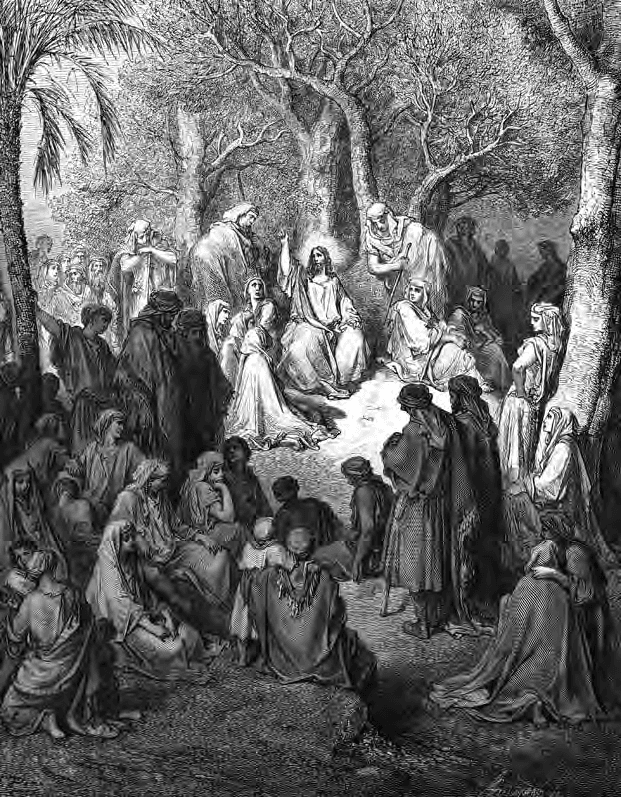
The Rich Young Ruler
Consider an incident in Jesus’ life reported in Matthew 19, Mark 10 and Luke 18. It was after Jesus took the little children in his arms and blessed them. Luke says the young man was a ruler, Mark says he came running and knelt before Jesus. His running would indicate eagerness and enthusiasm; kneeling would show humility and respect. He asked Jesus a question: “Good Master, what shall I do that I may inherit eternal life?” It was a sincere question, not like
those that the Scribes and Pharisees asked Jesus, trying to entrap him. Jesus said that by keeping the commandments of the law he would live.
“The young man saith unto him: All these things I kept from my youth up. What lack I yet?” Matthew 19:20
“What lack I yet?” This came from the young man’s heart. It should be the frequent inquiry of every child of God. When we have done our best and still feel we have come so far short of the perfect standard, let us earnestly ask, “What lack I yet?” At other times, when we are complacent, and are inclined to feel somewhat satisfied with ourselves, let us search our hearts with the question: “Lord, what lack I yet?” The account says: “Then Jesus, beholding him, loved him.” The Lord will love you too if you inquire of him, humbly and sincerely, asking to know what you still lack. He will tell you just as he told the rich young ruler kneeling before him. Now we come to the point:
“Then Jesus, beholding him, loved him; and said unto him, One thing thou lackest. Go thy way, sell whatsoever thou hast, and give to the poor, and thou shalt have treasure in heaven; and come, take up the cross and follow me.” Mark 10:21
Jesus must have loved this young man very much indeed because he offered him the greatest treasure in the universe, the treasure “hid in the field,” the kingdom of heaven. Jesus offered him discipleship and he told him what it would cost: Everything everything the young man had, all his wealth, all his prospects, his position, honors, and reputation. More than that, “Take up the cross, and follow me.” Not only was he to divest and consecrate all his earthly things, but he was to carry the cross showing a daily, sacrificial, ignominious, dying by following Jesus, suffering with him (Romans 8:17) to be glorified with him, to possess that rich “treasure in heaven.”
What followed was tragic: “But when the young man heard that saying, he went away sorrowful, for he had great possessions.” What a pitiful thing! By getting up from his knees and leaving, he had bartered away the greatest of treasures, “Eternal in the heavens” (2 Corinthians 5:1), for a few miserable years of earthly advantage. “He went away sorrowful.” How unlike the man of the parable who found the “treasure hid in the field” and who “for joy there of” sold all that he had. This young man had no joy; he “went away, sorrowful.”
The sequel to this incident shows conclusively what the promised treasure was, that it was indeed participation with Jesus in the kingdom of heaven, the kingdom that will bring restitution blessings to the world:
“Then answered Peter and said unto him: Behold, we have forsaken all, and followed thee. What shall we have therefore?” Matthew 19:27
In other words, “You promised this young man treasure in heaven if he disposed of everything and followed you. That’s just what we’ve done. What will our reward be?”
“And Jesus said unto them; Verily I say unto you, that ye which have followed me; in the regeneration [or restitution], when the Son of man shall sit in the throne of his glory; ye also shall sit upon twelve thrones, judging the twelve tribes of Israel.” Matthew 19:28
Isn’t that a perfect description of a participation in the Millennial kingdom which will bless the world?
Jesus promised this treasure of the kingdom to “Ye which have followed me.” He made this promise not only to those who heard his voice that day but also to all who have followed him since, including you and me. We have seen the treasure “hid in a field,” we have “found” it, we have “counted the cost,” we have “for joy thereof” sold all that we had and consecrated our all. We have not “turned away sorrowful.”
Another Example of Poor Thinking
There is another parable of Jesus emphasizing the utter futility of laying up earthly possessions as compared with the eternal riches of God:
“And he spake a parable unto them, saying, The ground of a certain rich man brought forth plentifully. And he thought within himself, saying, What shall I do, because I have no room where to bestow my fruits? And he said, This will I do, I will pull down my barns, and build greater; and there will I bestow all my fruits and my goods. [continuing from the Diaglott] And I will say to myself, Life! Thou hast an abundance of good things, laid up for many years. Rest, eat, drink and enjoy thyself. But God said to him, Foolish man! This night they will demand thy life from thee. And who then will possess what thou hast provided? This is he who amasses treasure for himself, and is not rich with respect to God.” Luke 12:16-21
This is what the rich young ruler had done. He also had “great possessions.” He allowed his riches enjoyable only during his brief lifetime to influence him when he rejected the greatest invitation anyone can receive: to have a part in the eternal kingdom of heaven. Jesus sums up the lesson:
“But rather seek ye the kingdom of God, and all these things shall be added unto you. Fear not, little flock; for it is your Father’s good pleasure to give you the kingdom. Sell that ye have, and give alms;
provide yourselves bags [or purses] which wax not old; a treasure in the heavens that faileth not; where no thief approacheth, neither moth corrupteth. For where your treasure is, there will your heart be also.” Luke 12:31-34
Again we see what the treasure consists of. We are to seek the kingdom of God with as much fervency as a man seeking treasure hid in a field and then, with joy, sell or consecrate our all to obtain it.
How much does our participation in the kingdom of heaven mean to us? Is it really a treasure to us? Is it really precious to us? Is it so highly prized that we will, with joy, sell all we have, to attain it? Let us carefully examine ourselves our innermost motives because it is important. Why do we want a part in the heavenly kingdom? Do we want to be kings and priests and heirs of God and joint-heirs with Christ, because of a desire to shine, to be above others? Do we run for the prize of the high calling for personal glory, personal honor, personal immortality?
Paul said, “In due season we shall reap, if we faint not.” (Galatians 6:9) What do we expect to reap? Personal exaltation? Is that our total conception of the treasure of the kingdom of heaven? SATAN HAD THAT MOTIVE! He said:
“I will ascend into heaven; I will exalt my throne above the stars of God. … I will ascend above the heights of the clouds; I will be like the Most High.” Isaiah 14:13,14
Do you realize how closely this boast of Satan describes what the Lord has promised us? It’s a little frightening, isn’t it? We, too, expect to “ascend into heaven.” By sharing Christ’s throne, we, too, will be exalted “above the stars [or angels] of God.” We, too, “will be like the Most High” in the sense that we will partake of the divine nature. Ah, but there is one tremendous difference between our aspirations and that of Satan. That difference is one of motive. You can see how important motive is. Our motive must not be of selfish ambition as Satan’s was. Our motive should be the same as our Master when he saw the treasure hid in a field and with joy, sold all that he had to buy that field, giving his life for the world, purchasing Adam and his race.
Our motive for desiring the kingdom of heaven should only be that we want a part in the work of restitution, lifting up the world of mankind out of the pit of death, and seeing them safely over the great highway of holiness to human perfection and full fellowship with God. We should desire to be kings for one purpose only so that we may be used of the Lord to rule with equity to help the world. We should desire to be priests for one purpose only so that we may bless the people. We should desire to be heirs of God and joint-heirs with Christ so that we might fulfill God’s will in administering “the times of restitution of all things, which God hath spoken by the mouth of all his holy prophets since the world began,” restoring the earthly inheritance to Adam and his race. We should desire glory, honor and immortality so that we might, by our part in the Millennial kingdom, glorify and honor God, and do so throughout eternity.
The Pearl of Great Price
The same lesson is taught by the second parable, the “Pearl of Great Price.”
“Again the kingdom of heaven is like unto a merchantman, seeking goodly pearls; who, when he had found one pearl of great price [or value], went and sold all that he had, and bought it.” Matthew 13:45,46
Here the value of a share in the kingdom of God is likened to an unusually choice pearl which a pearl merchant finds and greatly desires to make his own. The parable says that the merchantman had been seeking such a pearl. How well this describes many who for years seek the truth before they find it, going from one church to another, from one denomination to another, finding some pearls which seem to have value but which, upon closer examination, are found to contain flaws, are hollow and worthless. These are the sectarian doctrines lacking in wisdom, justice or love, and dishonoring God. So the seeking goes on and on:
“That they should seek the Lord, if haply they might feel after him, and find him.” Acts 17:27
They search desperately and continually; they cannot rest. They do not know exactly what they are looking for, they only know that their longings toward God remain unsatisfied. As a thirsty man seeks water, they continue their search. David expressed it:
“Oh God, thou art my God. Early will I seek thee. My soul thirsteth for thee … in a dry and thirsty land, where no water is.” Psalms 63:1,2
What is he thirsting for? The next verse tells us: “To see thy power and thy glory!” In other words, “The kingdom of heaven,” the “pearl of great price.” Those who thus diligently and earnestly seek him, he leads to his truth:
“When the poor and needy seek water, and there is none; and their tongue faileth for thirst; I, the Lord, will hear them; I, the God of Israel, will not forsake them. I will open rivers in high places, and fountains in the midst of the valleys. I will make the wilderness a pool of water, and the dry land springs of water.” Isaiah 41:17,18
To the seeking ones, the thirsty ones, God provides fountains, rivers, lakes and seas of the pure water of truth. Thus they find the “pearl of great price.” When they have found it and examined it, they know it is genuine. It is absolutely flawless. It is beautiful and perfect from whatever angle it is viewed. The merchantman realizes his long quest is over at last. He is “lost in wonder, love and praise.” The “pearl of great price” satisfies his longings as nothing else can do.
He decides he must have it, he must make it his own. It becomes the most important thing in his life. The parable says he “went, and sold all that he had, and bought it.”
Now let us consider the price that must be paid and what it signifies. In the parable of the “Treasure Hid in a Field,” we see that the man “selleth all that he hath.” We quoted Paul as saying, “I have suffered the loss of all things.” Jesus said to the rich young ruler, “sell whatsoever thou hast, and give to the poor … and follow me.” Peter said, “Behold, we have forsaken all, and followed thee.” Jesus said to his disciples, “Sell that ye have, and give alms.” Now in this parable of the Pearl the merchantman “went, and sold all that he had, and bought it.” We have mentioned the necessity of consecrating our all to the Lord. Jesus said, “Whosoever he be of you that forsaketh not all that he hath, he cannot be my disciple.” (Luke 14:33)
It is important to know exactly what is meant by these expressions. Just as the rich young ruler did not fully understand the requirements of discipleship and “went away sorrowful,” considering the price too high, so some today, drawn to the step of consecration, feel unable to give up everything. After counting the cost, they regretfully turn away. Perhaps if they really understood what is meant by stewardship, they would not turn away but eagerly accept the conditions.
Christian Stewardship
What is Christian stewardship? We have no such position as “steward” in the world today. But in Jesus’ day it was an important profession. A steward’s office was a confidential one and of wide scope. It was a position of great trust. A steward had complete charge of his master’s property. He had the liberty and full authority to do anything and everything the owner himself could do with his goods. He could make presents, cancel debts, or use in any manner he chose the goods under his care. He could not be held responsible as a culprit before the law because the very nature of his office as a steward was such that he fully represented and acted for his employer. Of course he might be discharged for unfaithfulness, but while a steward, he was fully authorized to use his judgment. (See Reprints, page 2715.)
What has this got to do with us? The Lord’s consecrated people are called “good stewards of the manifold grace of God.” (1 Peter 4:10) The Diaglott says, “the manifold favor of God.” This certainly includes all material as well as spiritual blessings. We are called stewards of God and are told, “It is required in stewards that a man be found faithful.” (1 Corinthians 4:1,2)
How do we become stewards? Whereas the Jews were required to give a tenth of all their possessions and income to the Lord, we must consecrate our all without the reservation of a single item. After we have covenanted our all to him our time, money, property, influence, name, earthly hopes and ambitions, family and friends the Lord, after accepting our full consecration, makes us personal “stewards” of these things. He hands them back to us, so to speak, saying: “All these things are now mine, but I assign them to your care. I appoint you as my steward over them.” As his stewards, he permits and commissions us to use our consecrated all for him, to use reasonably and moderately, according to our best judgment of what would honor his name and forward his cause.
He permits us to use some of our consecrated means for our own sustenance and for the care of our families. He not only permits it, he commands it:
“But if any provide not for his own, and especially for those of his own house, he hath denied the faith.” 1 Timothy 5:8
We also read about the necessity of “providing for honest things, not only in the sight of the Lord, but also in the sight of men.” (2 Corinthians 8:21) However, we are expected to exercise moderation. “Let your moderation be known unto all men.” (Philippians 4:5) The use of a reasonable portion of our time, energy and talent in providing for the necessities is expected and approved by the Lord. He does not regard this as a selfish use, but merely a necessary expenditure by his steward. As to the time, energy and talent we devote directly to his cause or on behalf of his people, he leaves this entirely in our hands, saying to us, so to speak:
“You have consecrated everything to me and I have returned it back to you. It is for you to use in my name and to my glory, and to the forwarding of my will in the earth as you understand my will from my word. Go, occupy, use. I will inspect your work later and I will judge of your love and your devotion by the carefulness with which you use your stewardship.” Reprints, page 2542.
What did Jesus mean when he said to the rich young ruler, “Sell whatsoever thou hast, and give to the poor, and thou shalt have treasure in heaven; and come, take up the cross and follow me”? (Mark 10:21) This is a direct statement that the young ruler must dispose of everything.
Of course Jesus meant exactly what he said but I also think Jesus read that young man’s heart. He must have seen goodness and nobility there because he loved him. He saw something else as well. He saw that the man was overly fond of his many possessions; they meant too much to him. This was his particular weakness. So Jesus put the matter to him in its fullest, strongest light, without any explanation. It is quite true that the condition of fellowship with Christ in the heavenly kingdom is the consecration of “whatsoever we have.” We must sacrifice every earthly interest and even earthly life as well, in his service. Jesus kindly, but plainly told him this. He did not explain stewardship but waited to see if the young man would overcome his weakness of love of money.
Suppose this rich young man instead of going away sorrowful had sat down and counted the cost. Suppose he had consecrated himself and determined to give up all and follow Christ. Then, coming to Jesus, suppose he said:
“Master, I have determined to follow your counsel, to sell all and give to the poor and to follow thee. How and where shall I begin? I have twenty houses and three farms, much cattle and a fleet of fishing boats. Which shall I dispose of first, and how shall I distribute the money?”
That’s what Jesus wanted to hear, a willingness to give up everything. Jesus probably would have said to the young man:
“Present all these things unreservedly to God and yield yourself as his servant also, and from that moment consider yourself God’s steward, commissioned by him to use all those goods as well as your personal talents to his glory in serving those about you as a steward who shall give an account. Be neither wasteful nor miserly. Think not of these goods henceforth as your own, and talk not about giving them again to the Lord, for once given they are his forever. Such portions of that consecrated property as you have need of he permits you to use for your personal and family necessities. Use the rest in the work of the Lord.”
The young man was “very rich.” Had he become a consecrated follower, he might have been kept busy many years disposing of his goods and had much pleasure and satisfaction doing so. There is no reason whatever for supposing that the Lord meant for him to sell his houses and other property at once and throw the money into the street to the multitude. The selling or disposing of that which he had would go onas he found uses for the money in the service of God and as he progressed in that service. (See Reprints, page 855.)
To feed the poor would not necessarily mean to feed the hungry with the bread that perishes. I think it would primarily mean to feed the spiritually hungry with the bread of life. It would mean to spend self
for the highest spiritual good of others, to give them the gospel of Jesus Christ. As Jesus said:
“I am the bread of life. He that cometh to me shall never hunger; and he that believeth on me shall never thirst.” John 6:35
Paul said we are, “stewards of the mysteries of God.” (1 Corinthians 4:1) It is our privilege to tell others of the mysteries of God’s divine plan of the ages. These are the lasting and eternal things we have to impart to the spiritually poor, the spiritually hungry, the spiritually thirsty.
Have you found the “treasure hid in a field”? Have you seen it? Has it filled your heart with joy? Have you greatly desired to obtain it, to make it your own? Would you rather have a part in the kingdom of heaven, the “treasure in heaven,” than to possess all the glittering treasures of the world? Have you sold consecrated all you have on earth to obtain the heavenly treasure? If you have, you are blessed indeed because you are following in the footsteps of Jesus. It was Jesus who said of you, “The Father himself loveth you.” (John 16:27)
The Greater Works
“Verily, verily, I say unto you, He that believeth on me, the works that I do shall he do also, and greater works than these shall he do; because I go unto my Father.” John 14:12
LIFE is sweet. Life is dear. It is the greatest gift of God for without life nothing can be experienced, nothing can be enjoyed, nothing can be known, nothing can be hoped for “For there is no work, nor device nor knowledge, nor wisdom, in the grave.” (Ecclesiastes 9:10) For this reason mankind clings to life very tenaciously. A man will spend his every treasure and whatever he can borrow to regain his lost health, and to prolong his life to the pitiful utmost.
Let there be a rumor that cures have taken place at some remote shrine and thousands of stricken people will journey there regardless of the cost to themselves of money and pain. People will travel literally around the world on the slim chance that their ailments might be healed and a few more days of life enjoyed. The announcement that a new drug is successful against a disease instantly brings tens of thousands of frantic requests for the medicine.
Man seems to realize instinctively that he was designed to live forever and he protests and struggles against any termination of that life. So powerful is this natural instinct for survival that even the Lord’s people who confidently expect that “this mortal must put on immortality,” nevertheless cling tightly to human life. This is entirely appropriate for it is for God to decide the time of our change.
But I remember an old brother, many years ago, when I was a child in the truth. He was crippled and literally bent double with arthritis. He was in constant pain. Hehad also suffered several heart attacks and always expected that the next one would be fatal. When he came to meetings he inched his way along, slowly and painfully, by the use of two short canes. The burden of his testimonies was always the same:
“Oh, if the Lord would only call me home! I, like Paul, have fought the good fight; I have kept the faith; I have finished my course. If I could only lay down this miserable, misshapen, mortal body in which I am imprisoned, and in a moment, in the twinkling of an eye, be clothed with that glorious divine body the Lord has promised me. I can hardly wait for my change to come. Oh, dear friends, it is so hard to wait!”
After a while he would have another heart attack. He would immediately send for the doctor to administer adrenaline or oxygen or whatever other emergency treatment might be necessary in order to prolong his tortured human existence a little while longer.
I am reminded of Elijah, who sat down under a juniper tree in the desert and wished earnestly to die. Why had he fled to the desert in the first place? Because Jezebel had threatened to kill him. It doesn’t make sense except to show that life is sweet and every human instinct makes men cling to it.
Human nature was the same in Jesus’ day except that the situation then was much more hopeless. Today modern techniques of medicine and surgery have controlled many diseases. Large research facilities have been set up. Clinics and hospitals are widely available and new cures and wonder drugs are found almost daily. But in Jesus’ day medical knowledge was primitive and comparatively ineffective.
Sanitation was poor and there were no diagnostic and treatment centers. Some serious diseases were handled by such desperate measures as heartlessly banishing the sufferers into desert or wilderness areas so that others might not be contaminated. So it is reasonable to suppose that the proportion of sick, suffering, crippled and blind was much greater in those days than in civilized countries today.
Under these conditions the Jews, who had the scriptures read to them regularly every Sabbath day, would think with longing on some events in their past history. The sick ones would think of the time the fiery serpents bit the children of Israel so that many sickened and died. But under the Lord’s direction, Moses made a brazen serpent, and raised it upon a pole. If any were bitten, they looked upon the brazen serpent and were healed. (Numbers 21:8, 9) “What a wonderful arrangement that was!” they would say. “We, too, have been bitten by sin and disease and death. If onlysomeone like Moses, or greater than Moses, would appear. We could just look to him and be healed!”
There were many lepers in those days. Those having this dreadful disease would remember and say, “Elisha, the prophet of the Lord, healed the leprosy of Naaman, the Syrian. (2 Kings 5:10-27) If only another such prophet of the Lord would come and heal us of our leprosy!”
The poor and needy those suffering from malnutrition and starvation would remember the manna and the quails of the wilderness journey. They would also remember how Elisha caused the widow’s oil to increase and never fail (2 Kings 4:2-7) and how he made twenty pieces of bread feed a hundred men with some left over (2 Kings 4:42-44). “Oh, Lord, send us bread too” they would pray.
Then there were those who had lost loved ones in death–the cruelest blow of all. They would remember how, when the widow’s son had died, Elijah raised him back to life:
“And the woman said to Elijah, now by this I know that thou art a man of God, and that the word of the Lord in thy mouth is the truth.” 1Kings 17:17-24
Yes, they too would be able to recognize a prophet from God and listen to him and believe him if one would only come healing the sick, feeding the multitude, and raising the dead as did those prophets of old.
The afflicted ones in Israel would remember other promises too. The psalmist had sung:
“Bless the Lord, O my soul, and forget not all his benefits. Who forgiveth all thine iniquities; who healeth all thy diseases; who redeemeth thy life from destruction [or death].” Psalms 103:2-4
Isaiah had spoken of a time when “the inhabitant shall not say, I am sick.” (Isaiah 33:24) Then he had joyfully announced a message from God saying,
“He will come and save you. Then the eyes of the blind shall be opened and the ears of the deaf shall be unstopped. Then shall the lame man leap as an hart, and the tongue of the dumb shall sing. Isaiah 35:4-6
Malachi had spoken of a mysterious “Sun of righteousness … with healing in his wings.” (Malachi 4:2) These were the things they looked for, longed for, and hungered and thirsted for.