
Lessons for Us
Let us consider some lessons. As in the case of so many other Bible narratives, this one furnishes first of all a general outline of the Divine Plan. As Pharaoh oppressed the Israelites, Satan has been a cruel and severe taskmaster. He has enslaved and degraded the human race. As Romans 8:21 expresses it, mankind is under “the bondage of corruption.” As the Israelites groaned under their burdens and cried to God in their distress, we read: “For we know that the whole creation groaneth, and travaileth in pain together.” (Romans 8:22) As Pharaoh refused to let the children of Israel go, we read of Satan that he “opened not the house of his prisoners” (Isaiah 14:17)–all mankind being confined in the prison-house of sin and death. Does not Pharaoh’s merciless killing of the male babies of Israel remind us of the Satan-inspired massacre of the babes of Bethlehem by Herod?
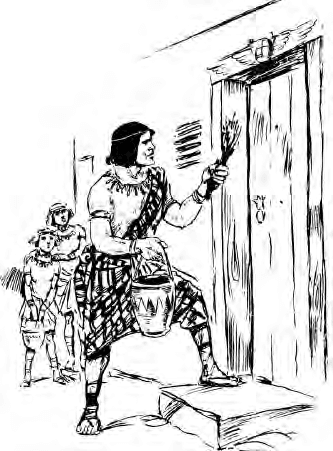
The “Lamb of God” Provides Release
The passover lamb was slain as a result of which Pharaoh’s hold upon the Israelites was broken and they set out for the Promised Land. Similarly, Jesus was sacrificed as “the Lamb of God which taketh away the sin of the world.” (John 1:29) The human race was ransomed and the Millennial Kingdom became their glorious prospect. But as Israel did not enter in at once but wandered in the wilderness for 40 years, so mankind has continued to wander in the wilderness of sin and death for 2000 years since Jesus died.
As the children of Israel finally arrived at the raging torrent of Jordan within sight of the Promised Land, mankind is now within sight of the Messianic Kingdom when, as Luke 21:25,26 expresses it: “Upon the earth distress of nations with perplexity; the sea and the waves roaring. Men’s hearts failing them for fear.”
There was the stupendous miracle of the drying up of the Jordan and the passing of the children of Israel safely into the Promised Land.
The antitype of his magnificent event is just before the world. As the rushing waters of Jordan receded before the advancing priests bearing the sacred ark, similarly the Royal Priesthood Christ, Head and body will bring peace to the world when men have reached their extremity. They will usher the world into their Promised Land, the grand Messianic Kingdom. As we read:
“Then they cry unto the Lord in their troubles, and he bringeth them out of their distresses. He will make the storm a calm, so that the waves thereof are still. Then they are glad because they be quiet. So he bringeth them unto their desired haven.” Psalms 107:28-30
In another picture, the Jordan represents Adamic death which will give way before the great Ark of the Covenant borne by the Royal Melchisedek Priesthood enabling mankind to pass into the Messianic Kingdom.
As the children of Israel after crossing the Jordan conquered and completely destroyed Jericho, mankind will, during the Millennial Age, conquer every vestige of Adamic sin in their beings.
That New World will indeed be “a good land, and a large,” “a land flowing with milk and honey.” Eden will be restored and made world-wide, and “the earth shall be filled with the knowledge of the glory of the Lord, as the waters cover the sea.” (Habakkuk 2:14) As Isaiah 25:6 expresses it: “And in this mountain shall the Lord of Hosts make unto all people a feast of fat things; a feast of wines on the lees; of fat things full of marrow; of wines on the lees well refined.” To which Micah 4:4 adds in symbolic language:
“They shall sit every man under his vine and under his fig tree; and none shall make them afraid. For the mouth of the Lord of Hosts hath spoken it.”
But besides this general outline of the Divine Plan, segments of the narrative also depict the course of the Church. In this picture Egypt represents the world and Pharaoh represents Satan who is the god of this world. As the children of Israel were in Egypt but were not Egyptians, the Lord’s people are in the world but not of the world. As the Israelites were burdened by heavy labor and cried for relief, these hear and obey the Lord’s invitation, “Come unto me, all ye that labour and are heavy laden, and I will give you rest.” Matthew 11:28
However, the Church is more particularly represented in the firstborn of Israel being called in Hebrews 12:23 the “Church of the firstborn, which are written in heaven.” As the passover lamb was slain and its blood applied to save the firstborn of Israel, Jesus died as a ransom and the merit of his sacrifice was applied on behalf of the Church.
As 1 Corinthians 5:7 says: “Christ our passover is sacrificed for us.” We are justified and covered by the robe of Christ’s righteousness and delivered from the bondage of sin and death just as Israel was delivered from Egypt. How happy we are to be released from this burden. In our exodus from under Satan’s dominion we are led by Christ Jesus, a greater than Moses, whom Moses prefigured. The Red Sea, in which Pharaoh’s host perished, pictures the second death which the Church escapes but which will be the final fate of Satan and all his willing agents.
The wanderings of the children of Israel in the wilderness journeying to the Promised Land, “a land flowing with milk and honey,” also depicts the course of the Church. We too have a promised land, the heavenly kingdom, a land of glory, honor and immortality, toward which we are journeying. We read in 2 Peter 1:4 that there “are given unto us exceeding great and precious promises that by these ye might be partakers of the divine nature.” Jesus spoke of our promised land when he said in John 14:2,3: “In my Father’s house are many mansions . . . I go to prepare a place for you . . . that where I am, there ye may be also.”
As the Israelites in the wilderness ate manna and drank water from the rock, we are abundantly supplied with “daily heavenly manna,” spiritual food, “meat in due season,” and drink deeply of the clear water of truth.
As the timid and slavish Israelites were disciplined by their forty years of wilderness experiences during which the old, rebellious ones were eliminated and the nation renewed, the Lord’s people on this side of the veil are subjected to chastening and disciplines until their old natures are transformed and they mature as new creatures of whom it is written, “Old things are passed away; behold, all things are become new.” 2 Corinthians 5:17
We may consider the swollen river Jordan as representing consecration unto death which is required of those who will become new creatures in Christ Jesus, who become heirs of the exceeding great and precious promises. This is suggested by the fact that it was in the river Jordan that Jesus symbolized his consecration.
As the children of Israel found enemies in the land which they must eliminate, the consecrated child of God has enemies which must be conquered. He must fight the weaknesses, the imperfections, the evil attitudes and desires of the old nature. These, as the apostle declares in 1 Peter 2:11, “war against the soul,” the new creature. Thus we are told to “fight the good fight of faith; lay hold on eternal life.” (1 Timothy 6:12) We are instructed to “war a good warfare.” (1 Timothy 1:18) As the children of Israel after their warfare found rest in the Promised Land, the glorified Church finds rest in the Heavenly Kingdom.
Some Personal Lessons
Let us consider some of the precious personal lessons contained in this narrative, which is “written for our admonition” lessons which will keep us from falling.
At their first arrival to the borders of the Promised Land, the Israelites instead of being elated were terrified and would not enter in. Similarly some spiritual Israelites approaching the Jordan of consecration and catching a glimpse of the promised glories beyond, are afraid to proceed. As the Israelites sent out spies, they sit down and count the cost. But they sit too long and count too much. As the ten spies did, they misinterpret the facts. They see only the frightful giants of opposition and despair. Instead of taking the Lord at his word and believing his promise of “grace to help in time of need” (Hebrews 4:16), some of the Lord’s dear people wish they were back in Egypt! As a result they must suffer many weary wilderness experiences which might have been avoided before they finally cross the Jordan.
Some never cross over but fall in the wilderness. They lose the High Calling by default. Let us remember this example to keep us from falling. As it was God’s good pleasure to give the Promised Land to the children of Israel if they would but enter in, let us remember the words of Jesus: “Fear not, little flock; for it is your Father’s good pleasure to give you the Kingdom.” (Luke 12:32) Let us not hesitate. In the words of Caleb of old, “Let us go up at once to possess it; for we are well able to overcome it.” (Numbers 13:30) Let us echo the strong affirmation of faith by Paul: “I can do all things through Christ who strengtheneth me.” (Philippians 4:13) Paul believed that God would perform his promise as he said: “I know whom I have believed; and am persuaded that he is able to keep that which I have committed unto him against that day.” (2 Timothy 1:12) Of all the people in the world the Lord’s people should be supremely optimistic. Do you think the Lord would have invited you to the High Calling if he did not intend to give it to you? Don’t you think he is ready to give you every assistance to attain it?
Those of Israel who lacked the faith and zeal to promptly enter the promises of God were sentenced to suffer tribulation in the wilderness. Does this not remind us of the Great Company of whom it is written, “These are they which came out of great tribulation”? (Revelation 7:14) Let us resolve not to be of this class.
Prompt, Willing Obedience
Let us rather emulate the spirit of Israel as they approached the Jordan the second time with full assurance of faith. (Hebrews 10:22) As they said to Joshua let us say to the Lord: “All that thou commandest, we will do. Withersoever thou sendest us, we will go.” This is true consecration. A prompt, willing and complete obedience. This was the attitude of Jesus when he came to his Jordan of consecration as we read:
“Then said I, Lo, I come. In the volume of the book it is written of me; I delight to do thy will, O my God. Yea, thy law is within my heart.”– Psalms 40:7,8
If we do this, we will inherit God’s encouragements to Joshua:
“Arise, go over this Jordan . . . There shall not any man be able to stand before thee all the days of thy life . . . I will not fail thee, nor forsake thee . . . Be strong and of good courage.”
As the children of Israel found the river at flood stage, and apparently impossible to cross, the child of God sometimes encounters situations in his life which seem impossible of solution. The raging waters of circumstance seem to be an impassible barrier to Christian progress. But just as the waters of Jordan receded before the sacred ark, the obstacles which seem so formidable to us have a way of eventually disappearing before the Lord’s providences. Let us not forget that the overflowing river prevented the enemy from attacking Israel. With us the seeming calamities and hindrances permitted by the Lord often turn out to be blessings in disguise.
Therefore, in the language of 1 Peter 4:12: “Beloved, think it not strange concerning the fiery trial which is to try you, as though some strange thing happened unto you.” There is a good reason for everything that happens to a child of God. It is never a “strange thing.”
As the priests bearing the ark marched into the river while it was still flowing, we should boldly face our problems and march right into them, “strong in the Lord, and the power of his might.” (Ephesians 6:10) Just try it and see if they will not flee before you! Don’t forget that we also bear the Ark of the Covenant. We may get our feet a little wet, but the waters will not overwhelm us because we are assured:
“When thou passest through the waters, I will be with thee; and through the rivers they shall not overflow thee . . . For I am the Lord thy God, the Holy One of Israel, thy Saviour.” Isaiah 43:2,3
The Lord promised rest for the children of Israel. The Promised Land was a promise of rest. He said to Moses, “My presence shall go with thee, and I will give thee rest.” (Exodus 33:14) The apostle Paul in the third and fourth chapters of Hebrews draws a lesson from the experiences of Israel in their provoking the Lord, and their failure to promptly obtain the promised rest. We read:
“Harden not your hearts as in the provocation, in the day of temptation in the wilderness; when your fathers tempted me, proved me, and saw my works forty years. Wherefore I was grieved with that generation, and said, They do always err in their heart; and they have not known my ways. So I sware in my wrath, They shall not enter into my rest.” Hebrews 3:8-11
Then the apostle points out that the reason Israel did not find rest was a lack of faith, and he exhorts us not to fail along this line. We read:
“Take heed, brethren, lest there be in any of you an evil heart of unbelief, in departing from the living God. But exhort one another daily, while it is called Today; lest any of you be hardened through the deceitfulness of sin. For we are made partakers of Christ, if we hold the beginning of our confidence stedfast unto the end. . . . And to whom sware he that they should not enter into his rest, but to them that believed not? So we see that they could not enter in because of unbelief.” Hebrews 3:12-14,18,19
Just what is this very important “rest” promised to the children of God? Paul gives the answer:
“For he that is entered into his rest, he also hath ceased from his own works, as God did from his. Let us labour therefore, to enter into that rest, lest any man fall after the same example of unbelief.” Hebrews 4:10,11
The Jordan of Consecration
When we cross the Jordan of consecration, we cease from our own works in the sense that we give up our own wills. We relinquish every earthly interest subordinating them to the Lord’s will. Things which were important to us before, things which caused us anxious thought, are now committed to the Lord with full assurance and trust that he will make them come out right. We have obeyed the injunction of Psalms 37:5, “Commit thy way unto the Lord. Trust also in him, and he shall bring it to pass.” But this wonderful rest of mind does not come to us easily and automatically upon consecration. It must be striven for just as the children of Israel had battles to fight after crossing Jordan. Paul says that we must labor to enter into rest. We must train our thoughts. We must consciously develop a restful mind based on faith. We must work at it.
How can we do this? There are practical procedures we can follow. For example, if we find ourselves worrying about something we cannot control, let us by instant prayer place that very thing into the Lord’s hands and rest in the knowledge that it is in good hands. This is the way Paul sums up the matter saying, “Let us therefore come boldly unto the throne of grace, that we may obtain mercy and find grace to help in time of need.” (Hebrews 4:16) If our restlessness continues, let us go to the scriptures reminding ourselves of such promises as: “Casting all your care upon him, for he careth for you.” (1 Peter 5:7) “Cast thy burden upon the Lord, and he shall sustain thee. He shall never suffer the righteous to be moved.” (Psalms 55:22) “For he shall give his angels charge over thee, to keep thee in all thy ways.” (Psalms 91:11) “The Lord shall preserve thee from all evil. He shall preserve thy soul.” (Psalms 121:7) There are many, many more such scriptures that will bring reassurance and rest to the mind if we will read and repeat them to ourselves.
Doing this may be labor at first, but if persisted in, it will become easy and habitual; then you will truly enter into that wonderful rest of faith. To attain it is eminently worthwhile. We can be undergoing the hardest physical labor with weariness and sweat of face and still, at the same time, have this rest. We can be desperately sick, on a bed of pain, and still have this rest. Every earthly thing can be going wrong with us without in the least disturbing this rest. The time of trouble may –intensify and anarchy rage in the streets, “Though the earth be removed and though the mountains be carried into the midst of the sea, though the waters thereof roar and be troubled, though the mountains shake with the swelling thereof.” (Psalms 46:2,3) Still we will not fear. Impossible you say? It does seem impossible. That is why it is called “the peace of God which passeth all understanding.” (Philippians 4:7) But it is attainable because the same verse tells us that this peace “shall keep your hearts, and minds through Christ Jesus.”
We should be able to rest in the truth. You cannot rest in something which is always changing. We should not be like the wicked who are described as being “like the troubled sea, when it cannot rest, whose waters cast up mire and dirt.” (Isaiah 57:20) At one time in the past, when under the domination of a Society which frequently changed
its teachings, we hesitated to express ourselves on even basic doctrines. “Is this the latest thought?” we would ask ourselves. We had no rest. Every issue of their magazine brought further changes. But we broke away from that organization and went back to the Studies in the Scriptures and other writings of Brother Russell which are the Lord’s provision of “meat in due season” for the Household of Faith. We have had rest ever since. Now when we are told of “new light,” we are not disturbed. We have already been through that experience. We have already learned that lesson. We rest in the truth which the Lord revealed at this end of the age through his Faithful and Wise Servant. We are sure of the truth as it has been revealed. If we are never sure of the truth, we cannot rest in it. Such are described as “Tossed to and fro, and carried about with every wind of doctrine.” (Ephesians 4:14) James says, “He that wavereth is like a wave of the sea, driven with wind and tossed.” (James 1:6) One cannot rest if he has an “itching ear,” always craving to hear something new. It is a wonderful thing to rest in the truth. Let us not miss this great blessing.
Our final rest will come beyond the veil. It is written of those who participate in the first resurrection that they “rest from their labours, and their works do follow them.” (Revelation 14:13) That glorious rest will not mean a cessation of activity. Quite the contrary. Then we will have the capability and opportunity of serving God fully and effectively. This great prospect is not too far distant for any of us!
Meat in Due Season
“The eyes of all wait upon thee; and thou givest them their meat in due season. Thou openest thine hand, and satisfiest the desire of every living thing.” Psalms 145:15,16
WE HAVE a most wonderful, and thoughtful God. He has always fed his creatures. He has amply supplied their needs. When he created the animals, he provided for their sustenance and said:
“To every beast of the earth, and to every fowl of the air, and to every thing that creepeth upon the earth, wherein there is life, I have given every green herb for meat. And it was so.” Genesis 1:30
He had regard for every living thing no matter how lowly it might be. The psalmist says of him:
“These wait all upon thee, that thou mayest give them their meat in due season. What thou givest them, they gather. Thou openest thine hand; they are filled with good.” Psalms 104:27,28
Our wonderful and thoughtful God has always fed his people. As soon as he created man, God thought of his food supply, and amply provided it. Thus we read:
“So God created man in his own image. In the image of God created he him, male and female created he them. And God said, Behold, I have given you every herb bearing seed, which is upon the face of all the earth; and every tree, in the which is the fruit of a tree yielding seed, To you it shall be for meat.” Genesis 1:27,29
Man is so designed, that he must eat to live and he must eat regularly. He must have his bread. Recognizing this basic need, Jesus taught his disciples to pray: “Give us this day our daily bread.” (Matthew 6:11) This prayer of the righteous has always been answered. As David said:
“I have been young, and now am old. Yet have I not seen the righteous forsaken, nor his seed begging bread.”–Psalms 37:25
Jesus beautifully impressed upon his disciples God’s provision of food for the natural man, saying:
“Behold the fowls of the air. For they sow not, neither do they reap, nor gather into barns. Yet your heavenly Father feedeth them. Are ye not much better than they?” Matthew 6:26
This need for daily bread is true of the natural man. But the man of God has an additional requirement just as basic, just as necessary as natural food. Jesus told us of this need when he said:
“It is written, Man shall not live by bread alone, but by every word that proceedeth out of the mouth of God.”–Matthew 4:4
The reference is to spiritual food which is vastly more important than material food. “How can it be more important?” a worldly person might ask. “If I don’t eat, I will die.” Of course you will, but what will you lose? You will lose only this temporary life of pain and sorrow under the reign of sin and death. As we read:
“Man that is born of a woman is of few days, and full of trouble. He cometh forth like a flower, and is cut down. He fleeth also as a shadow, and continueth not.” Job 14:1,2
“The days of our years are threescore years, and ten. And if, by reason of strength, they be fourscore years, yet is their strength labour, and sorrow; for it is soon cut off, and we fly away.” Psalms 90:10
But by such a death, nothing is really lost because by virtue of Jesus’ ransom sacrifice, there shall be a glorious resurrection to life under ideal conditions. There is to be a grand restitution, an opportunity for restoration to human perfection for every man. So, to the natural man who dies through lack of material food, nothing is really lost. But to the unnatural man the man of God, the justified, consecrated, spirit-begotten child of God, the new creature one who has sacrificed and renounced his human restitution prospects, it is different. If he does not receive and assimilate the spiritual food provided, if he does not continually eat of “every word that proceedeth out of the mouth of God,” he will lose everything. He will lose the most stupendous prize ever offered to mankind. He will lose “the prize of the high calling of God in Christ Jesus.” (Philippians 3:4) He will lose “glory, honor, and immortality.” More than that, he may lose even life itself! That is why the child of God esteems spiritual food so highly. That is why he hungers and thirsts for it. That is why he eagerly partakes of it at every opportunity and cannot get enough of it. That is why he carefully guards his source of supply, will not let it go, nor permit it to be adulterated. It is because he does not live by material bread alone, that he can say with Job:
“I have esteemed the words of his mouth more than my necessary food.” Job 23:12
The child of God finds the spiritual food that the Lord has provided to be a most tasty and satisfying morsel. He has an appetite for it. He savors it, and rejoices over it.
“Thy words were found and I did eat them. And thy word was unto me the joy and rejoicing of mine heart.”–Jeremiah 15:16
“Meat in due season” may be defined as “the right food at the right time.”
“A word spoken in season, how good it is!” Proverbs 15:23
“To every thing there is a season; and a time to every purpose under the heaven.” Ecclesiastes 3:1